

Useful Things
Build a Home Inventory You Can Find and Update
Give your belongings a simple index, connect it to useful photographs and documents, and test whether you can retrieve the record when you need it.

Start with a record you can retrieve
A home inventory becomes useful when you can connect an object to its description and supporting files. A folder full of photographs is a beginning. Add a short index that tells you what each image shows and where the relevant receipt or model information lives. The method below uses one list and one evidence folder; choose tools you already know how to open.
The Iowa Insurance Division’s March 4, 2025 consumer guide recommends recording belongings with details such as descriptions, purchase dates, receipts and photographs. An inventory can support the documentation of a loss, but the record itself does not determine coverage or a payment. For policy-specific questions, check the policy and ask the insurer or agent. This guide concentrates on organizing the evidence.
Make a small first pass
Choose one room and define its boundaries before you start. Include its cupboards and drawers, or mark them as unfinished. Take an overview photograph, then list the objects you can identify. Start with the items whose individual identity matters to you, such as an appliance or piece of furniture. A finished room is a manageable unit of progress.
Keep a separate queue for missing details. If you cannot find a receipt, write ‘receipt not located’ and continue. If the purchase date is unknown, record that uncertainty. Leaving a clear gap is easier to revisit than filling a field with a plausible date. Give each room a status such as ‘first pass’ or ‘checked’; completing one room does not mean the whole home is recorded.
Give each item a stable reference
Create a short identifier and use it in the list and its filenames. For example, the invented identifier LR-001 could label a living-room chair. The row might contain a plain description, room, maker or model if known, purchase information, the names of supporting files and the date you last checked it. The identifier is your filing device, not a manufacturer’s serial number.
Use descriptions that distinguish similar objects. ‘Black desk lamp, office, adjustable arm’ is easier to recognize than ‘lamp.’ Photograph a model or serial label when it is accessible without dismantling the item. Keep different fields for a label you observed and information you copied from an old document. If an object moves to another room, change its location while keeping its identifier.
Connect photographs to the list
After the room overview, take closer views where they add identifying detail. Check the result before moving on: can you read the label, and can you tell which object it belongs to? Name the files with the identifier and a useful suffix, such as LR-001-overview and LR-001-label. Put those names in the row so the connection survives even when the files are sorted differently.
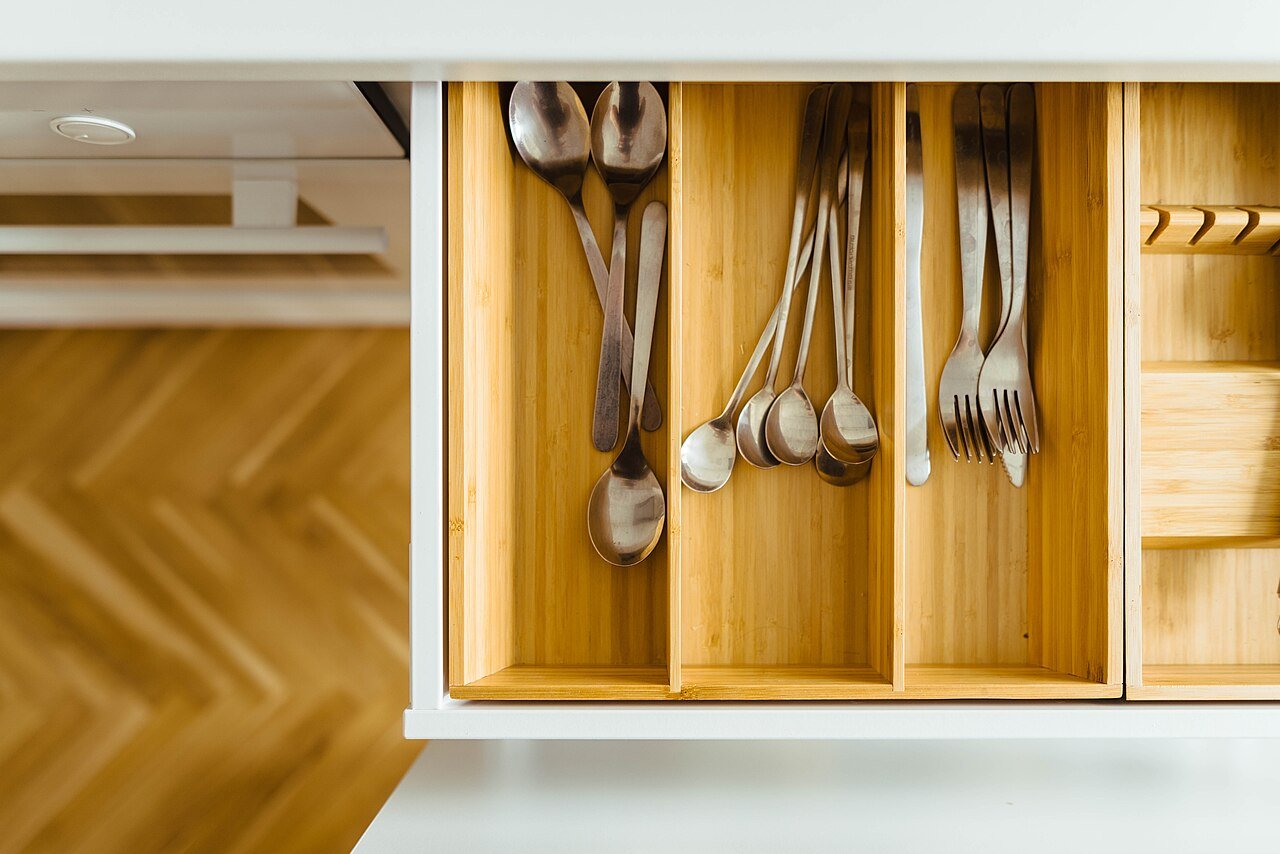
For a drawer of ordinary utensils, a group photograph and a clear description may be a sensible first record. The Insurance Information Institute’s undated inventory brochure suggests grouping some belongings, including pots and pans, rather than making every small item a separate entry. Record the scope of your group. A distinctive or important object can still have its own row, linked to the wider group photograph.
Keep purchase evidence understandable
When a receipt covers several objects, preserve the full document and note which item or line your row refers to. Avoid creating several unexplained copies. Use one filename and refer to it from each relevant row. If you add a close-up for readability, retain the original as well. A short note explaining the relationship can save a later reader from reconstructing your filing choices.
Label amounts according to what they represent. A recorded purchase price, an old appraisal and a current estimate are different information. If you include an estimate, attach its date and basis. Keep private records private and share only the documents needed for the particular purpose. There is no need to put bank-account identifiers or identity documents in the belongings list to make a chair or appliance findable.
Test the copy you would rely on
Both the Iowa regulator and the Insurance Information Institute recommend keeping an inventory copy away from the home. Choose a destination you can access if your normal device is unavailable. Include the index and the evidence files it references. A list that points to photographs stored only on a lost phone leaves a gap in the record.
Test the arrangement with one item. Open the copied index, choose a row, and find its photograph and supporting document from that copy. If you use spreadsheet hyperlinks, check them from the backup location; a link that works on your usual computer may depend on that computer’s folder paths. Plain filenames in the row provide another way to find the files. Record when you performed the test.
Update when belongings change
Add a new item while its identifying information and purchase evidence are at hand. When you sell, donate or replace an object, mark the old row accordingly so the current list remains understandable. Check that the copy away from home includes the change. A simple update note can say which room or item was reviewed and what remains outstanding.
Moving is another useful checkpoint. In its December 1, 2015 consumer article on moving, the National Association of Insurance Commissioners recommends an inventory before the move as a record of possessions. For your own working list, record packed or moved locations separately from permanent room names. After unpacking, check the rows you used rather than assuming the earlier photographs describe the new arrangement.

Finish with a retrieval check
Your first session can end with one room indexed, its photographs named, its missing details queued and one copied record successfully opened. That gives you a repeatable process for the next room. Keep the unfinished queue visible and use the same identifiers consistently. The practical test is simple: choose a belonging and see whether the record lets you identify it and retrieve the files without searching through every folder.