


Technology
How Heat Pumps Move Energy—and Why the Whole System Matters
Follow the energy through the refrigerant, the building and the meter to understand what a heat-pump performance number actually means.
An outdoor unit is only the beginning
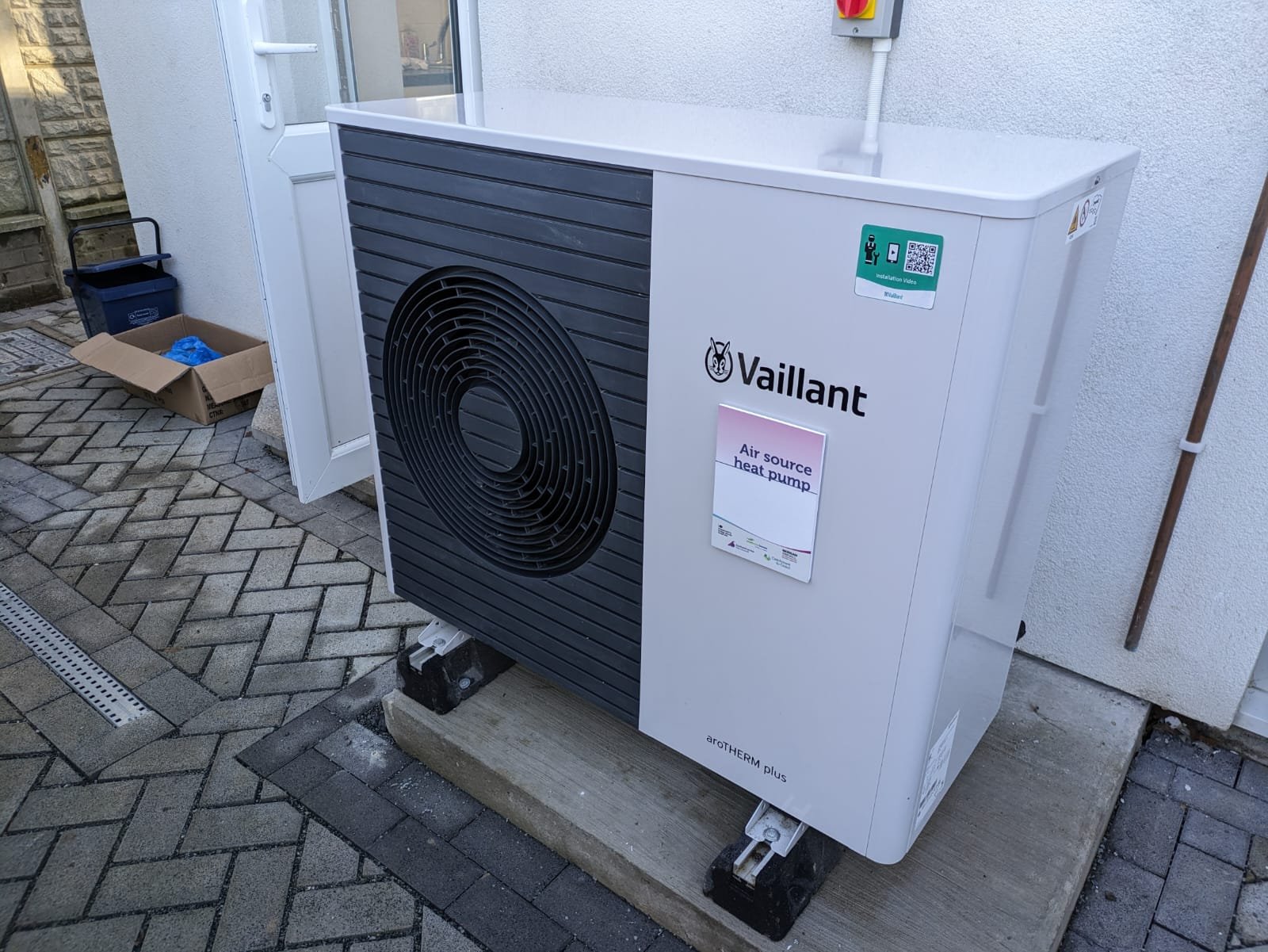
A fan grille and a pair of pipes can conceal an important distinction: a heat pump uses electricity to move thermal energy, rather than converting that electricity into every unit of heat it supplies. Understanding the energy path explains both its capability and the questions that a specification sheet cannot settle on its own.
Three questions belong together. How does the machine transport heat? Can the installation supply enough heating for the building? What does a stated performance ratio actually count? This is an explanation of established technology, drawing on thermodynamics, the International Energy Agency’s 2022 account and European guidance and field research published in 2025. Those source dates are not new October 2026 measurements. The photographs illustrate equipment and settings; we did not test the pictured installations.
Follow the refrigerant around the circuit
In a conventional vapor-compression heat pump, a refrigerant circulates through a sealed circuit. At the heat-collecting side, it absorbs energy as it evaporates. The compressor does work on the vapor, raising its pressure and temperature. At the heat-delivering side, the refrigerant releases heat and condenses. A pressure-reducing device prepares it to return to the lower-pressure part of the circuit. The cycle repeats.
The names evaporator and condenser describe those changes of state. A fan moves air across a heat exchanger; it is not the whole heat-pumping mechanism. In an air-source heating system, the outdoor exchanger collects energy from the air. Heat can then be delivered to indoor air or a water circuit, depending on the installation. The IEA’s explanation is a useful introduction to these routes.
Cold air still contains thermal energy. If the collecting exchanger is colder than that air, energy can pass into the refrigerant. The compressor supports the work of moving energy toward the warmer destination. This explains why cold weather does not make the principle disappear. It does not promise unchanged output or performance at every outdoor temperature.
Why the heat output can exceed the electrical input
For a simplified cycle, conservation of energy gives a straightforward balance: heat delivered to the warm side equals heat collected from the source plus work input. OpenStax’s thermodynamics treatment sets out this relationship. The source belongs in the account; omitting it makes ordinary energy conservation look like a contradiction.
Take an explicitly hypothetical example: one unit of work helps transfer three units of heat from the source, so four units reach the warm side. The heating coefficient of performance, or COP, is four divided by one: four. This is an illustration of the definition, not a rating for the photographed machines.
COP describes a ratio for a defined operating point or period. It does not state how much heating is available. A system delivering six energy units using two input units and another delivering three using one both have a ratio of three, but the first supplies twice as much heat. Specify whether the quantities are energy over a period or power at an operating point before comparing them.
Temperature lift makes the building part of the technology
The job depends on both the source and the temperature needed at the destination. A thermostat’s room setting does not fully describe it: the system may need to supply water or air at a different temperature to maintain that room. The refrigerant and surrounding fluids also exchange heat across temperature differences, so their temperatures are not interchangeable.
For a water-based system, radiators or floor heating affect the delivery temperature required for comfort. The European Commission’s December 2025 guidance explains that hydronic heat pumps work more efficiently when they can deliver warm rather than very hot water. Insulation and suitable emitters can help reduce that requirement. The guidance does not prescribe one flow temperature for every building.
This is why a larger COP in a table is not necessarily a better answer to your design question. Record the source and delivery conditions beside each figure. Two entries measured at different temperatures may describe different jobs. Ask whether the stated heat output, at the intended conditions, matches the building’s assessed demand.
A machine must meet changing demand
Maximum capacity is only part of the specification. Heating demand changes with weather, internal gains and schedules. Equipment that can modulate output still has an operating range. Its minimum output and control behavior can matter during milder periods, when the building needs less heat.
A building’s heat loss and its distribution system should therefore inform the equipment choice. Floor area or age alone cannot supply every design input. Nor can a brief controller screenshot diagnose repeated starts: timing, run duration, temperatures and the service being provided belong in the record. Space heating and domestic hot water are different tasks, even when the same machine supplies both.
What a field study adds—and what it does not
Fraunhofer ISE’s HP-QA project page identifies 2024 as its main evaluation period. In that period, 49 air-source systems achieved seasonal performance factors from 2.6 to 4.9, averaging 3.4. The broader research pool contained 77 systems; it should not be mistaken for the denominator of that particular result. The institute announced the project’s findings on November 3, 2025.
The project recorded electrical consumers and hydraulic energy, flow and temperature data. It identified opportunities involving oversizing, switching frequency and the interaction between the heat pump, storage and heat delivery. This provides a useful contrast to a single product rating: real installations produced a spread of outcomes. It supplies neither a guaranteed result for another home nor a performance measurement of the units in these photographs.
To use a field result responsibly, retain the setting, period and measurement boundary. Compare them with the question you are asking. A favorable endpoint in a range is not a prediction simply because it would make an attractive sales claim.
Draw the measurement boundary before reading a number
A whole-home electricity bill includes lighting, cooking and other uses. It cannot by itself give a heat-pump COP, because it does not separately establish the relevant electrical input and useful heat delivered. An electricity-use observation and a performance ratio answer different questions.
For a system result, identify where heat was measured and which electrical consumers were counted. Did the denominator include circulation, controls and supplementary heaters? Did the numerator include both space heating and hot water? Were the quantities independent meter readings, controller estimates or calculations? Preserve those labels when sharing the figure.
A seasonal factor uses energy totals over its stated period and boundary. It is not generally an unweighted average of COP snapshots. For an original hypothetical example, one period delivers nine energy units using three input units; another delivers one using one. The combined ratio is ten divided by four, or 2.5. Averaging the separate ratios, three and one, gives two and answers a different mathematical question.
Weather is context, not a diagnosis
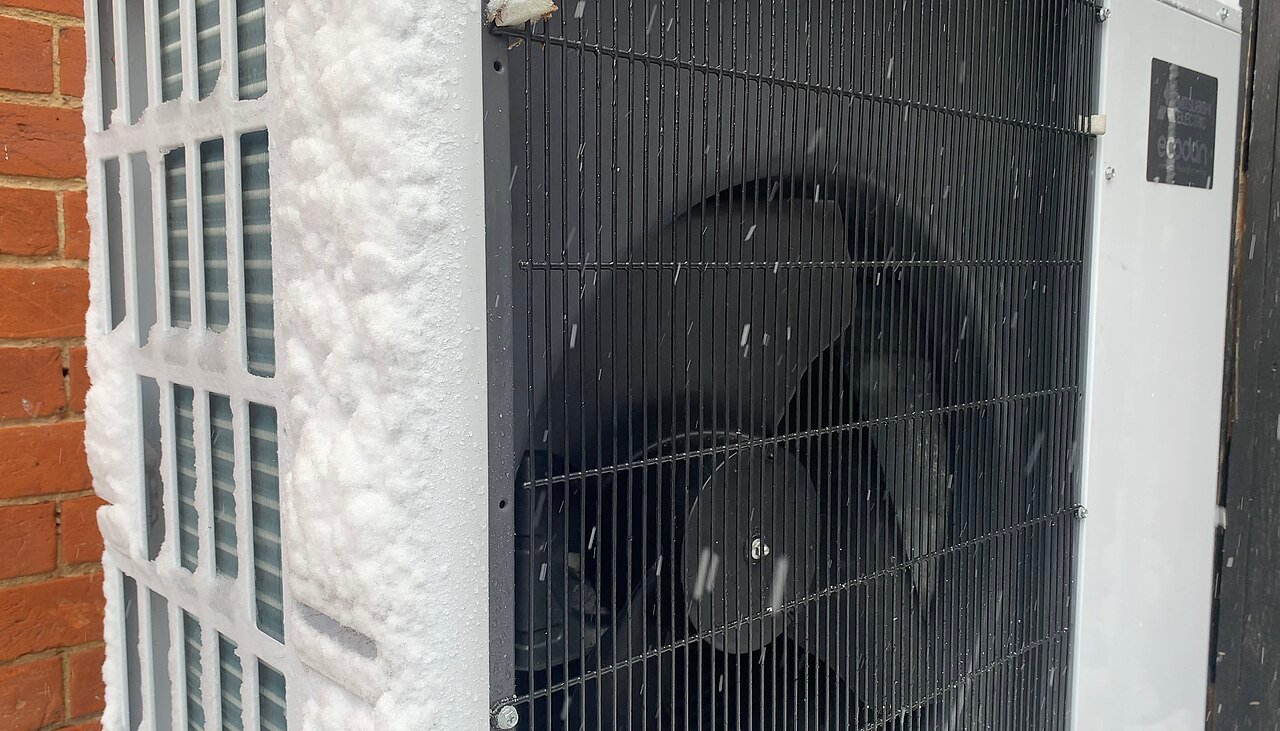
The snow photograph gives a setting, not a temperature series or efficiency test. A cold-weather claim should say whether it describes an operating limit, measured capacity, a ratio at specified conditions or a complete building design. Those are different pieces of information. Knowing that equipment can operate at a temperature does not establish how much heat it supplies there.
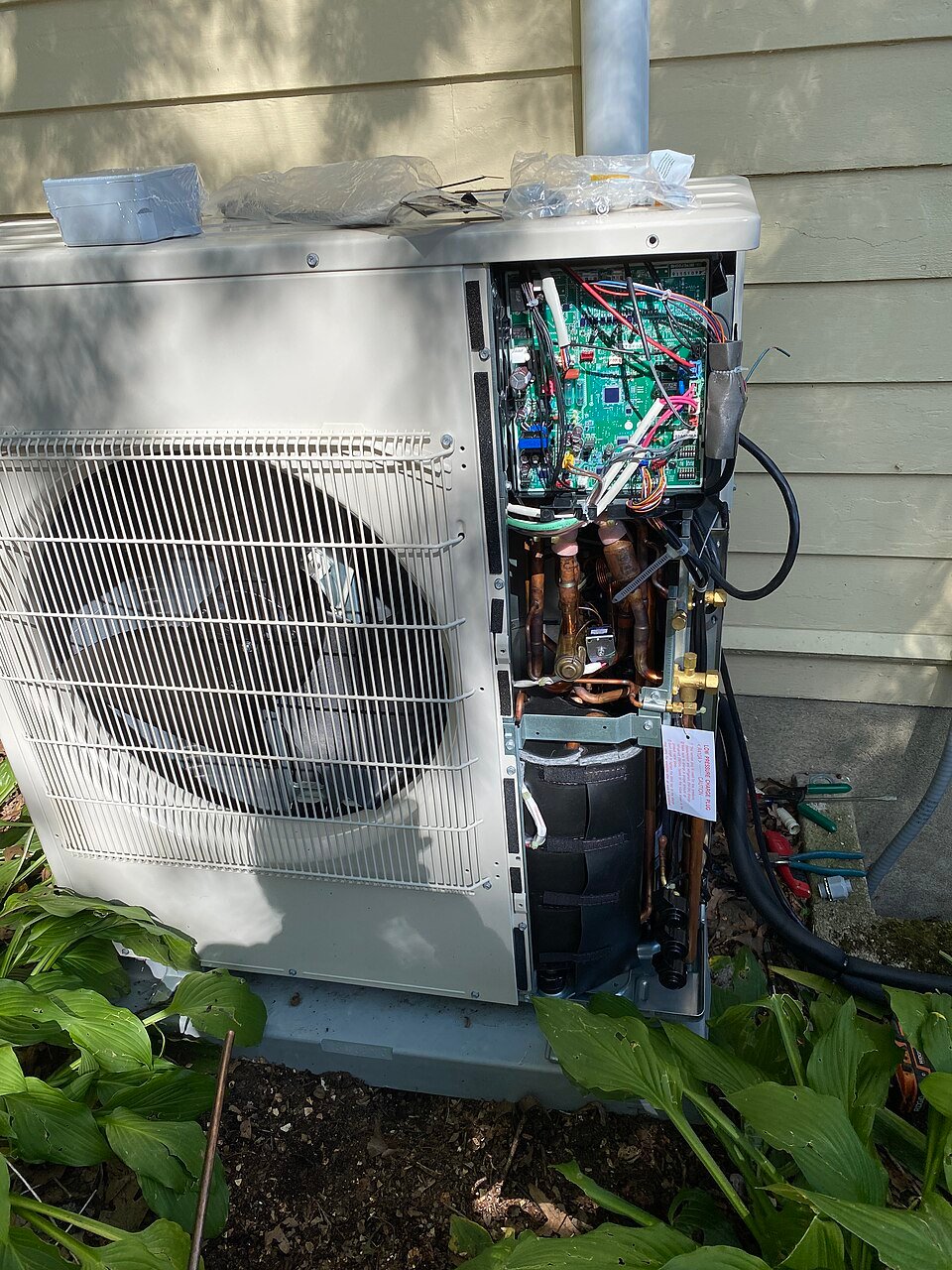
Likewise, a visible pipe or service-panel photograph cannot establish refrigerant pressure, charge or equipment condition. Preserve model identification, manuals, dated service records and relevant controller messages. Internal electrical and refrigerant work belongs to qualified service. Clear observations help that process without pretending that an image has diagnosed a fault.
A useful way to read the next specification
Start with the service: heat source, air or water delivery, and space heating or domestic hot water. Then record the conditions, available capacity, measurement period and included consumers. Finally identify the evidence: standardized rating, operating observation, seasonal field result or estimate. These fields reveal whether two appealing figures can fairly be compared.
If you want to compare running costs, an energy ratio is only one input. Use dated local tariffs and equivalent delivered-heat boundaries, and distinguish operating cost from installation or lifetime cost. The Commission’s discussion explicitly depends on local electricity and fuel prices; a regional example is not a household bill forecast elsewhere.
Keep a short comparison note with the source link, date, equipment or study, conditions, period, heat output and input boundary. Leave a field blank when the source does not supply it. That blank identifies the next question to ask. The refrigeration cycle explains how heat moves; the building defines the job; the meters and definitions explain the result. Reading all three together is more useful than treating one large performance number as the whole system.