

Science | Earth Processes
How River Pebbles Lose Their Corners
Repeated impacts can round a stone before a ruler records much shortening. Shape and size tell different parts of its story.
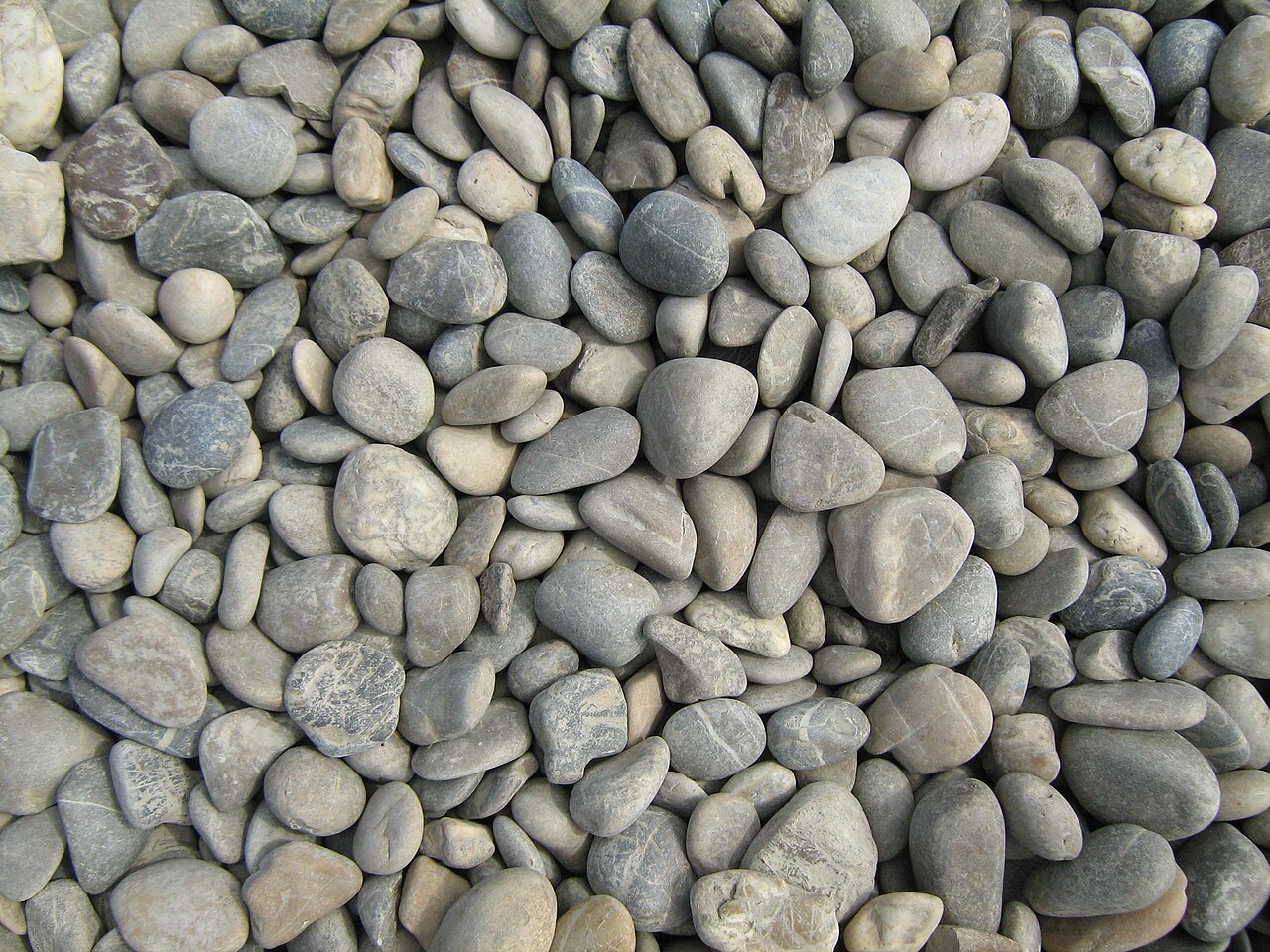
As stones move along a riverbed, collisions and rubbing wear them down. Abrasion can remove exposed corners and edges, leaving a rounder outline. That change does not require a pebble to become a ball.
What a rotating drum revealed
In a 2014 PLOS ONE study, Gábor Domokos and colleagues tested four oolitic-limestone blocks separately in a one-metre rotating drum. A paddle lifted and dropped each block. Photographs, mass measurements and three perpendicular lengths tracked the changing stones.
- Rounding first: corners and edges rounded while the measured lengths changed little, even though material was being lost.
- Shortening later: after the original flat faces disappeared, the lengths shortened as abrasion continued.
The experiment isolated collisions with a large surface. Its two-stage pattern is not an exact timetable for every natural pebble. Rounded stones can still be elongated or flattened.
Different rocks, different histories
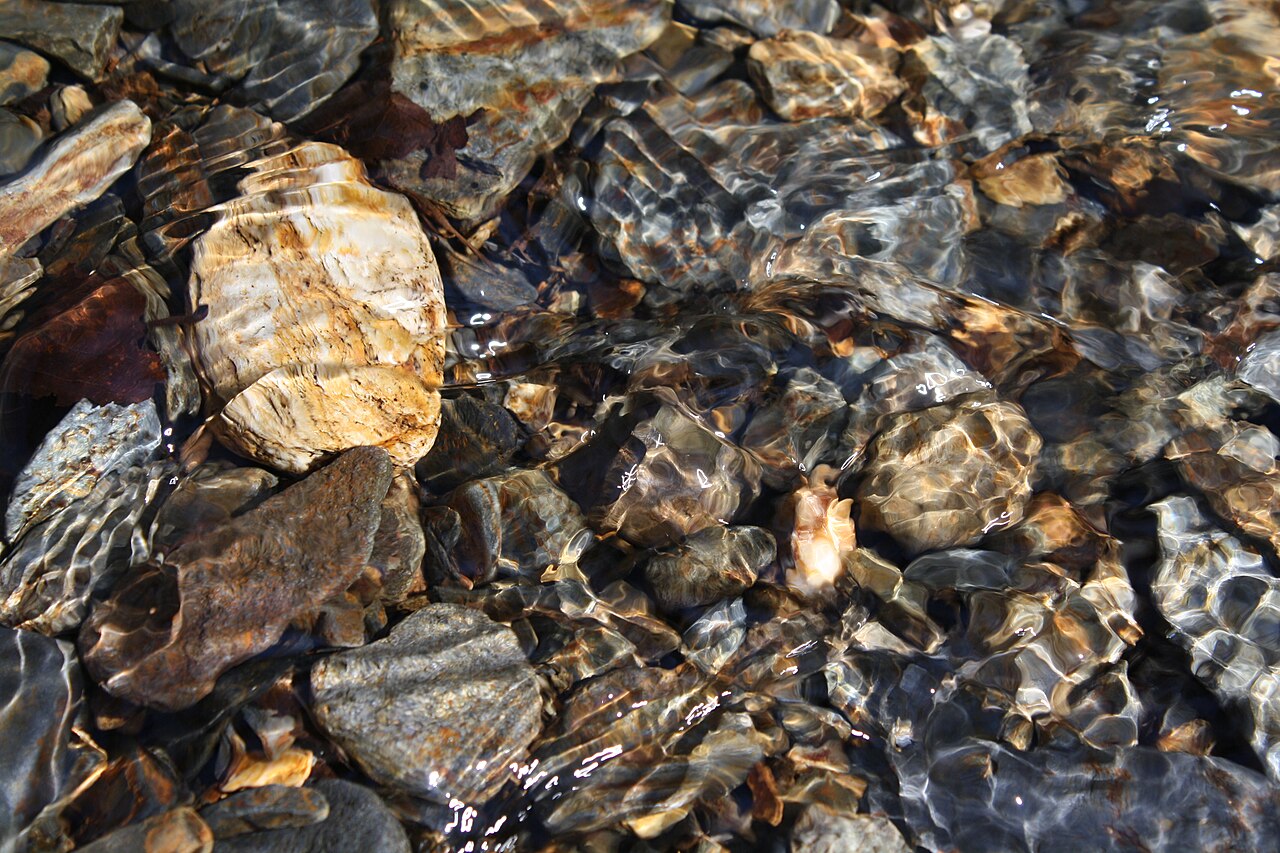
A 2024 field study in two Himalayan catchments examined granite and quartzite pebbles in Nepal. Their fitted rounding rates differed by rock type. Pebbles at similar downstream distances could also have different outlines, so position alone did not determine their shape.
The researchers highlighted uncertainty about starting roundness and the assumptions used to reconstruct past transport. Some stones can inherit rounding from an older deposit before entering another river. A rounded outline therefore need not record just one uninterrupted journey.
Can shape reveal the distance travelled?
It can help, with calibration. A 2015 Nature Communications study linked pebble shape to fractional mass loss, then used an abrasion coefficient to estimate transport distance. The coefficient had to be reasonably constrained. The inference came from a model and supporting assumptions, rather than a universal conversion from roundness to kilometres.
A clue you can read carefully
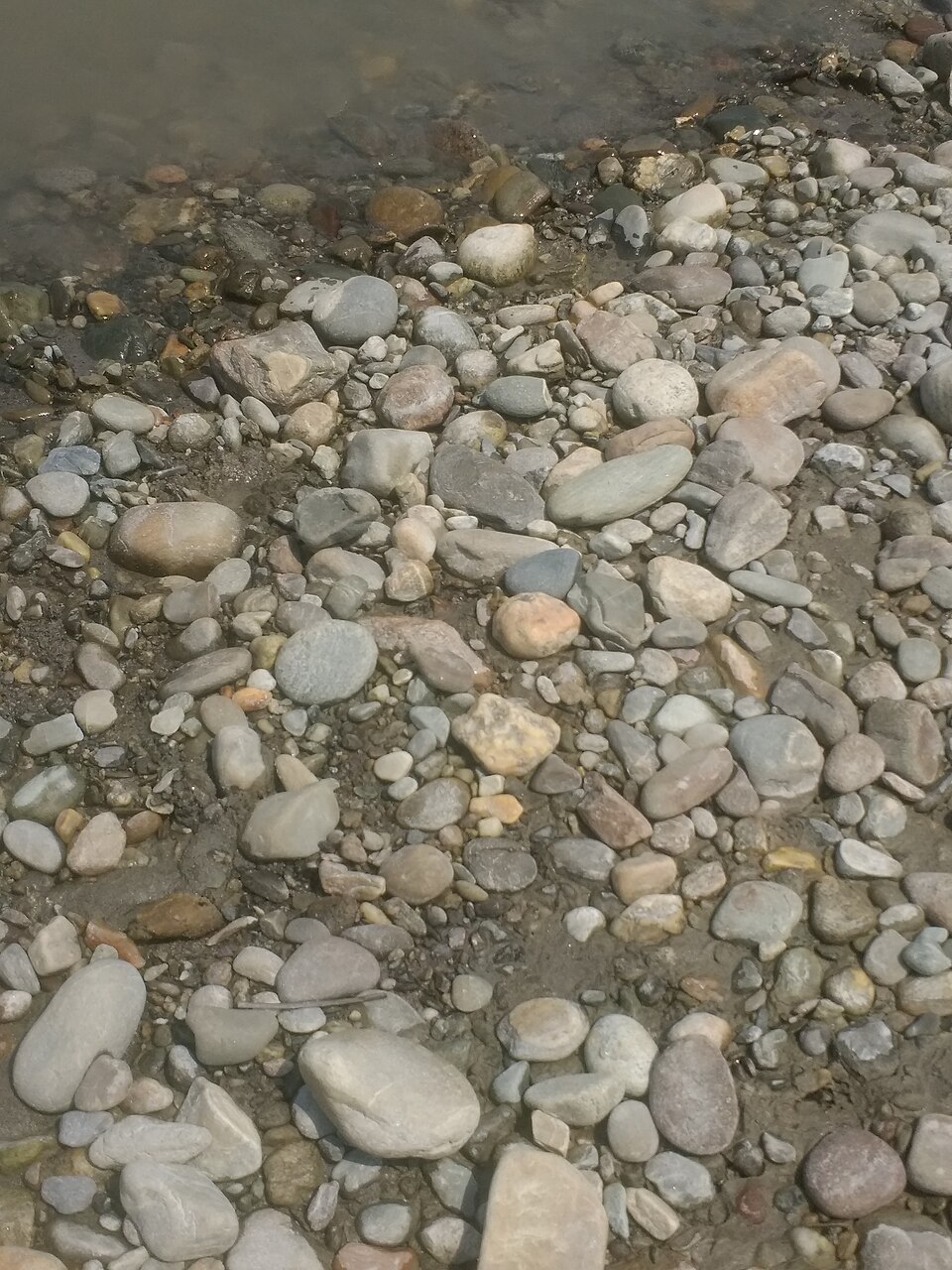
The photographs show why outline and overall form are worth separating: many stones have softened edges but remain flat or long. They illustrate the subject, not the experiments. Without a known starting shape and suitable calibration, these pictures cannot supply a travel distance or an age.
Sources and photograph notes
Checked October 15, 2026. This explanation draws on published research; the three photographs are illustrative, and no OnelROR experiment is claimed.
- Domokos et al., PLOS ONE — February 12, 2014; controlled rounding experiment and geometric models.
- Pokhrel et al., Earth Surface Dynamics — April 17, 2024; Himalayan field data. The October 10, 2024 corrigendum corrects a printed equation; the authors state that results are unchanged.
- Szabó et al., Nature Communications — October 13, 2015; model-based transport reconstruction.