


ONELROR · BUYING GUIDE
Osprey Daylite 13L: Choose a Small Daypack by What You Carry
A compact daypack makes sense when your everyday load stays compact. Here is how to judge the Osprey Daylite’s 13-liter capacity, check the fit and decide whether its simple layout matches your routine.
OnelROR Editorial Team · October 18, 2026 · 4 min read
Our recommendation: start with your actual load
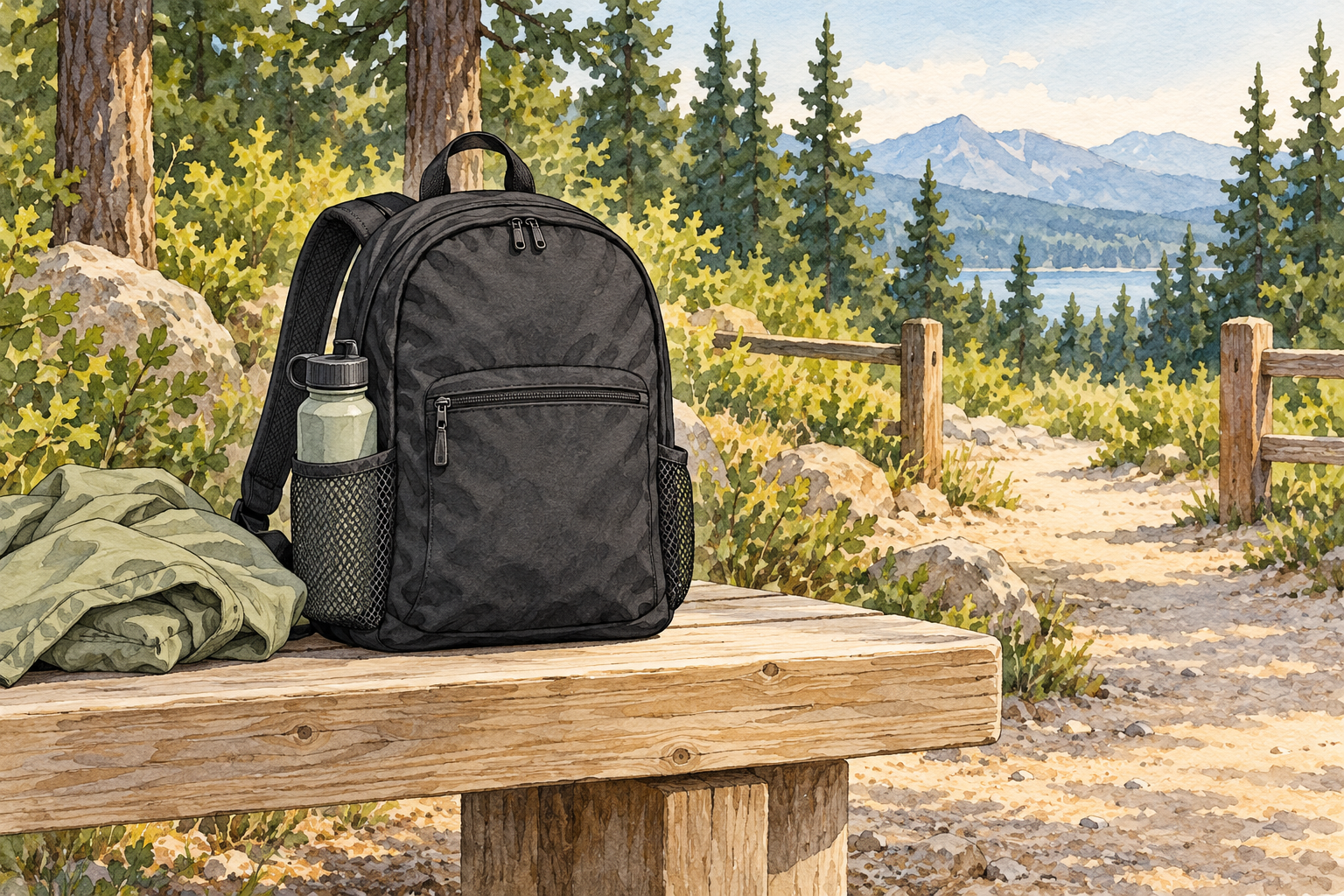
The Osprey Daylite is worth considering for errands, a light commute or a short outing when you want a small bag rather than spare space for everything. We recommend it conditionally: choose it if your essential items fit comfortably and the harness works for your body. Choose more capacity if a bulky lunch, extra footwear or several thick layers are regular requirements.
This is a buying assessment based on published specifications and practical selection criteria. OnelROR has not carried or tested this pack. The illustrations show generic daypack concepts, not the exact product, its contents or a field test.
Know which Daylite you are comparing
Osprey’s Daylite product page, checked October 18, 2026, lists a 13-liter capacity and dimensions of 43 × 26 × 20 cm. Its panel-opening main compartment, side compression straps, two mesh bottle pockets and front organizer with a key clip support a simple everyday layout. The interior sleeve is multifunctional; a sleeve listing does not establish that your particular laptop and protective case will fit.
On Amazon, the black Daylite Commuter listing is identified by ASIN B08LP148YT. Match the name and selected variant when you open it. Similar Daylite family names can describe different capacities and pocket arrangements. Compare the exact item rather than assuming every photograph or color option represents the same configuration.
Make a packing check before you buy
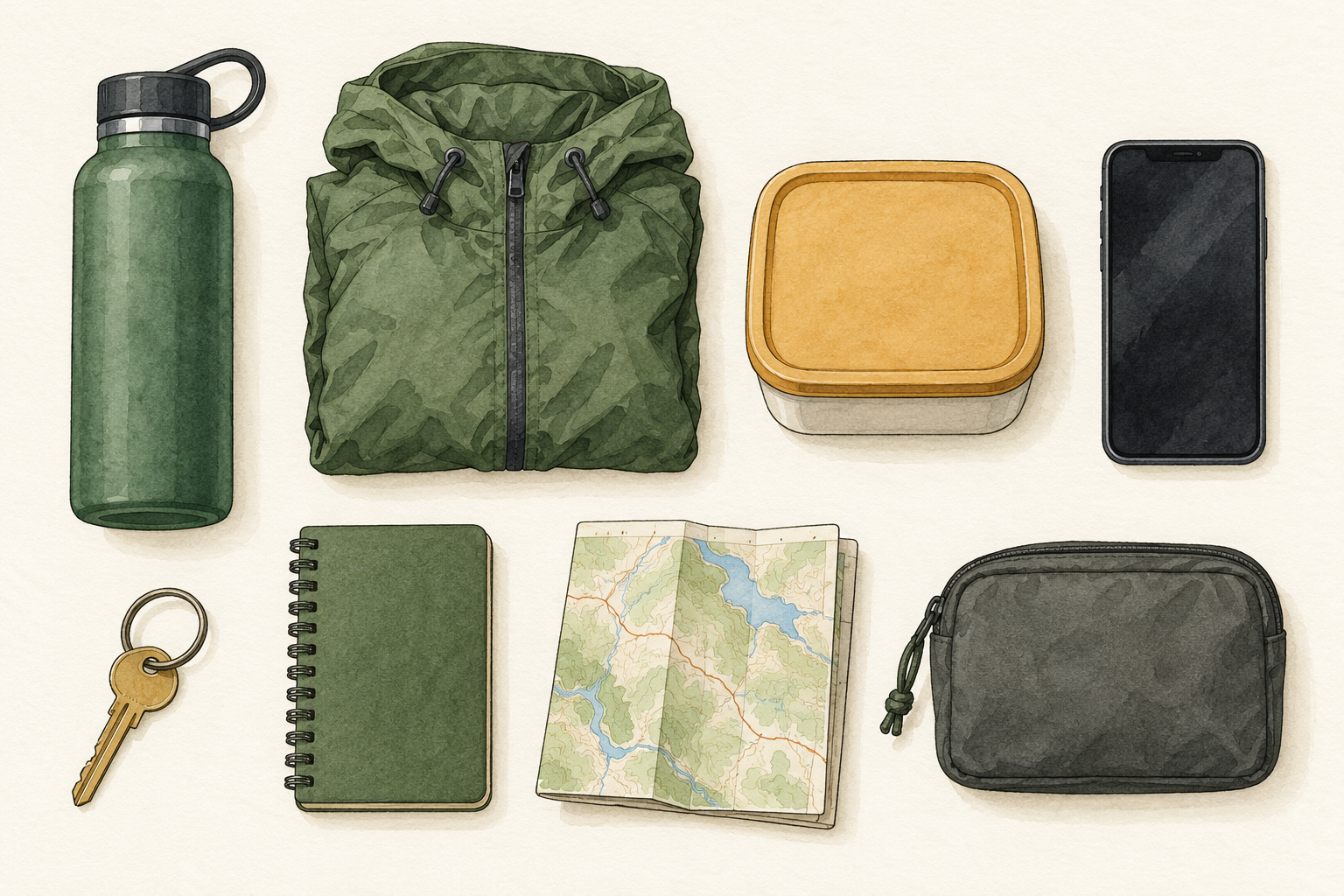
Lay out what you actually carry on a normal day: your filled bottle, lunch container, folded layer, keys, wallet and any work essentials. Add the items you need on your busiest typical day. An empty bag that looks neat in a product photograph can still be the wrong shape for a rigid food box or a padded device case.
- Check bulky objects first. Measure your largest rigid item, including its case. Exterior bag dimensions are not the dimensions of every internal pocket.
- Leave working space. You should be able to close the zipper without forcing it and retrieve an item without emptying the whole bag.
- Check bottle access. Compare your bottle’s shape with the pocket and check retention while moving; do not assume all bottles fit equally well.
- Separate wet and valuable items. Use suitable protective storage for electronics rather than treating a fabric backpack as a waterproof container.
Fit matters more than a capacity number
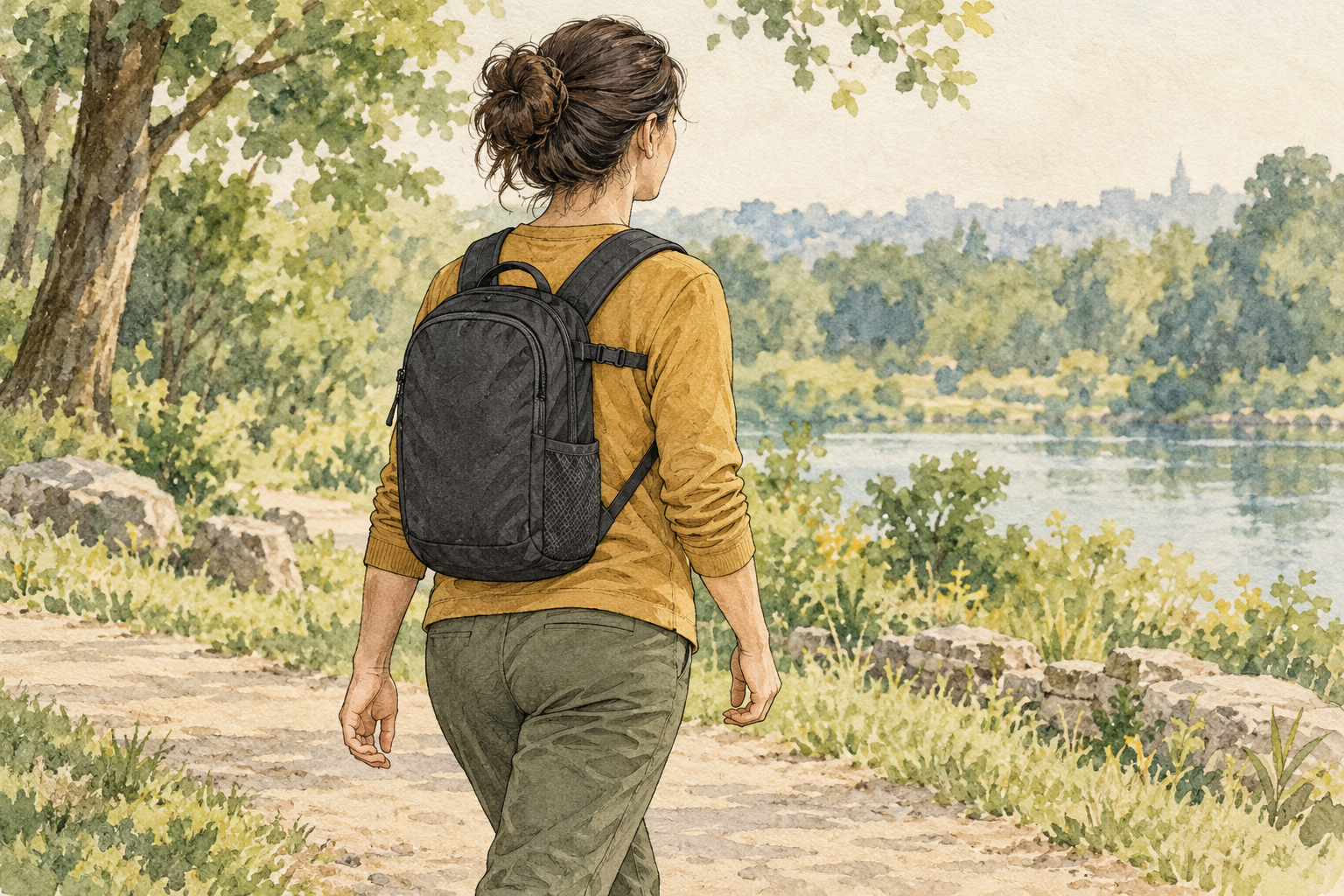
Osprey’s size and fit guide emphasizes that body shape varies and not every pack fits every person. Try the bag with a representative load when possible. Wear both shoulder straps, adjust them evenly and check that the bag stays close without pulling uncomfortably at your neck or shoulders.
Walk, turn and reach as you would during your routine. If you keep changing your posture to accommodate the bag, reconsider the fit. A small bag should solve a carrying problem, not require you to pack around a poor harness match. Use the seller’s stated return conditions when judging whether you can evaluate fit properly.
Choose the outing before choosing the bag
For a trail trip, make your equipment plan independently of the bag’s volume. The National Park Service’s Ten Essentials covers navigation, extra clothing, lighting, first aid, food, water and emergency supplies, with additional needs depending on the activity. Its guidance was updated May 28, 2026. Check your destination, forecast and route, then confirm the complete necessary load fits. Do not omit essential equipment just to make 13 liters work.
The buying decision
Put the Daylite on your shortlist if you value a compact footprint and straightforward organization, and your usual load passes the space and fit checks. Pass if you need a rigidly structured work bag, substantial expansion room or guaranteed compatibility with a specific device. The useful purchase is the bag that carries your routine comfortably, not the smallest bag you can force shut.


