
Curiosity | Plant Anatomy
The Tiny Fruits on a Strawberry’s Surface
Small dry fruits cover a fleshy flower base. A strawberry’s anatomy makes sense when you follow how its flower develops.
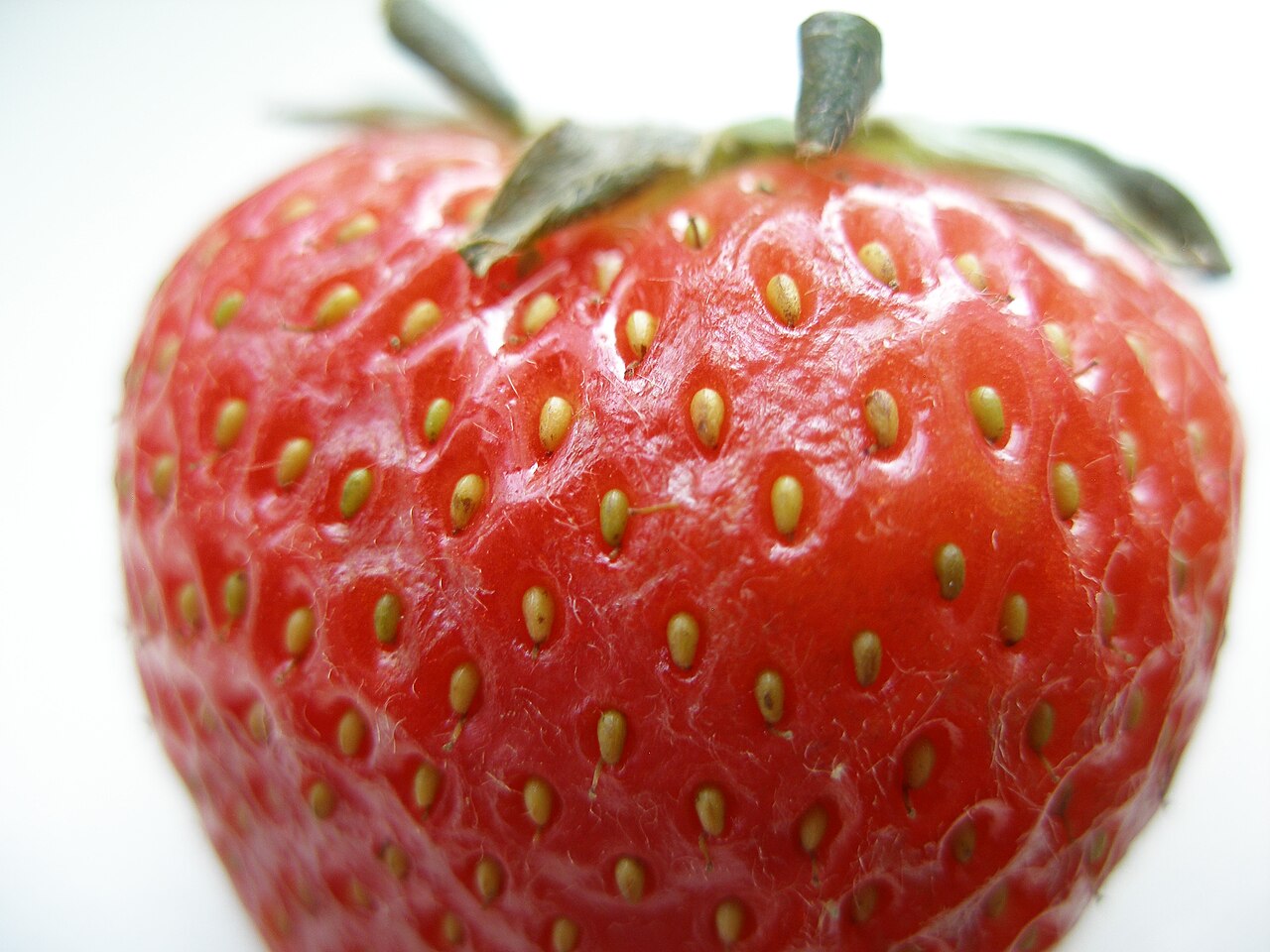
A seed inside a tiny fruit
The pale dots in a strawberry’s dimples are called achenes. Each is a small botanical fruit of the one-seeded type, with a seed enclosed by a dry fruit wall. That outer wall is part of what you see on the surface.
The University of Sydney’s botanical glossary defines an achene as a dry fruit that stays closed at maturity. Its seed is separate from the surrounding fruit wall. “Dry” describes this little fruit, even though the much larger structure carrying it is juicy.
One flower, many ovaries
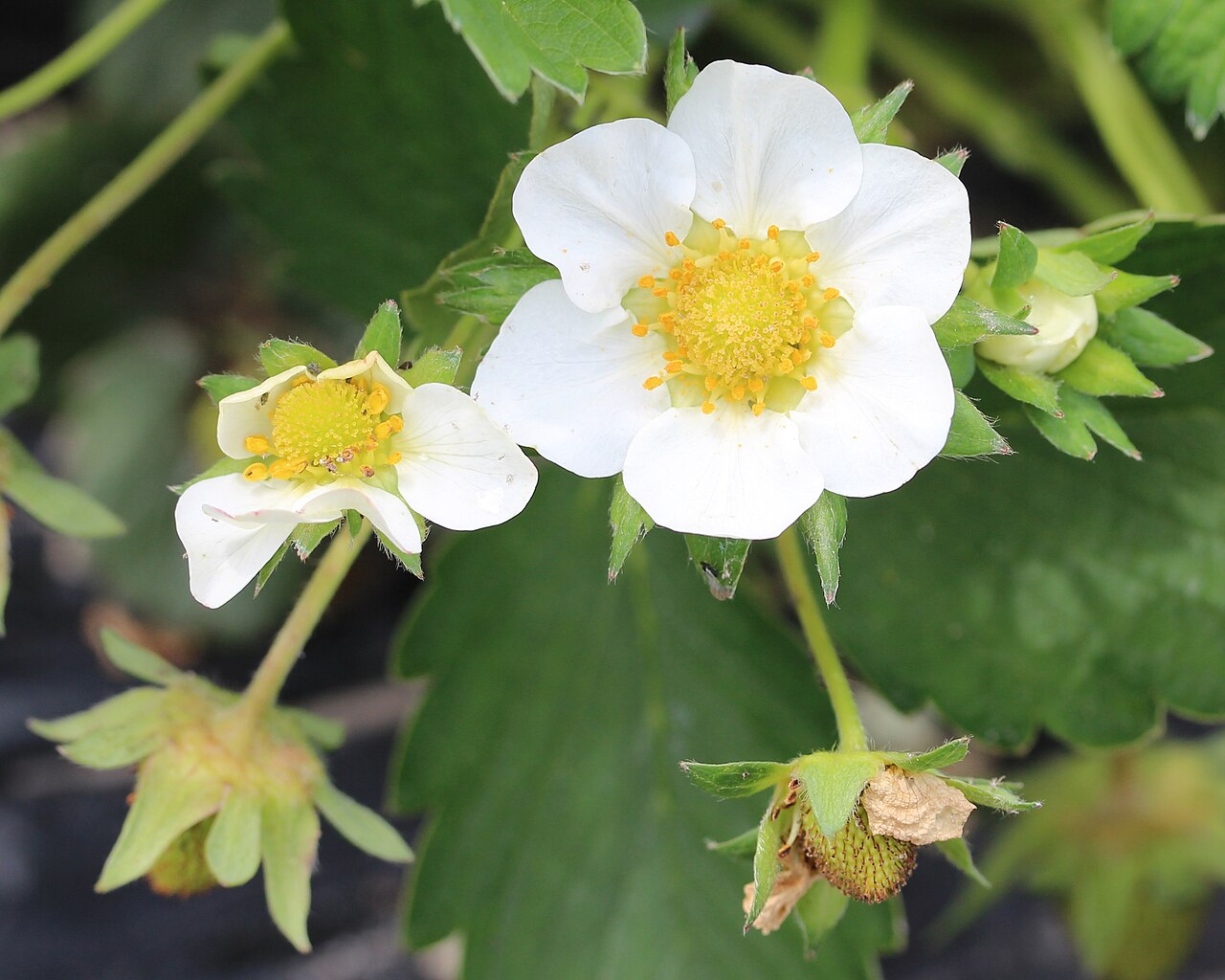
A strawberry flower has numerous separate carpels, the reproductive structures that contain the ovaries. They sit together on a common receptacle: the flower’s supporting base. Within the ovaries, fertilized ovules develop into seeds.
The University of Illinois’ flower-to-fruit account follows the two developments side by side. Each carpel matures into an achene, while the shared receptacle enlarges and becomes fleshy. This explains the arrangement: many small fruits remain on the outside of the expanded flower base.
What “aggregate accessory fruit” means
Botanists use two complementary labels for the whole strawberry. The University of Minnesota’s horticulture textbook explains them through the tissues involved:
- Aggregate: numerous ovaries from a single flower contribute separate small fruits.
- Accessory: tissue beyond the ovary contributes to the structure. In a strawberry, that is primarily the enlarged receptacle.
The terms describe different aspects of the same development. Aggregate tells you how the small fruits are grouped; accessory identifies the origin of much of the flesh. The familiar strawberry can therefore be described as an aggregate accessory fruit without treating its everyday name as an error.
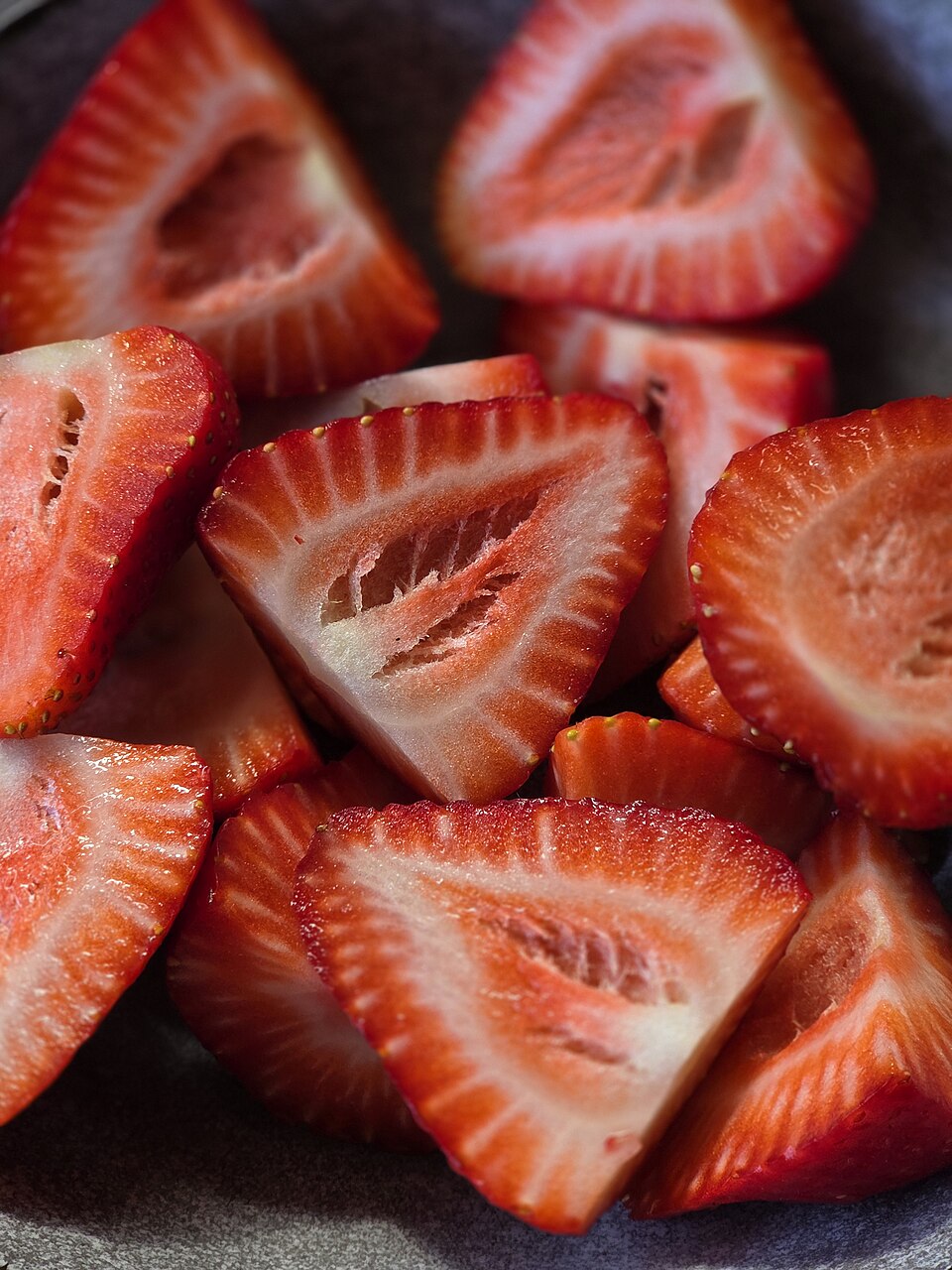
Reading the cut surface
The cut strawberries pictured above show a broad fleshy interior, while the opening photograph shows the separate surface achenes. Together, the views help distinguish the enlarged receptacle from the tiny fruits it carries. The seed enclosed inside an achene is smaller still; these ordinary close-ups do not expose that internal seed.
Sources and photograph notes
Checked October 15, 2026. This source-based botanical explanation includes three illustrative photographs; it does not describe an OnelROR experiment.
- University of Sydney: Achene — undated botanical glossary; dry fruit wall, enclosed seed and remaining closed at maturity.
- University of Illinois: Flower to fruit, Fragaria — undated teaching resource; carpel and receptacle development.
- University of Minnesota: Fruit Morphology — The Science of Plants, book copyright 2022; aggregate and accessory classification.