Curiosities | Venetian Craft
Why a Venetian Gondola Is Not Symmetrical
A gondola’s uneven hull is part of how one gondolier can propel and guide it with an oar working on one side.
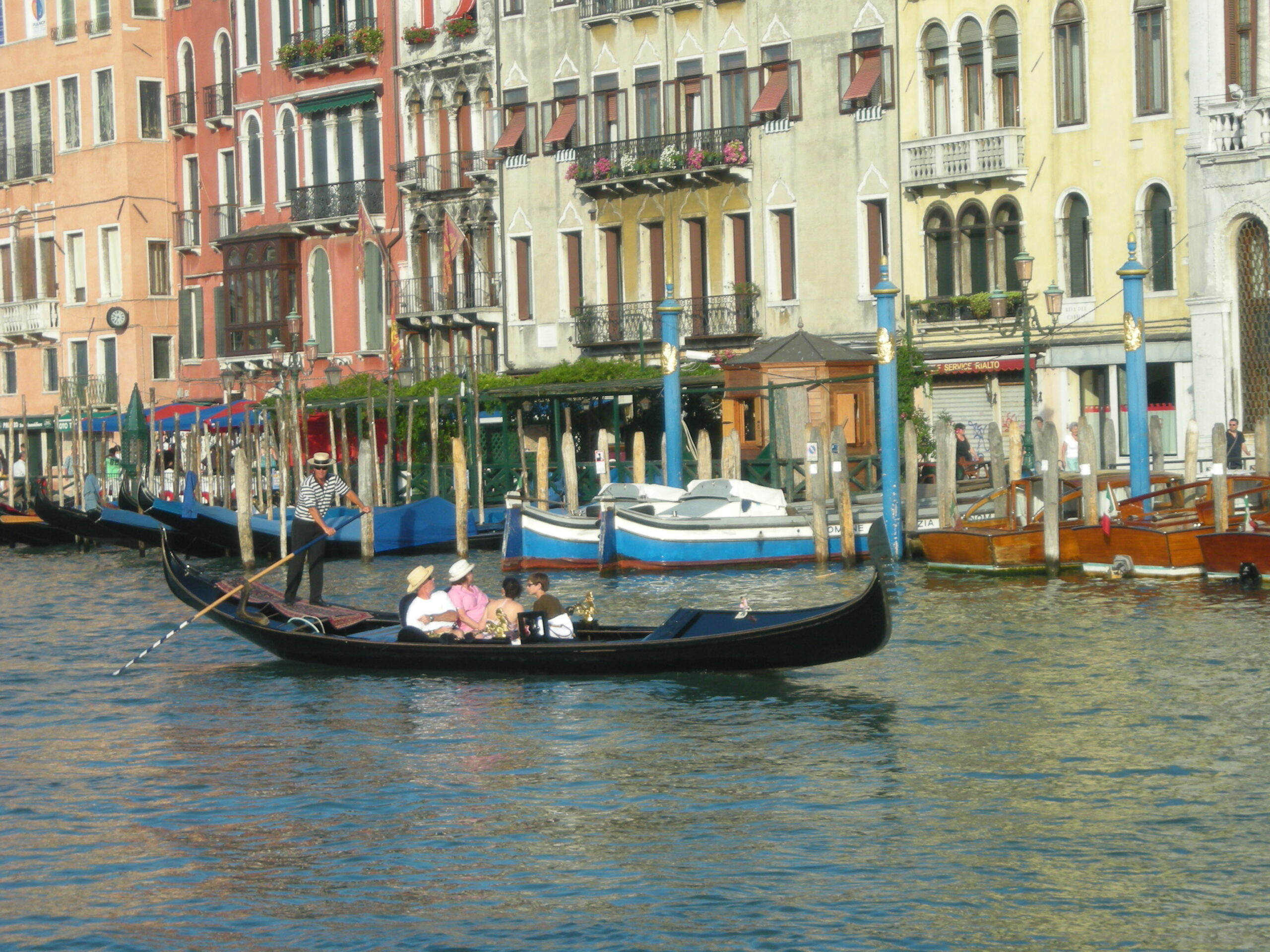
The familiar black gondola is deliberately asymmetric. Facing the bow, its left side is wider than its right. The Museo Nazionale Scienza e Tecnologia Leonardo da Vinci explains that the resulting tilt helps reduce the leftward turning effect produced by a single rower. It is a useful counterbalance, not a substitute for steering.
A hull shaped for its surroundings
The hull’s other conspicuous features also have practical roles. Its flat bottom suits the lagoon’s shallows. The raised bow and stern reduce the area immersed in water, helping the boat manoeuvre through canals.
The museum describes the distinctive asymmetry as becoming established from the final decades of the nineteenth century. The modern outline emerged through a long evolution, rather than arriving as an unchanged design from medieval Venice.
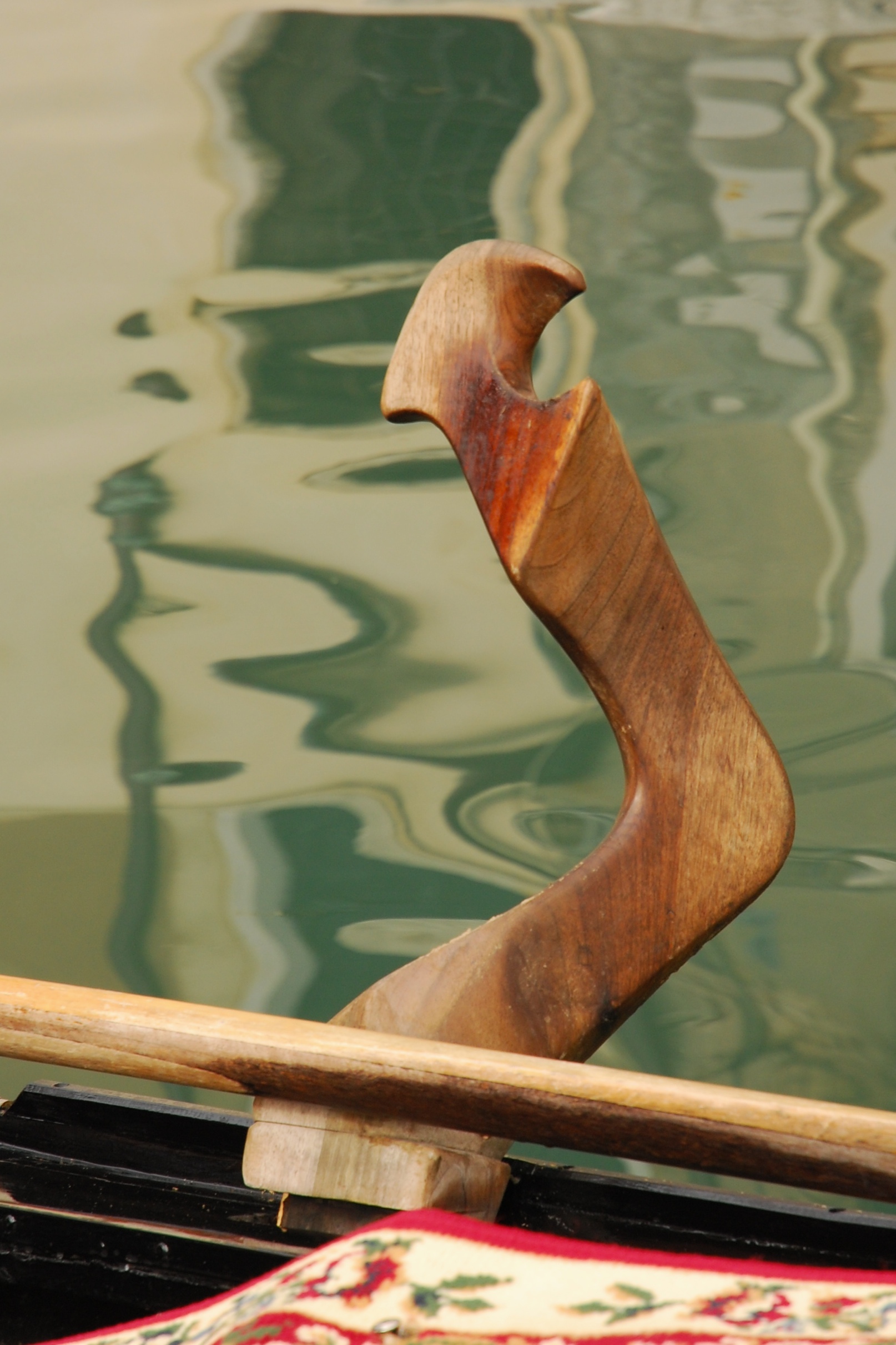
The wooden sculpture beside the rower
The curved wooden post carrying the oar is called a fórcola; the plural is fórcole. Venetian oarpost maker Saverio Pastor explains that different manoeuvres require different oar positions. The post’s sweeping curves provide several places to bear against, rather than simply decorating the boat.
Traditional Venetian rowing is performed standing and facing forward. In narrow canals edged by buildings, that stance gives the rower a better view and helps manoeuvrability. The gondola’s stern fórcola supplies multiple pivot points for controlling the oar during city navigation.
There is no single universal fórcola shape. Pastor notes that its dimensions and form vary with the rowing position, the rower’s build and their technique. The boat and the person using it are parts of the same practical system.
One gondolier is not the only arrangement
The familiar single-gondolier scene does not describe every gondola. Pastor’s catalogue includes types accommodating up to four rowers, with different fórcole for their positions and for ordinary or racing techniques.
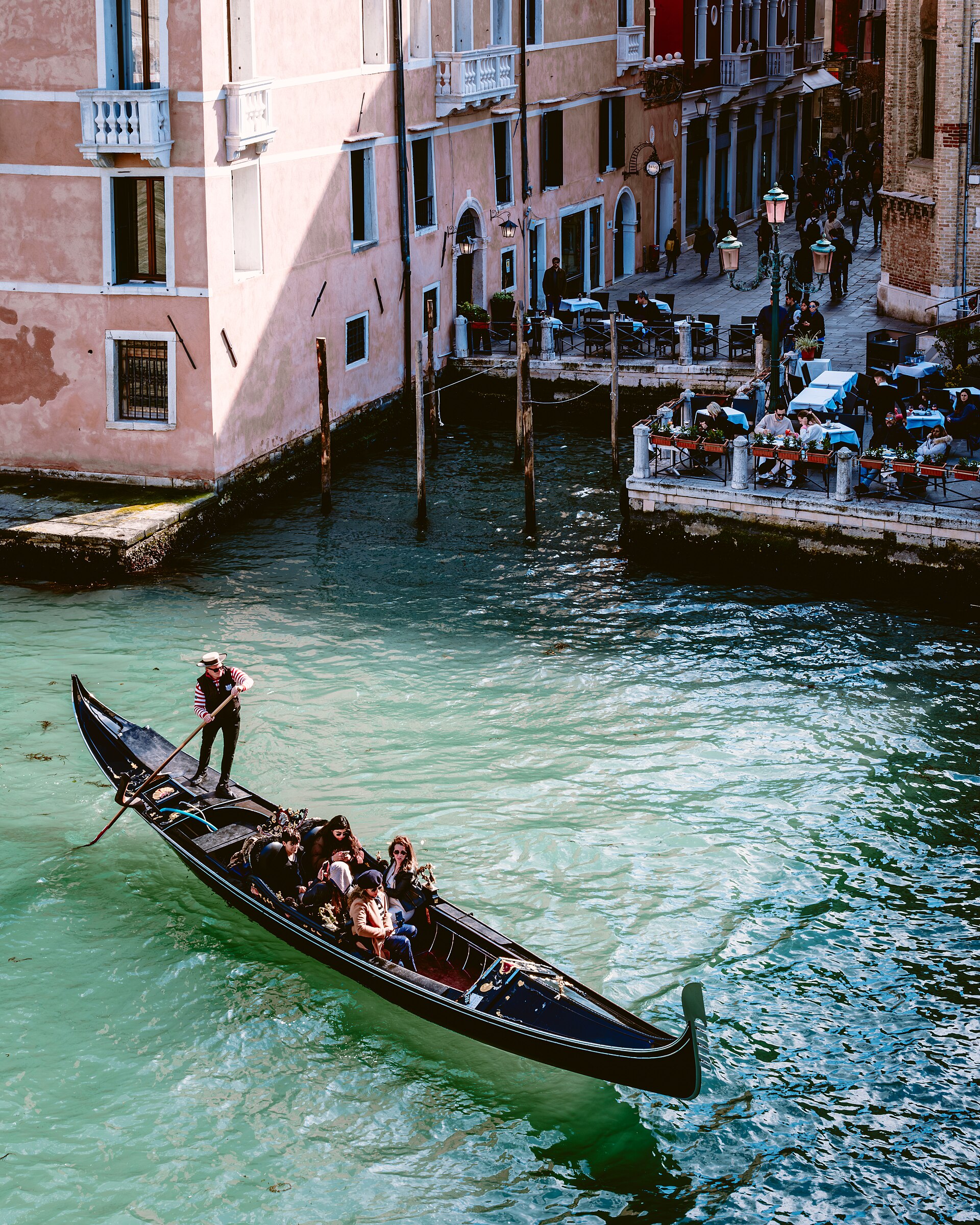
The hull and the sculpted oarpost form a practical partnership, shaped around the way the gondola is rowed.
Sources and photograph notes
Checked October 15, 2026. This explanation uses museum documentation and a specialist maker’s descriptions; the photographs illustrate the boats and equipment.
- Museo Nazionale Scienza e Tecnologia Leonardo da Vinci: gondola veneziana, CMND-3152 — hull form and development.
- Saverio Pastor: What is a fórcola? and Venetian rowing — oarpost and technique.
- Pastor’s catalogue of fórcole — different rowing positions and gondola types.