


Why Old Sidewalks Have Purple Glass—and What It Once Lit

Curiosities · Historic Engineering
Why Old Sidewalks Have Purple Glass—and What It Once Lit
Those small panes underfoot were windows for the rooms below. Their shape, color and repairs reveal different parts of the story.
Opening image: original AI-generated conceptual watercolor, not a photograph or an identified historic location.
A window you can walk past
A row of purple circles or squares in an old sidewalk can look like decoration. In many surviving installations, it is something more practical: a roof made partly of glass. These features are called vault lights, pavement lights or sidewalk prisms. Daylight enters through them and reaches a space beneath the pavement, often a basement extending beyond the building above it. The word vault refers to that below-ground space; it does not mean that every example concealed a bank’s valuables.
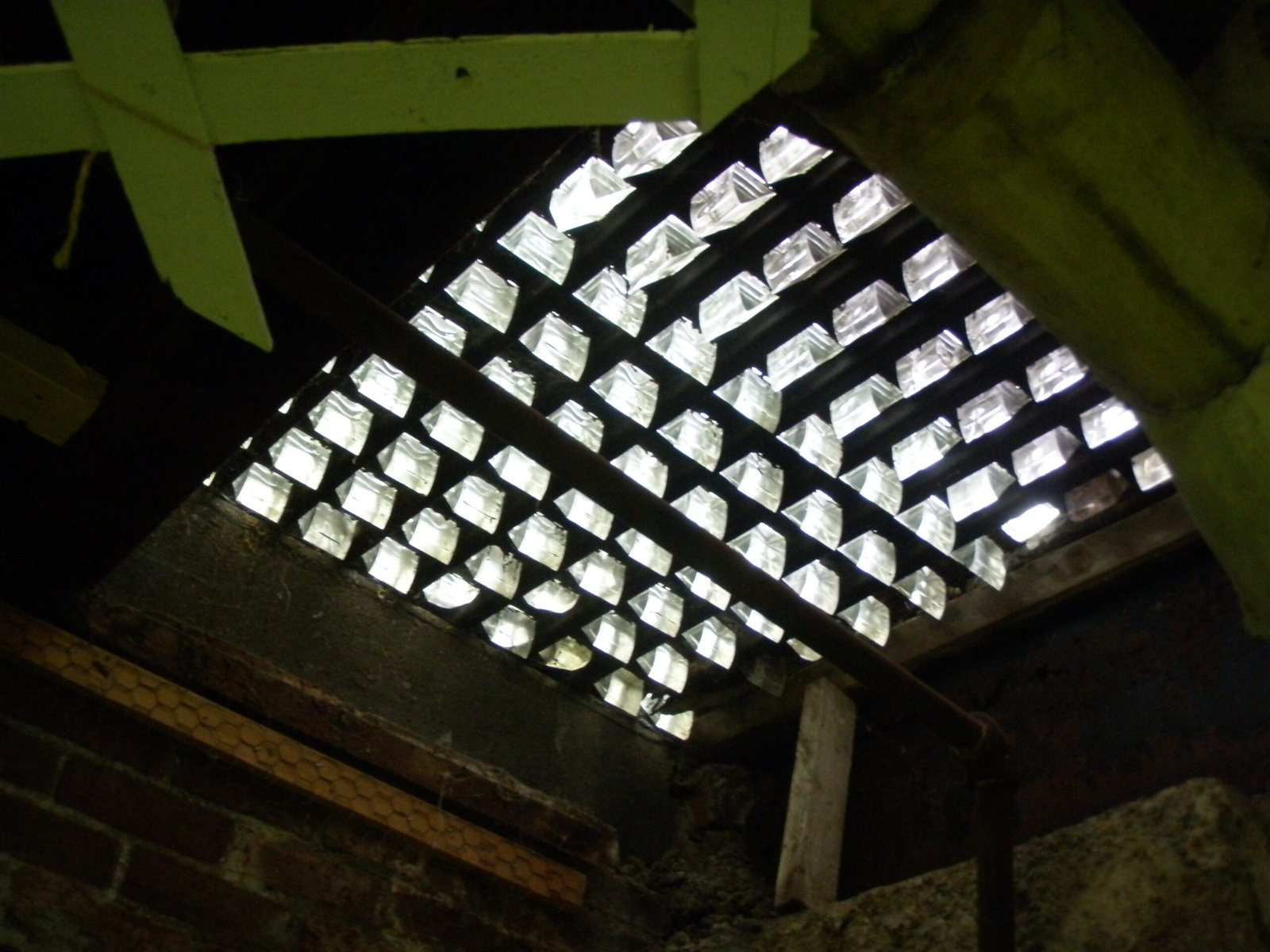
The useful question is not simply why somebody put glass where people walk. It is how a small opening at street level could make the room below more usable. A photograph looking upward from beneath a pavement light in Geneva, New York, offers a helpful change of perspective: what seems like a detail of the walking surface becomes an overhead source of illumination. You are seeing the same assembly from the side where its purpose is easiest to recognize.
This is a historical curiosity, rather than a report of a new discovery. The evidence discussed here includes a National Park Service preservation note published in November 2003 and KQED reporting first published in January 2020, updated in November 2023. Neither date establishes the age of a particular panel you encounter today.
Why the glass was there
The National Park Service traces Thaddeus Hyatt’s cast-iron vault-light patent to 1845. Small lenses fitted into modular iron panels allowed daylight to enter below street level. The system became common during the second half of the nineteenth century, alongside the growth of cast-iron architecture. Later installations also used glass set into reinforced concrete. That history explains why two sidewalks can serve a similar purpose while looking quite different.
A basement used for storage or work needs light, but its position limits the places where a conventional window can go. Extending part of the room beneath the sidewalk creates an opportunity to admit daylight through the ceiling. Vault lights turn an otherwise opaque boundary into a collection of small openings. Their appeal was tied to making difficult space useful, not just making a storefront attractive.
The underside matters. A simple transparent lens can admit light, while a projecting prism can change its direction. The Park Service describes pendant lenses with angled surfaces that sent light farther into lower rooms. That does not make every piece of sidewalk glass a precision prism of the same design. The flat or rounded surface visible above can conceal a different shape below, and a top-down photograph cannot establish all of its optical details.
Why some panes became purple
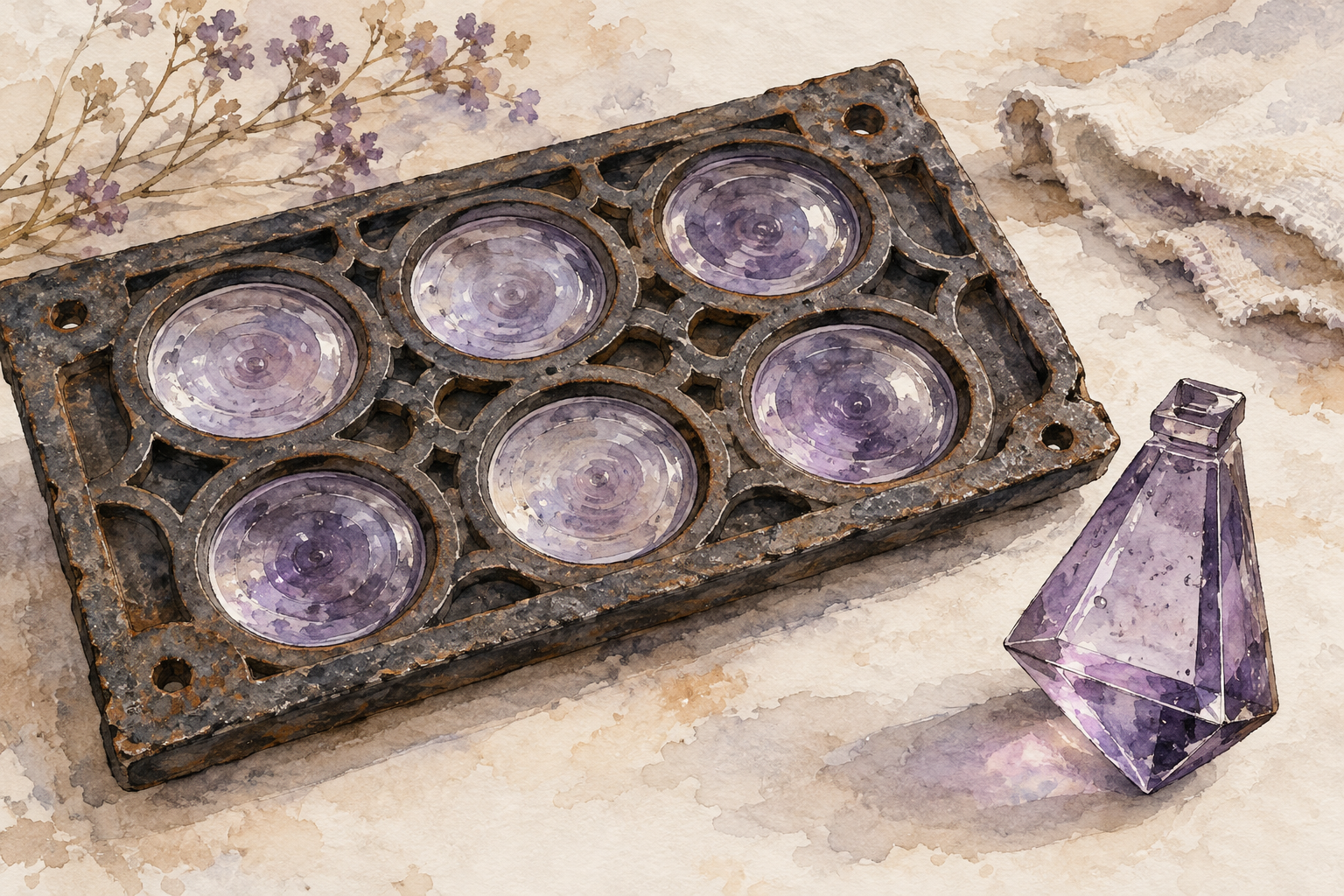
KQED’s Bay Curious explanation connects the purple or pink appearance of many old vault lights with manganese used in glassmaking. It helped clarify glass affected by other ingredients. Long exposure to ultraviolet light can change the manganese-containing glass’s color, a process commonly called solarization. Some panes that began comparatively clear therefore acquired the hue that now makes them conspicuous.
The careful word is some. A purple pane is not, by itself, a date stamp or a laboratory identification of its ingredients. A repaired panel can mix surviving glass with replacements. The Park Service’s account of concrete vault-light repairs in Seattle describes replacement glass deliberately tinted pinkish to resemble historic solarized lenses. Color can be part of a repair’s visual matching, as well as a result of earlier exposure.
For the same reason, a pale piece beside a darker one is an observation, not a complete explanation. It may prompt useful questions about replacements, materials or exposure, but the answer needs records or closer examination by someone qualified to assess the installation. Photograph the difference if you are documenting it; do not turn it into a claim that one pane must be original and its neighbor must be new.
A repair tells a second history
The Park Service’s documented example is at 552–554 Broadway in New York’s SoHo Cast-Iron Historic District. A cast-iron storefront and sidewalk vault assembly were installed during an 1897 alteration. By the restoration described in the note, lenses were cracked, absent or filled with opaque materials, and some iron panels were damaged. The 2002 project repaired surviving components and replicated missing ones, restoring the assembly’s daylighting function.
That distinction is worth keeping: preserving a feature does not always mean leaving every component untouched. A working panel has glass, seals, framing and a supporting structure. An attractive surface does not reveal the condition of all those parts. The preservation note emphasizes inspection and maintenance after rehabilitation, rather than treating restoration as the end of the story.
Its repair case is useful historical evidence, not a do-it-yourself prescription or a statement about the condition of that sidewalk in October 2026. We have not inspected the location. The note’s costs, materials and project circumstances belong to that documented work; they are not a current estimate for another building.
How to look without overreading
If you encounter pavement glass on an ordinary walk, begin with the arrangement. Are the lenses circular or square? Are they held in metal panels or set into concrete? Is the assembly immediately beside a building? These details help you describe what is visible before you attach a historical explanation. A useful caption might say that a panel contains round lenses in an iron frame. It need not announce an inventor, installation year or room use that you have not verified.
Then separate three questions. What is the feature designed to do? When was this particular example installed or repaired? Does it still perform that function? A general history can answer the first. A local archive, preservation record or building history may answer the second. The third requires evidence about the space below and the installation’s current condition. Knowing one answer does not automatically supply the other two.
Observe from a normal public walking route, keep entrances and pedestrian traffic clear, and respect closures. Do not lift covers, test a pane’s strength, remove glass or enter a basement to improve a photograph. If an opening or broken component appears hazardous, keep away and report its location through the appropriate local channel. Curiosity does not require treating old infrastructure as an exhibit you can handle.
The small glass pieces become more interesting when the explanation stays precise. They connect a surface underfoot with a room out of sight, and a material’s appearance with a history that may include both age and repair. The next time you notice them, look for the window first—and leave the unverified story open until the records catch up.



