


Categoría: Science & Space

A Möbius Strip Has One Boundary, Not Two
Trace the surface and the rim separately to understand what a half-turn changes.

Why a Solar Day Is Longer Than One Earth Rotation
A turn relative to distant stars ends before Earth faces the Sun again. Follow the extra rotation to distinguish a sidereal day from a mean solar day.

Doubling a Simple Pendulum’s Length Does Not Double Its Period
Count a complete swing, then compare length through a square root. The simple-pendulum rule predicts a different change from doubling the period, and its assumptions matter.

Why Foil Has a Shiny Side and a Dull Side
Double rolling explains regular foil’s two finishes. A non-stick coating is a separate feature: check the product’s label before choosing a face.

The Dots Under a Fern Frond Can Be Sori
A sorus is a cluster, not one large spore. Follow the parts beneath a fern frond and see why their arrangement varies.

Match a Geologic Map’s Colors to Its Legend
Match a geologic map unit to its explanation, distinguish bedrock from superficial deposits, and see why zooming does not create a finer survey.

Why a Wheelbarrow Is a Second-Class Lever
Locate the pivot, load and effort in a wheelbarrow, then use a simple force-balance example to see why its handles do not support all the weight.

Three Side Lengths Fix a Triangle’s Shape
Compare a triangle with a four-sided outline to see what fixed side lengths determine, and check which lengths can form a triangle at all.
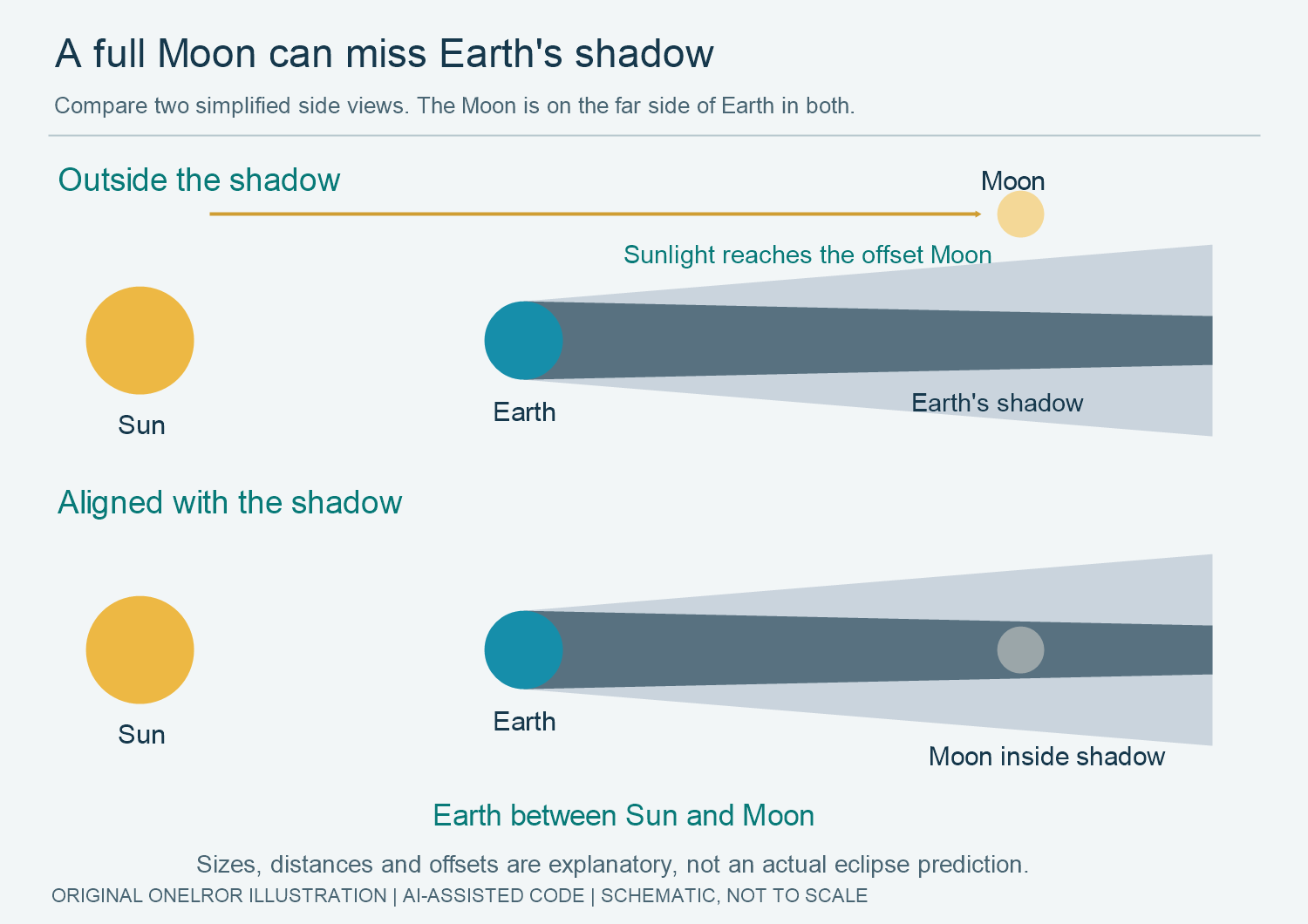
Why Most Full Moons Do Not Bring a Lunar Eclipse
A full Moon is necessary for a lunar eclipse, but orbital tilt usually carries the Moon outside Earth’s shadow. Read the geometry behind the difference.

Why 2100 Will Not Be a Leap Year
Apply the Gregorian four, 100 and 400 tests to see why 2000 had a leap day but 2100 will not.