


How a Fresnel Lens Turns Scattered Light Into a Lighthouse Beam

Science · Technology
How a Fresnel Lens Turns Scattered Light Into a Lighthouse Beam
A lighthouse can appear to flash while its lamp stays lit. Stepped glass redirects the light, and a rotating optical assembly can sweep that concentrated beam past an observer.
OnelROR Editorial Team · October 18, 2026 · Miami (America/New_York) · 3 min read
Featured photograph: sunset through the Devils Island lens, July 15, 2016. National Park Service, public domain; no claim to original U.S. Government works. This is the sun viewed through the optic, not its emitted beam.
Why the glass is divided into steps
A lamp sends light in many directions. A lighthouse optic redirects part of that spreading light toward the horizon, where a mariner can see it. The lens does not generate extra light energy; it makes the available light more useful in selected directions.
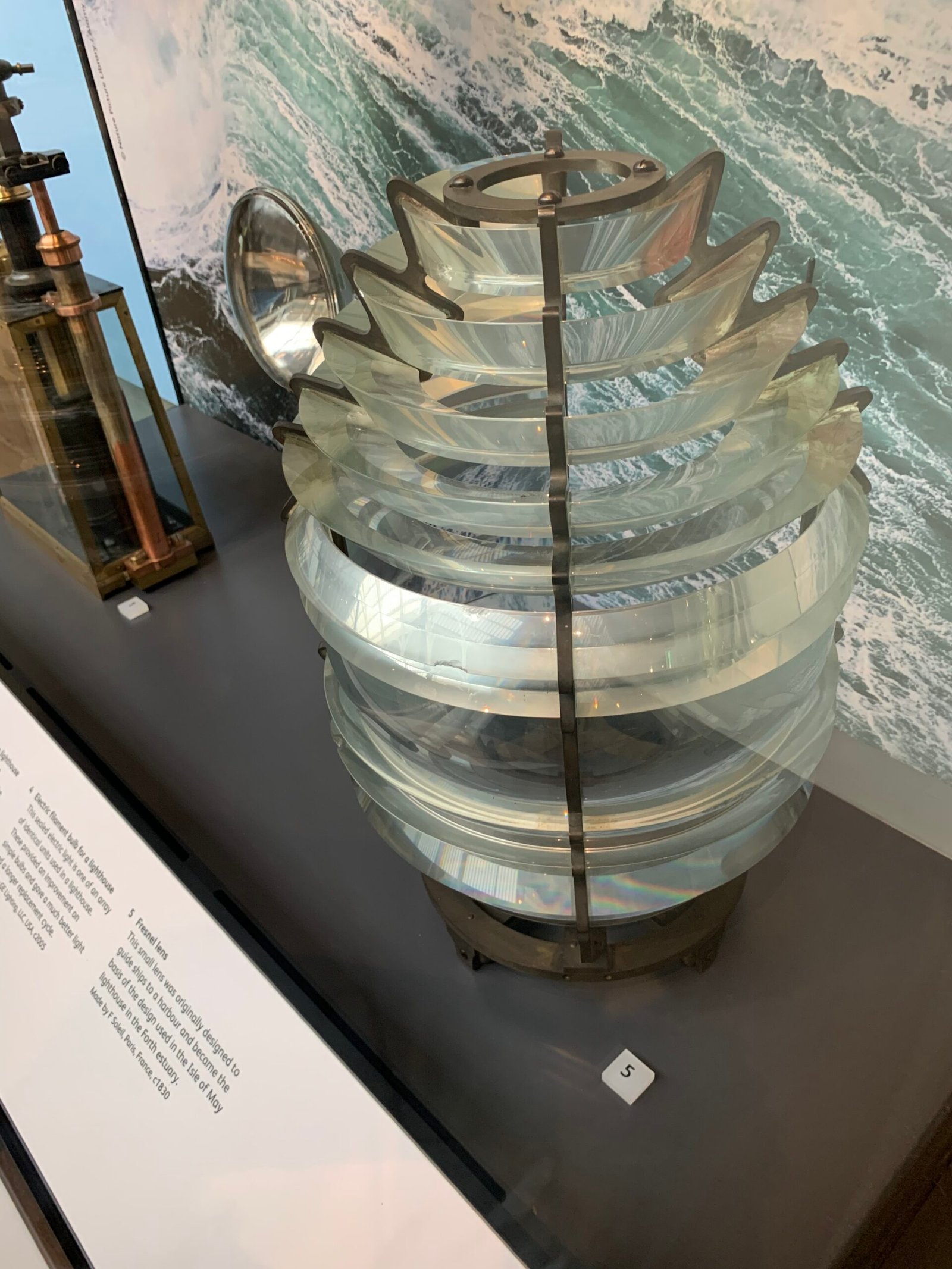
A thick conventional lens needs a large mass of glass. Fresnel’s stepped construction keeps the useful optical surfaces while removing much of the material between them. The separate zones are arranged to steer light in the required directions, reducing glass and weight. The rings and ridges are working surfaces, rather than decoration. The French Ministry of Culture’s Cordouan optics explanation describes this principle.
Refraction, and sometimes reflection
Light changes direction as it crosses between air and glass: refraction. In a directional lens panel, placing the source at its focus sends outgoing rays along nearly parallel paths. That concentrates the light into a beam instead of leaving it to spread as freely.
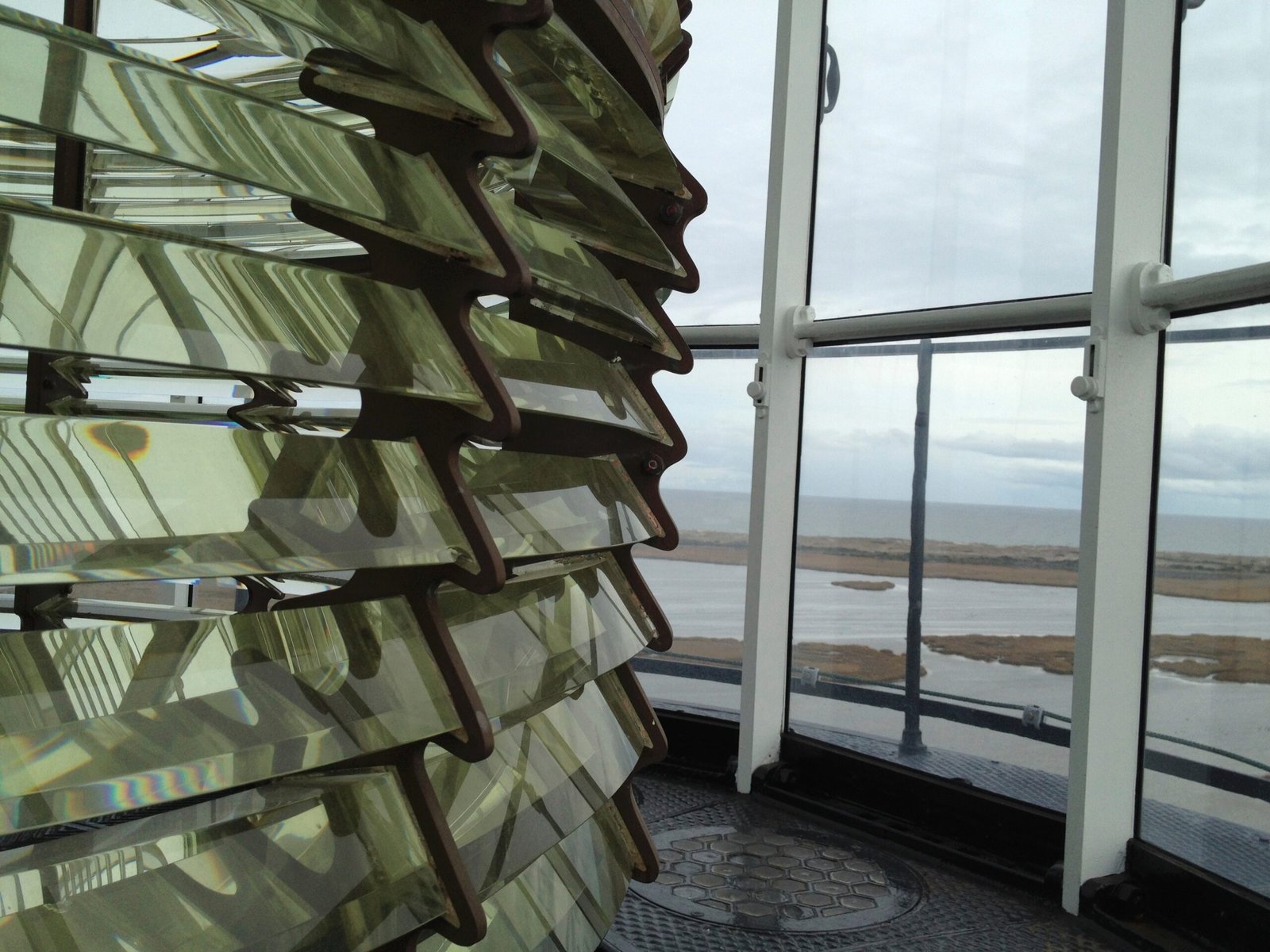
Some lighthouse assemblies also use specially shaped prisms that turn light by total internal reflection inside the glass, then direct it outward. An assembly combining refraction and reflection is called catadioptric. It is therefore more precise to describe the particular sections doing the work than to say every Fresnel lens is simply a stack of mirrors.
Why a rotating lens produces a flash
Imagine standing beside a rotating beam. You see a bright interval when it points toward you and a darker interval when it points elsewhere. In a revolving lighthouse optic, the lamp can remain lit while the lens assembly changes the direction of its beams. The apparent flash comes from that changing alignment, not necessarily from switching the lamp on and off.
The lighthouse authority Trinity House explains how prisms collect lamp light into a focused beam and how rotation supplies the flash character. The National Park Service adds that panel arrangement and rotation speed determine the observed pattern, known as the light’s characteristic.
That is one optical arrangement, not a rule for every lighthouse. A fixed Fresnel optic can instead show steady light around the horizon. Rotating directional beams and a fixed surrounding light distribute illumination differently.
What a lens “order” tells you
Descriptions of historic lighthouse lenses often name an order. These are size classes, not lamp-wattage settings or a universal ranking of visibility. The NPS overview includes sizes beyond the familiar first through sixth orders, including larger hyper-radial optics. Calling first order the largest in every case would miss that wider range.
The photographs here show different views and scales: a third-order lens at Devils Island, an 1830 museum example, and the prisms of Bodie Island’s first-order lens. The sunset photograph looks through glass toward the setting sun; it does not show a lighthouse beam being emitted.
The useful distinction is simple: the lamp supplies light, the optical surfaces control where it goes, and a revolving assembly can turn that direction into an identifying signal.
Sources and editorial basis
- National Park Service, “Fresnel Lens” — updated July 25, 2024; fixed and revolving arrangements, characteristics, and lens orders.
- National Park Service, “The Fresnel Lens” — updated August 16, 2017; historic construction context.
- French Ministry of Culture, Cordouan: principles of lenticular apparatus — refraction, total internal reflection, and stepped construction; no displayed publication date.
- Trinity House, “Optics” — operating lighthouse authority’s explanation of beams and rotating optics; no displayed publication date.
Sources checked October 18, 2026. The explanation concerns these historic optical systems and does not assign one visibility distance or efficiency percentage to every lighthouse.