


Why Ice Floats: What Freezing Does to Water

SCIENCE • WATER
An ice cube floats because ordinary ice is less dense than the liquid water around it. The reason is a small structural change with a large effect: when water freezes, its molecules settle into a more open arrangement and take up more space.
By OnelROR Editorial Team • October 24, 2026 • 3-minute read
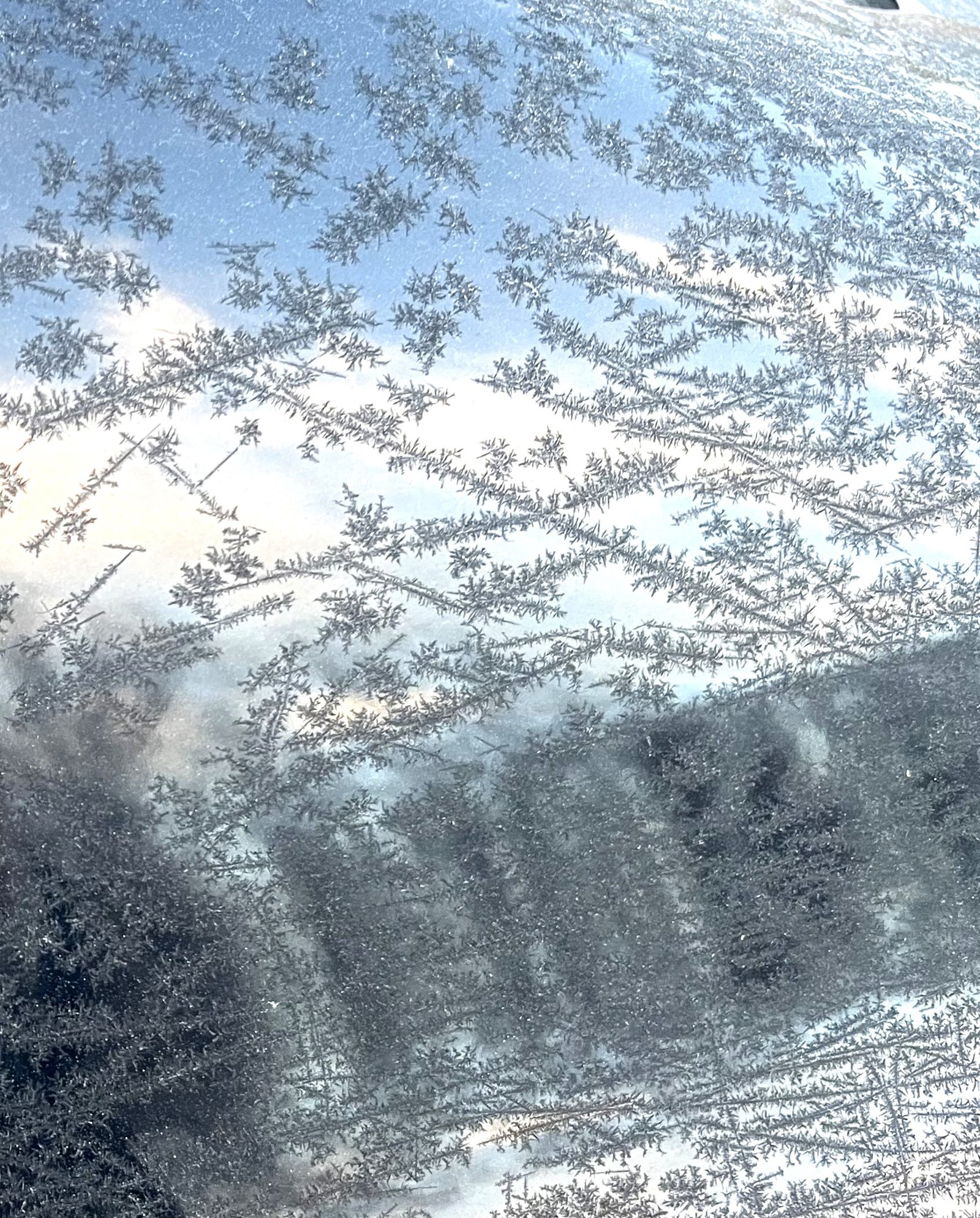
Featured image: Mark Vinson/USGS, June 2014; public domain.
Density is the key
Density compares how much mass fits into a given volume. If the same mass occupies more space, its density is lower. In a glass, the ice displaces liquid water; because the ice is less dense, it floats instead of sinking.
The U.S. Geological Survey (USGS) reports that water is most dense at about 4°C (39.2°F) and that its density decreases by roughly 9 percent when it freezes. The exact density of a sample can vary: ice may contain air, and natural water contains dissolved material, so the percentage is a useful approximation, not a value for every piece of ice.
Freezing gives water a more open structure
In liquid water, molecules move around one another. As water freezes, they become arranged in an orderly crystal lattice. In ordinary ice, that lattice holds the molecules farther apart than they are in liquid water. The same water therefore occupies more volume as a solid, lowering its density. The USGS describes this more spread-out arrangement as the reason ice floats.

Why many freshwater lakes freeze at the surface
The same density pattern affects a lake. Water near 4°C is denser than water near 0°C, so as a freshwater lake cools, the colder surface water can remain above the denser water below. When the surface reaches its freezing point, ice forms there and floats. This describes a common seasonal pattern, not a rule that every body of water freezes only from the top; temperature, mixing, depth, and dissolved substances matter.
The USGS overview of temperature and water explains how lake layers change as the surface cools, sinks, and mixes with deeper water. The details vary with climate and the lake’s conditions.
Saltwater is a useful comparison
Freshwater’s density maximum near 4°C should not be applied to seawater. Salt makes ocean water denser, and the National Ocean Service says seawater freezes at about −1.9°C (28.4°F), below freshwater’s freezing point. As sea ice forms, most of the salt is excluded from the ice crystals, but sea ice is not simply salt-free: the National Snow and Ice Data Center describes brine pockets and salt expelled into surrounding water.
What floating ice does not tell you
Floating ice is a clue about density, not a test of whether a frozen surface can support weight. Ice can vary in thickness and strength over short distances. The Minnesota Department of Natural Resources says ice is never completely safe and lists several factors that can affect it. For a real lake, consult current local guidance; do not judge safety from appearance alone.
Sources
- USGS, «Water Density» (updated August 24, 2026).
- USGS, «Temperature and Water» (updated August 24, 2026).
- NOAA National Ocean Service, «Can the ocean freeze?» (updated September 23, 2026).
- National Snow and Ice Data Center, «Science of Sea Ice.»
- Minnesota DNR, «How to check ice thickness.»



