


YISHU 8-Outlet Surge Protector: What to Check Before Buying
Outlet count can make a power strip look convenient, but it does not tell you whether it suits a particular setup. Here is a document-based way to read one popular listing while separating its stated features from evidence about safety or performance.
A compact power strip can make a desk or media area easier to arrange, but “more outlets” is not the same as “more power.” The YISHU listing for ASIN B09PDLBFKY describes a white, six-foot model with eight AC outlets, four USB ports, a flat plug and three side-facing outlets. Those are seller-listed details, not measurements from our own test. Its 900-joule surge-absorption figure is also a listing claim; we have not independently tested the device or verified that performance.
At about 02:08 UTC on October 25, 2026, the Amazon product detail page displayed a “#1 Best Seller” badge in the Multi-Outlet category. Amazon rankings change, and that badge is a category-specific snapshot—not a rating of electrical safety or a ranking across all Amazon products.
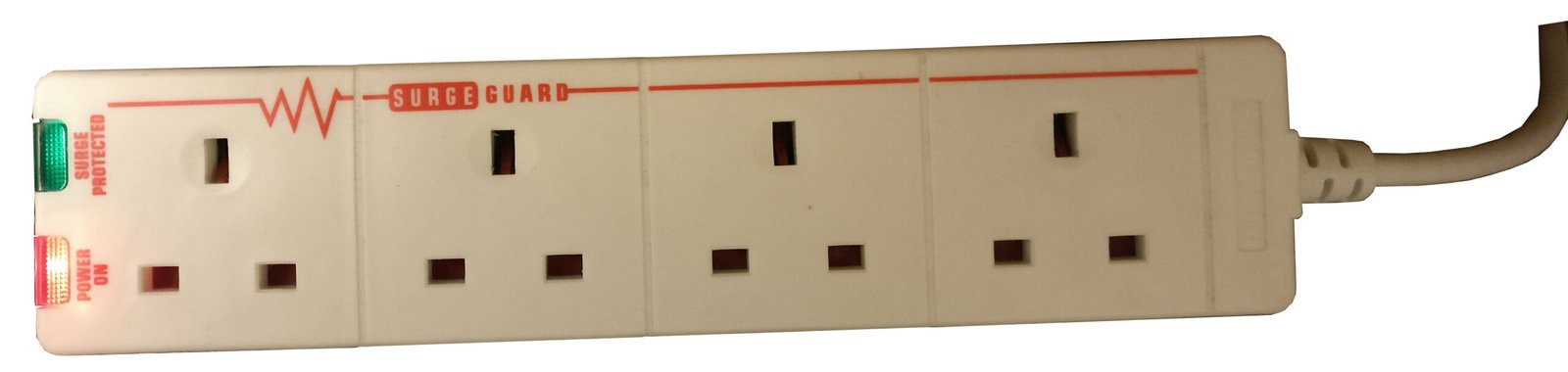
Featured image note: the photo shows a UK Surge Guard strip, not the YISHU model. Photo by Dylan Myers, CC BY 4.0; source.
What the listing does—and does not—tell you
Port count and spacing are easy to compare on a product page. Check the diagram and dimensions against the plugs you actually use: bulky adapters can cover neighboring sockets, and an angled plug may help a strip sit closer to a wall. A six-foot cord describes reach, but it does not increase the capacity of the wall circuit. The listed USB ports may also have limits that are different from the AC outlets; consult the product instructions for total output and compatible devices rather than assuming each port can deliver its maximum at once.
The listing calls this a surge protector and gives a joule figure. A joule number alone does not establish the protection level you need, the condition of the protection components, or independent certification. UL explains that surge protection is a separate device function and that electrical ratings matter; its certification overview describes UL 1449 for surge protective devices. I did not confirm a certification record for this specific YISHU model, so this guide does not describe it as UL Listed, ETL Listed, or independently approved.
Use the electrical rating and safety guidance
Before plugging in equipment, read the strip’s label and manual for its voltage, current or wattage limits, and compare those limits with the devices you intend to connect. Do not overload it. The U.S. Fire Administration advises using strips with internal overload protection, replacing worn or damaged cords, and keeping cords away from places where they can be pinched, such as beneath rugs. Follow appliance instructions too: some high-draw devices, including portable space heaters, should go directly into a wall outlet rather than a strip.
Stop using a strip that is cracked, loose, damaged, unusually warm, or producing an odor, and follow its manual for replacement. A switch or indicator light is not proof that surge protection remains effective. If you need surge protection for valuable electronics, check the exact model’s documentation and a recognized certification listing, and ask a qualified electrician when the right protection or circuit capacity is unclear.
Why product photos need context
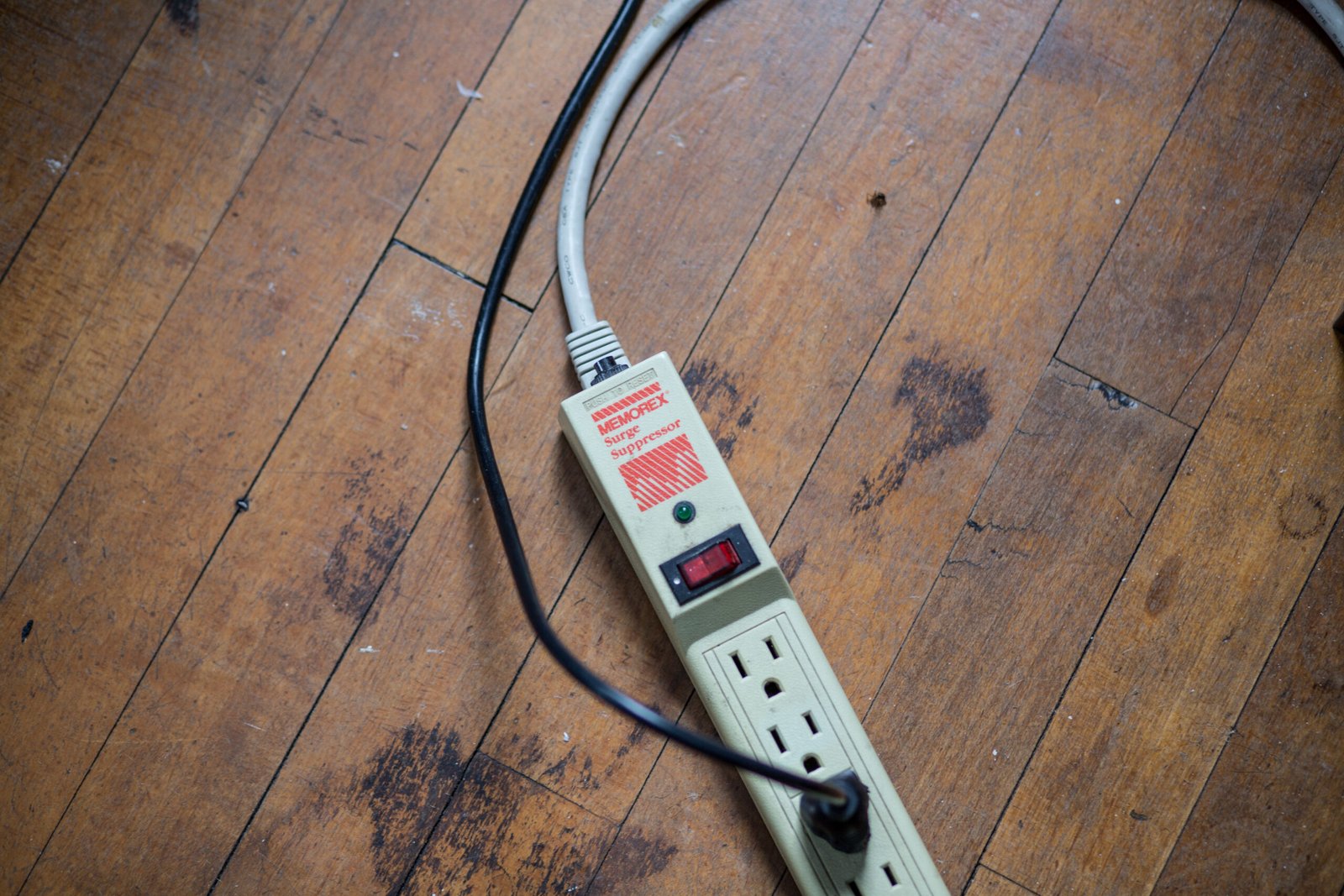
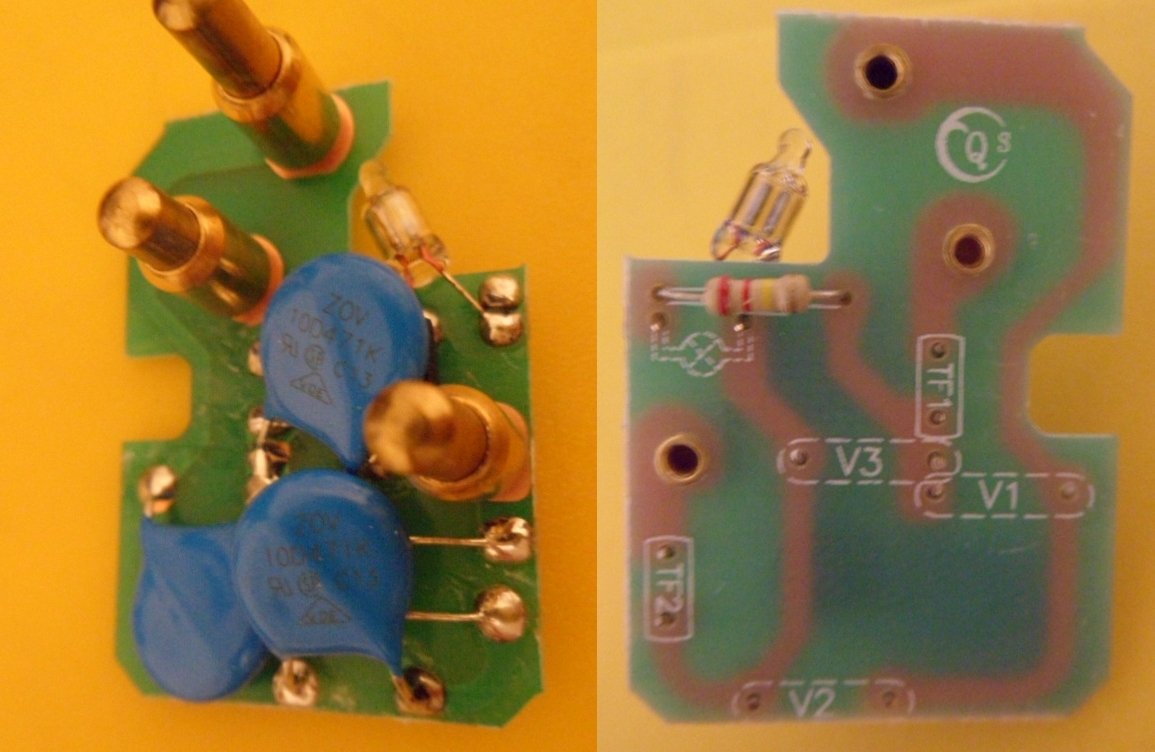
The photographs here illustrate different examples, not the YISHU model. One shows a vintage suppressor; the close-up below shows components on a separate surge-protection circuit board. Neither reveals what is inside B09PDLBFKY. Use the product’s own documentation for model-specific construction, and do not infer safety performance from a similar-looking shell or component.
A short checklist before you buy
- Confirm outlet orientation, spacing, plug shape and cord reach for your setup.
- Read the model’s full electrical rating and manual; do not rely on outlet count or a joule number alone.
- Look for a credible, model-specific certification record instead of treating a marketplace claim as proof.
- Use overload protection and replace damaged equipment.
These checks help distinguish a convenient layout from a suitable electrical device. This is a document-based look at the listing and general safety guidance, not hands-on testing or individualized electrical advice.
As an Amazon Associate I earn from qualifying purchases.
View the YISHU listing on Amazon
Commission notice: If you buy through this link, OnelROR may earn a commission.
Official references
- U.S. Fire Administration: Appliance and Electrical Fire Safety
- UL Solutions: Guide to Power Strips and Surge Protectors
- UL Solutions: Power Strips Testing and Certification
- U.S. Consumer Product Safety Commission: Electrical Safety
Sources and Amazon listing checked October 25, 2026. Amazon category rank checked at 02:08 UTC.
Written by OnelROR Editorial Team. October 24, 2026. 4-minute read.