



A Classified Space Force Mission Is Set to Launch Tonight—What We Know About USSF-259
SPACE | LAUNCH WATCH
A Falcon 9 is approved to carry the classified USSF-259 mission from California this evening. The launch window and location are public; the payload and destination remain deliberately undisclosed.
A classified United States Space Force mission is scheduled to lift off from California tonight, giving West Coast observers a chance to watch a Falcon 9 rise from Vandenberg Space Force Base even as the spacecraft it carries remains hidden from public view.
Vandenberg says the Space Force has approved the launch of USSF-259 from Space Launch Complex 4 East on Tuesday, September 15, during a four-hour window from 6 p.m. to 10 p.m. Pacific time. That corresponds to 9 p.m. Tuesday through 1 a.m. Wednesday on the East Coast.
What remains secret
The Space Force has identified USSF-259 as a classified mission. Officials have not publicly described the payload, its intended orbit or its operational purpose. That absence of detail is normal for some national-security launches, but it also creates an information vacuum that can quickly fill with unsupported claims.
Launch-site geography, airspace notices or the direction of flight can sometimes suggest a broad class of orbit. They do not establish what a satellite does. Unless the Space Force or another responsible agency releases more information, descriptions of the payload beyond “classified” should be treated as speculation.
Why Vandenberg is used
Vandenberg sits on California’s central coast and supports launches over the Pacific. Its location is especially useful for missions headed toward high-inclination or polar paths because a rocket can travel southward over ocean rather than populated land. That geographic advantage has made the base a major departure point for military, Earth-observation and commercial satellites.
USSF-259 is scheduled from SLC-4E, the same pad SpaceX uses for many Falcon 9 missions from the West Coast. The assignment of a familiar rocket and pad does not reveal the payload, but it explains why the visible part of the countdown may resemble other Falcon 9 operations.
When observers may see it
A launch window is a period in which liftoff can occur, not a promise that the rocket will leave at the opening minute. Weather, range safety, technical checks or mission requirements can delay the attempt within the window or move it to another day.
If skies are clear and the trajectory is favorable, people across parts of coastal and Southern California may see the vehicle after liftoff. Dusk launches can produce a bright expanding plume high in the atmosphere, where sunlight may still reach exhaust gases after the ground has darkened. Visibility is never guaranteed and can change with clouds, haze and the exact launch time.
How to follow the launch responsibly
Vandenberg’s official channels are the best source for range approval, window changes and postponements. A live broadcast may also be linked by the base or SpaceX near launch time. Because this is a classified mission, coverage can end earlier than it does for a commercial satellite launch, particularly after the first-stage portion of flight.
- Check Vandenberg’s official update shortly before the window opens.
- Use the official stream linked by the base rather than copied broadcasts.
- Expect countdown holds and schedule changes until liftoff.
- Do not interpret an early webcast ending as evidence of a failure.
- Wait for an official statement before describing mission success.
What counts as a successful launch
For public observers, ignition and ascent are only the beginning. SpaceX may confirm the first stage’s return if recovery is planned, while the Space Force may later announce that the mission met its objectives. With classified payloads, officials can provide only a short confirmation and withhold orbital details.
The public story tonight is the launch itself. The mission’s secrecy is a reason for careful wording, not a license to guess.
Sources
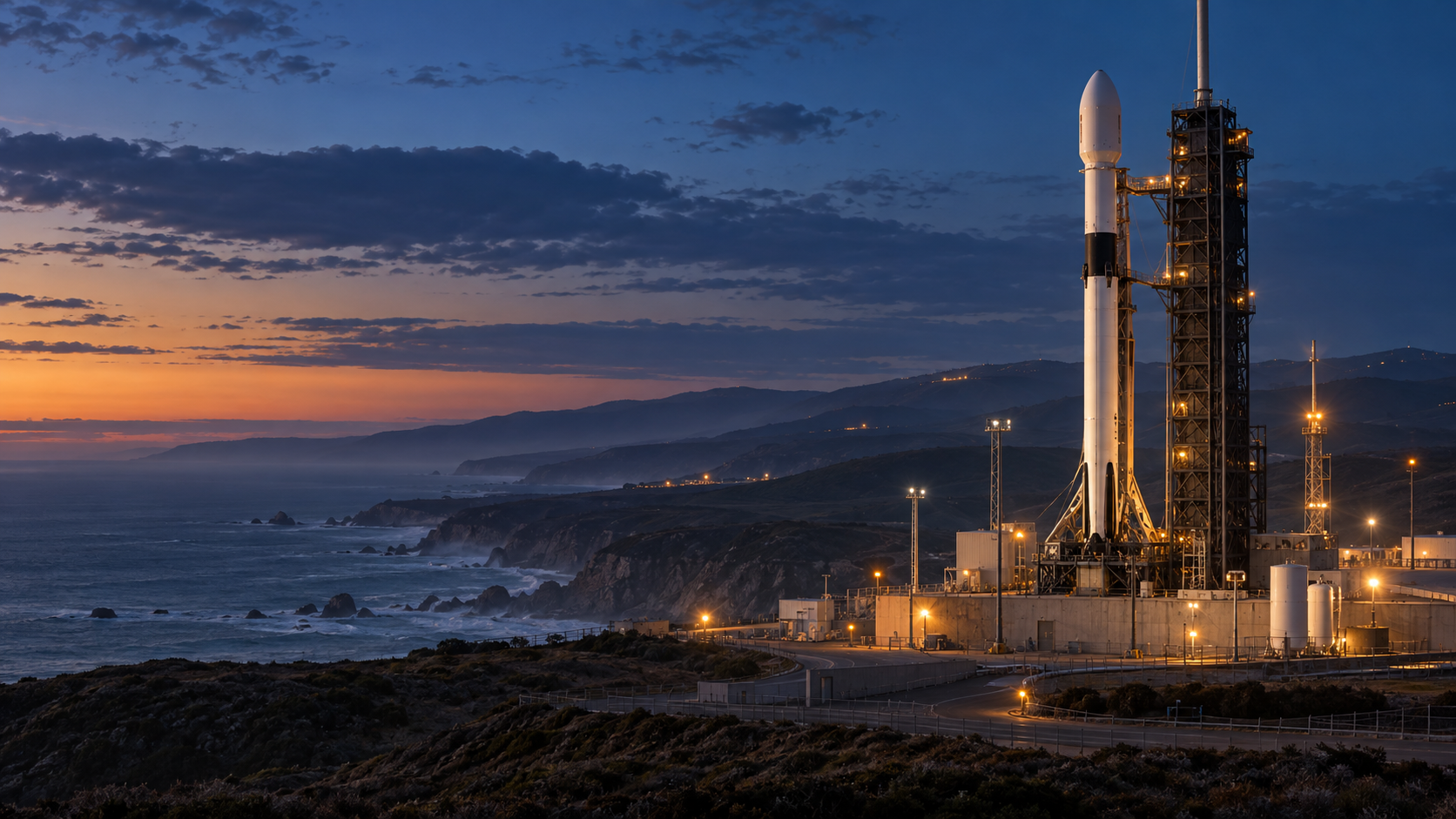
Reporting note: Launch schedules can change. This article reflects information available at publication preparation time. The featured image is an original editorial illustration created for ONELROR, not documentary photography.