

Googlebook Arrives as a Premium Laptop Category: Five Models, $899 Starting Price and What to Compare
Google has introduced Googlebook as a new premium laptop category built by Acer, ASUS, Dell, HP and Lenovo. The first five models start at $899, with U.S. retail availability scheduled for October 4.
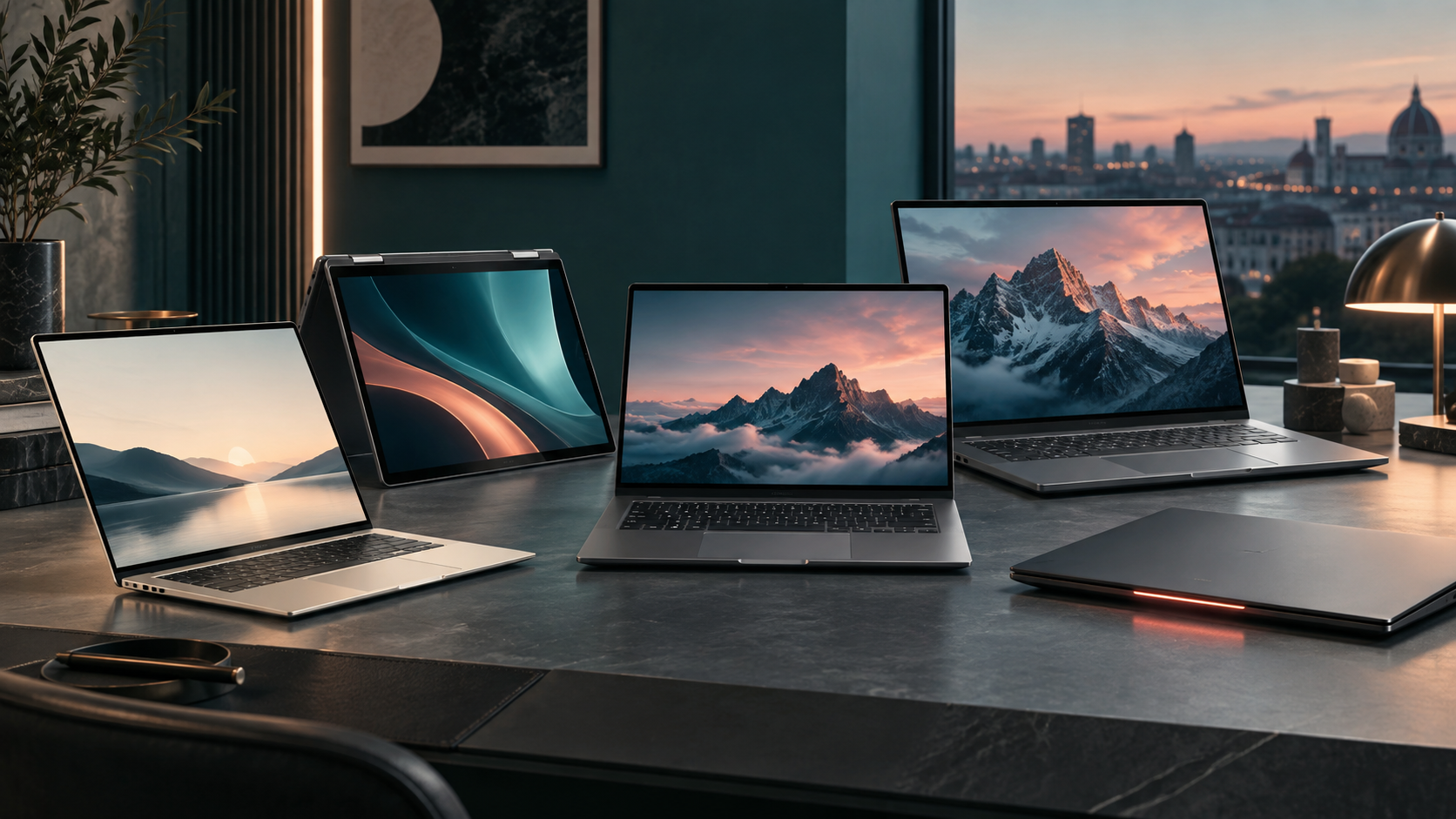
Editorial illustration: The featured image is an original OnelROR illustration and does not depict a specific announced model.
Google unveiled the first Googlebook lineup on September 21, positioning it above ordinary Chromebook shopping by setting common expectations for materials, displays, memory and on-device AI hardware. Preorders are open through the Google Store, Best Buy and selected retailers, according to the company.
The launch is a category announcement rather than a single computer. Each manufacturer is emphasizing a different use case, which means buyers should compare the individual specifications instead of assuming that every Googlebook has the same size, processor, ports or battery result.
Five models, five different priorities
Google describes Acer’s model as the only convertible in the initial lineup, designed to shift between laptop and tablet use. ASUS focuses on portability with a stated weight of 2.2 pounds. Dell is presented as a balanced design, HP as a design-focused option, and Lenovo as the productivity-oriented choice with a 15-inch display.
Those descriptions help narrow the field, but they are not substitutes for model-level specifications. A frequent traveler may value the lightest chassis, while someone working with large spreadsheets may prefer screen space. A convertible is useful only if the buyer expects to use touch and tablet modes regularly.
The baseline hardware is unusually clear
Google says every model starts with at least 16GB of high-speed memory, while selected configurations reach 32GB. Processor options include Intel Core Ultra Series 3 and Snapdragon X Elite, paired with neural processing units rated above 45 TOPS for supported on-device AI workloads.
The screens are touch-enabled and can reach up to 2.8K resolution. Google also highlights premium materials such as aluminum, magnesium alloy and carbon fiber, along with backlit keyboards, glass-feel haptic trackpads and audio systems with as many as six speakers and Dolby Atmos.
The phrase “up to” matters. Display resolution, speaker count, memory ceiling and chassis material can differ by model and configuration. Buyers should confirm the exact retail listing rather than applying the best specification in the family to every machine.
Battery claims need real-world context
Google advertises up to 14 hours of video playback and 16 hours of web browsing. Those figures provide a comparison point, but actual endurance depends on display brightness, wireless activity, applications, video calls, background synchronization and processor choice.
Before buying, look for independent testing of the exact configuration. Also check charger size, USB-C charging support and whether a full workday includes demanding tasks such as photo editing, development tools or multiple external displays.
The Glowbar returns as a visible design signature
The lineup includes a luminous Glowbar that can animate during startup and indicate battery level. Google says developers will receive access to create additional interactive animations. It is a distinctive visual feature, although buyers should treat it as an interface detail rather than a reason to overlook keyboard comfort, repairability or port selection.
Price, software benefits and availability
Googlebook models start at $899. Google says purchases include 12 months of Google AI Pro with 5TB of cloud storage and Gemini Advanced tools, plus three-month offers for YouTube Premium, Adobe Photoshop and other services. The company also promises feature drops and updates for up to 10 years.
Devices are scheduled to reach stores on October 4 in the United States and October 5 in Canada, the United Kingdom, Ireland, France, Germany and Australia. Subscription benefits may have eligibility rules, renewal prices and regional limits, so buyers should read the offer terms before assigning them value.
A practical comparison checklist
- Choose the form factor first: convertible, ultra-light or larger productivity display.
- Confirm the exact processor: software compatibility and battery behavior may differ across platforms.
- Check the real configuration: resolution, memory, speakers, ports and materials are not necessarily identical.
- Test the essentials: keyboard, trackpad, screen brightness and webcam matter every day.
- Price the full ownership period: include accessories and any subscription renewals after promotional periods.
- Wait for independent reviews: launch claims cannot replace measured battery, heat, noise and performance tests.
Googlebook gives premium laptop shoppers a new label and a defined hardware floor. The strongest choice will still come from matching one specific model to the buyer’s work, travel and software needs.