


Manufacturing Day Opens Factory Doors—and Better Questions About Work
ONELROR · ECONOMY
Manufacturing Day Opens Factory Doors—and Better Questions About Work
October’s factory visits offer a chance to connect impressive machinery with the people, training and everyday tasks behind production.
OnelROR Editorial Team · Originally published October 2, 2026 · Updated October 9, 2026 · Miami (America/New_York) · 24 min read
Update: rechecked NIST’s October 5 calendar revision and expanded the guide to access, ordinary tasks, role descriptions, training and follow-up. Earlier event dates are historical; later listings remain announcements requiring host confirmation.
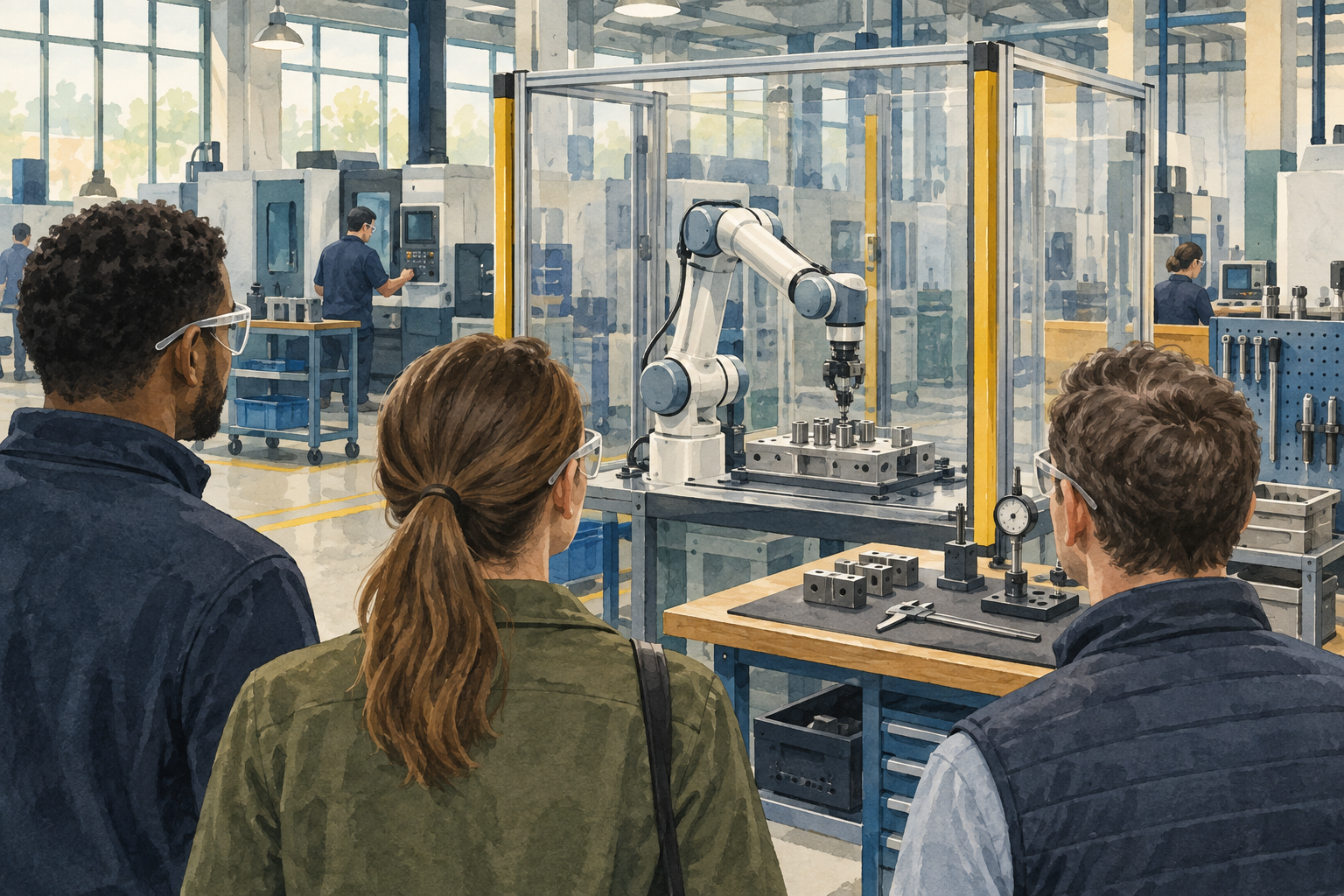
All three images are original AI-generated conceptual illustrations, not photographs of listed events, companies or facilities.
The date is an opening, not the whole opportunity
Manufacturing Day in 2026 fell on Friday, October 2. NIST’s Manufacturing Extension Partnership page, updated October 5, says related events continue throughout the month. Its calendar lists Illinois Makers on the Move for October 2–9 and a Generator Makerspace event in Burlington, Vermont, for October 15. Those are calendar entries, not evidence that every announced activity occurred, that visitors secured jobs, or that a particular host increased production. Confirm practical details with the organizer before traveling.
The official MFG Day website also identifies October 2 as the 2026 date and describes activities beyond a single day. Its broad criteria for recognizing an event do not mean that a particular factory accepts unregistered visitors. National participation rules and a host’s attendance requirements answer different questions. A facility can be part of the movement while restricting a visit to invited schools, a specific audience, or people who have completed the host’s own registration process.
This expanded guide was checked on October 9, after the main observance. It therefore treats earlier dates as earlier dates and later listed events as plans that still require confirmation. The original article’s useful idea remains: a visit is an opportunity to ask about people, preparation, and everyday work behind the machinery. We have not attended the listed events or interviewed their hosts. The examples and question sets below are editorial tools for your own visit, not reported conversations.
A good result from a factory visit does not have to be a job application. It might be a clearer understanding of a process, a better question for a training provider, or a decision that a role does not match your interests. Choose the result you want before you enter. Otherwise, a memorable demonstration can become the whole story, leaving you impressed but unable to explain what the people at that station actually do.
Choose a question that gives the visit a purpose
Start with one main question. A student may want to understand how school subjects appear in real tasks. A career changer may want to distinguish production work from maintenance or inspection. A parent may want to understand the route from a classroom to a first role. A community visitor may simply want to learn what a local facility makes. These are illustrative purposes, and none requires you to pretend you have already chosen a manufacturing career.
Turn the broad question into something the host can answer concretely. Instead of asking whether manufacturing is a good career, ask what a beginner in one named role is expected to do during an ordinary shift. Instead of asking whether a course is useful, ask which tasks its graduates are prepared to perform and how the host checks that preparation. Specific questions produce information you can later compare with a job description or a course outline.
Keep your question list manageable. A short tour may not allow a long private interview, and a guide may need to keep a group moving safely. Choose a main question, a follow-up, and a place to obtain information afterward. That structure lets you participate without turning the event into a cross-examination. If your question cannot be answered on the floor, ask which public resource or designated contact is appropriate for a later conversation.
You can revise your purpose during the visit. A station that initially seemed uninteresting may reveal a task you enjoy, while an impressive machine may involve daily work you would rather avoid. Record that change without treating it as a failure of planning. The point of a focused question is to make learning visible. It should help you notice when new information changes your understanding rather than forcing every observation to support the decision you expected to make.
Confirm the event, audience and route before leaving
Read the host’s current event information, not only a national calendar summary. Confirm the date, start time, location, audience, and whether a place is still available. A manufacturing site, a college workshop, and a conference venue may have very different entry arrangements. Do not assume the address of a company’s headquarters is the tour entrance. Use the instructions supplied for that specific event and check for any updates before setting out.
Ask about accessibility and the route you will actually follow when those details matter to your attendance. A general statement that a building is accessible may not describe every part of a factory tour. The appropriate question is whether the scheduled visitor route and activities can accommodate your needs. You do not have to share a detailed personal history publicly. Contact the organizer through its designated channel with the practical information needed to plan a suitable visit.
Check clothing, footwear, identification, age restrictions, photography rules, and any required protective equipment. Follow the host’s instructions rather than assembling a universal factory-tour checklist from unrelated facilities. If something is unclear, ask before arriving. A visitor who cannot join a particular activity may still be able to attend a conversation or presentation, but that option needs confirmation. Do not count on an informal exception at the door or bring an unregistered guest without checking.
Plan the journey home as carefully as the journey there. Know where the group finishes and whether transport arrangements depend on a school, organizer, or individual participant. Leave enough room for check-in and the host’s safety briefing without inventing a precise arrival interval that may not suit the event. The useful objective is a visit that starts calmly and respects the organizer’s process, allowing your attention to remain on learning rather than on solving avoidable access problems.
Observe safely and respect what the host cannot show
A visitor’s job is to observe within the host’s rules. Stay on the designated route, follow the guide, and do not touch equipment, workpieces, controls, or protective barriers unless the host explicitly directs an authorized activity. This article is not a guide to operating industrial machinery. A short demonstration can make an action look simple while leaving out the training, preparation, and controls that make it appropriate for the person carrying it out.
Respect photography and confidentiality restrictions. A machine, screen, part, or whiteboard may contain information the host cannot share publicly. Ask before photographing or recording, and accept a refusal without treating it as evidence that something is wrong. You can still make a useful note about the role of a station without copying its technical details. An open house creates an opportunity to learn; it does not grant permission to document everything visible on site.
If noise, distance, or a moving group makes an explanation hard to hear, ask at the next suitable pause. Do not step away from the route or approach an active workstation to obtain a better answer. A question can wait for the safe place the host chooses. The same applies to a demonstration you did not fully understand. An incomplete view is a reason to ask for clarification, not a reason to experiment with the equipment yourself.
Record the limits of the visit as part of your notes. Perhaps you saw only a demonstration area, a training room, or one part of a longer process. That scope does not make the experience worthless. It tells you how far your conclusions can go. A careful statement such as the guide showed this stage is stronger than an unsupported claim that you have seen how the entire facility works during every shift.
Follow one object through the process
Choose a generic product or component the host is willing to discuss and ask where it enters the process, what happens to it, and how it leaves. You do not need confidential specifications to understand the sequence. A simple flow from incoming material to preparation, production, checking, and dispatch can organize the visit. Treat that flow as a starting sketch for this facility’s explanation, not as a universal diagram that every manufacturer must follow.
At each stage, ask what information travels with the object. That might be an instruction, drawing, order, label, or record, depending on the process. The useful question is how a worker knows what is supposed to happen next. A finished item can conceal the decisions and information that made it possible. By following the information as well as the material, you begin to see tasks that a machine demonstration alone may leave invisible.
Notice the boundaries between stages. Who hands the work onward, who confirms that it is ready, and what happens if something is missing? You are asking about coordination rather than trying to audit the facility. The host may use different terms from those in your sketch; write those terms down and ask what they mean locally. A role that looks like moving objects may also involve checking documents, recognizing exceptions, and communicating with another team.
After the explanation, summarize the flow back in a short sentence and ask whether you have understood it correctly. This is a useful way to catch a misunderstanding before building further conclusions on it. Do not present the summary as the host’s approved process map unless it has actually been reviewed for that purpose. For your own learning, a corrected rough sketch is often more valuable than a polished diagram that silently connects the wrong stages.
Ask who prepares the impressive demonstration
The visible action may occupy only a small part of the work. Ask who prepares the equipment, selects the instructions, positions the material, checks readiness, and decides when the station can begin. These questions expose responsibilities without requiring the host to reveal confidential settings. They also keep your attention on people. An automated movement can be memorable while the planning and judgment surrounding it remain harder to notice during a brief visit.
Ask whether the person running the demonstration normally performs all those tasks or whether several roles share them. A presenter may simplify the explanation for a mixed audience, which is reasonable, but the simplification can blur the boundaries between jobs. Understanding those boundaries helps you investigate a specific career later. You may discover that the task attracting you belongs to setup, programming, inspection, maintenance, or coordination rather than to the station’s most visible operating role.
A useful follow-up is how a beginner learns the preparation sequence. Does the host use supervised practice, written instructions, classroom work, or another method? Ask who decides that the learner is ready for more responsibility. Do not assume that watching an expert once establishes competence or that every employer uses the same training route. You are collecting information about this host’s explanation and identifying which written sources can clarify it after the tour.
Keep the distinction between admiration and understanding. You can appreciate a smooth demonstration while still not knowing what the operator monitors or what would change for another product. State that uncertainty plainly in your notes. It creates a sensible follow-up question. A visit becomes more useful when you can say both what impressed you and which part of the work remains unexplained, instead of treating a successful demonstration as an answer to every question about the role.
Quality is a question about decisions, not just instruments
When the host shows a measuring tool or inspection station, ask what decision the result supports. Is the worker confirming that a part can move onward, identifying a problem, or providing feedback to an earlier stage? You do not need the product’s exact tolerances to understand that relationship. The instrument is only part of the story. The role becomes clearer when you know who interprets the result and what options follow from it.
Ask how the person doing the check knows the relevant requirement and which version of the instruction applies. This is a conversation about the flow of information, not an attempt to inspect private documents. A demonstration may use a sample prepared in advance, while routine production may involve repeated checks and records. Ask the guide to explain that distinction at a level appropriate for visitors. The answer can reveal whether you enjoy careful verification and documentation as well as visible making.
Avoid assuming that a measurement shown during the event proves the whole facility’s quality performance. It establishes only what the host demonstrated and explained in that setting. Broader claims would require appropriate evidence about a defined process and period. You can make a useful note without reaching that conclusion: the station checks a specified feature, the result informs a decision, and the guide described who handles an exception. That is a grounded account of what you learned.
For a career question, ask which skills help a beginner perform the role well. Careful reading, recording, attention, and communication may be relevant, but let the host describe the actual requirements rather than assigning them from a stereotype. Then compare the answer with a current role description. A person who likes solving visible mechanical problems may feel differently about repeated documentation; another person may enjoy precisely that combination. The visit can help separate those interests.
Ask what happens when the ordinary sequence changes
A demonstration often follows the planned path. Ask what a worker does when the material, instruction, result, or equipment does not match expectations. Keep the question general and allow the host to choose an appropriate example. You are not asking for access to a live fault or an invitation to troubleshoot. The aim is to learn who recognizes an exception, who is informed, and who has authority to decide the next step.
This question is useful because responsibility can change when something unusual happens. A person may perform a routine task independently but need to pause and consult another role when a condition changes. That boundary matters when you evaluate training and supervision. Ask how the boundary is explained to new workers. A clear description tells you more about the working relationship than a broad assurance that everyone is empowered or that technology takes care of problems.
Do not ask a host to create a failure for the sake of your understanding. A verbal explanation, a nonoperating example, or a training scenario may be enough. Respect the host’s decision about what can be discussed safely and appropriately. If the answer remains general, record it as general. There is no need to manufacture a precise story about a breakdown, defect, or recovery that you did not witness and the host did not describe.
Afterward, compare the exception process with your own preferences. Do you enjoy recognizing a deviation, following a defined escalation route, and waiting for a decision? Do you prefer a role with a different pattern of responsibility? These questions do not rank one kind of work above another. They help you understand which tasks and relationships might fit you, while leaving the employer’s actual requirements to its current written information.
Separate automation from the roles around it
When a robot or computerized machine attracts attention, ask which tasks it performs and which tasks remain with people. Avoid turning one demonstration into a forecast that all jobs disappear or that every role becomes highly technical. The useful information is local and specific: what the system does here, who prepares it, who monitors it, and who responds when the process needs attention. The answers can support a clearer picture without requiring a sweeping prediction.
Ask whether the facility changed training or responsibilities when the equipment was introduced, if the host is able to discuss that history. Distinguish an actual account of a change from a general statement about future possibilities. A host may reasonably describe goals that have not yet been achieved. Record them as goals. A plan to automate a task should not become a claim that the change is already complete or that its employment effects have been measured.
Technology labels can hide different skill requirements. The same broad term may cover operating an interface, configuring a process, maintaining equipment, or interpreting information. Ask the host to name the actual task and the level of preparation needed for the role you are investigating. Then look for that task in a job description or course outline. This makes the follow-up more useful than collecting fashionable terms that remain disconnected from what a beginner would do.
If the demonstration is too technical for you to follow, ask for the purpose before the mechanism. Understanding why a station exists can make later detail easier to organize. You do not need to imitate a specialist’s vocabulary to ask a serious question. A plain explanation of the task, the person responsible, and the information used provides a strong foundation for learning more, whether your interest eventually leads to a technical role or a different part of the organization.

Name the role before discussing the career
Manufacturing is an industry context, not a single job description. Ask the host for the name of a role that matches the task you found interesting. Then ask where its current description can be read. A conversation that begins with a machine may lead to several distinct occupations, each with different responsibilities and preparation. Naming the role prevents you from comparing a broad impression of factory work with a narrow training program that serves only one part of it.
The Bureau of Labor Statistics profile for machinists and tool and die makers, modified August 27, 2026, provides an independent reference point. It describes equipment setup and operation for precision parts and outlines education and training routes. The profile is about those occupations, not every manufacturing job and not a promise about an employer’s opening. Use it to orient your questions while checking the host’s own requirements for the role being discussed.
Ask what separates an entry-level version of the role from a more experienced one. Which tasks are learned first, which responsibilities are added later, and how does the organization decide that someone is ready? Do not assume a promotion timetable from an enthusiastic answer. Request the relevant written information where available. Understanding progression is useful, but it should remain distinct from a guarantee that every new worker will follow the same route or advance at the same speed.
If you discover that several roles interest you, keep them separate in your notes. Write the role name beside each task, source, and next question. This avoids an easy confusion in career exploration: combining the appealing duties of multiple jobs into an imaginary position that no employer actually offers. A clearer list may look less exciting at first, but it lets you compare real opportunities instead of pursuing a composite built from the highlights of a tour.
Investigate the ordinary shift as well as the event
Ask how a normal shift differs from the visitor demonstration. The host may have selected a station that is easy to explain or scheduled the visit around production needs. A short event can legitimately highlight a small part of the workplace. Your follow-up should explore the less visible tasks: preparation, records, cleaning within the role’s procedures, handovers, waiting, or coordination. Ask the host which of those activities actually apply rather than assuming they all do.
Clarify the schedule for the specific role you are considering. Ask about the advertised shift, how scheduling information is communicated, and where to find current conditions for applicants. The BLS profile notes that some machinists and tool and die makers work nights or weekends and that overtime can occur. That occupational context is a reason to ask a local question, not evidence that the facility you visited uses a particular shift pattern.
Think about the practical fit of the schedule without making the employer’s decision for it. Transport, caregiving, education, and other commitments can affect whether a particular opportunity is realistic. You do not need to disclose every personal detail during a public tour. Gather the relevant written schedule information and consider your own circumstances afterward. A career can be attractive in principle while one specific shift or location is unsuitable at this point in your life.
Avoid using the atmosphere of an open house as a complete account of everyday working conditions. A welcoming event and an ordinary production shift have different purposes. Ask respectful questions, consult current applicant information, and distinguish what you saw from what you still need to learn. That approach allows you to appreciate the visit while making a separate, informed decision about whether to pursue a role there.
Turn training language into a concrete route
When someone mentions training, ask what the term covers. It may refer to orientation for a new employee, supervised work, a college course, a certificate, or a structured apprenticeship. These are different arrangements. Write down the provider, the intended role, and the next step required to learn more. A reassuring phrase such as training is available is useful only after you understand who supplies it and what participation actually involves.
Ask what preparation is required before the route begins. Does the applicant need a particular qualification, prior experience, or another documented requirement? Ask which conditions are essential and which are preferences, using the provider’s current information. Do not infer an exception from a casual conversation at an event. If you need clarification about your own background, contact the designated admissions or hiring channel afterward with an accurate account of your circumstances.
Clarify how learning is assessed. Is the learner demonstrating a task, completing a course, receiving a recognized credential, or simply attending an introduction? The answer helps distinguish exposure from preparation. A hands-on activity at a tour can be valuable without qualifying someone to work independently. Treat the event as the beginning of an investigation, and ask the provider how its formal route connects to the work that attracted your interest.
Ask whether the host’s suggested preparation is specific to its own equipment or transferable to other settings. Do not assume either answer. A course can have a useful local relationship while still needing careful evaluation for your goals. Compare the published learning outcomes with several current role descriptions if you are exploring options. The objective is to identify an actual bridge from your present preparation to a defined task, not to enroll simply because a demonstration was engaging.
Registered apprenticeship is a specific arrangement
Apprenticeship.gov describes Registered Apprenticeship as a pathway combining paid work experience with a mentor, classroom instruction, progressive wage increases, and a portable recognized credential. That official description provides a useful comparison when an event uses the word apprenticeship. It does not establish that every training arrangement mentioned by a host is registered, currently recruiting, or available to you. Ask for the specific program name and sponsor before treating the general definition as a description of that opportunity.
Read the program’s own current entry information and application process. The official career-seeker page directs applicants to the employer or program sponsor for a specific opportunity. A tour organizer may introduce the route without controlling admissions. Keep that distinction clear. Being welcomed at a visit, meeting a representative, or expressing interest does not equal acceptance. Your next action should follow the named program’s normal process rather than relying on an informal expectation created during the event.
Ask how classroom learning and work are scheduled together, who supervises the work, and how progress is documented. Request written details about the arrangement rather than assuming they match another program you have heard about. These questions help you evaluate the practical route while leaving decisions about eligibility and participation to the appropriate provider. We are not selecting applicants, completing applications, or making claims about the outcome of any individual program.
If a host describes a different kind of training, it may still be worthwhile. The purpose of distinguishing terms is accuracy, not dismissing every route that is not registered apprenticeship. Name the arrangement correctly, identify its provider, and establish what the participant receives and what comes next. A clearly described short course is easier to evaluate than an impressive label attached to an unclear process.
Compare written opportunities without inventing promises
After the event, place the relevant role description, course outline, or program information beside your notes. Identify the specific requirement each document answers. One source may describe duties, another entry criteria, and another a timetable. Avoid merging them into a promise that one course automatically leads to one job. A connection mentioned during a tour should be verified in the current information from the employer and provider, especially when a decision involves significant time or cost.
Ask the provider for a complete written account of fees, equipment, scheduling, assessment, and any conditions that affect participation. Do not rely on a single headline or assume that a quoted figure includes every requirement. This guide does not estimate your costs or advise you to commit money. It suggests gathering the terms that let you assess the arrangement accurately. If an important condition remains unclear, keep it marked as unanswered rather than filling the gap with an optimistic guess.
Separate employment facts from projections and promotional statements. An employer’s current vacancy is not the same as an industry forecast, and a broad statement about future demand is not an individual offer. This article does not use national wage or opening figures to predict your pay or hiring chances. Such figures describe defined populations and periods; a personal decision still requires the actual role, location, qualifications, and terms of the opportunity you are considering.
Use a simple comparison sheet with consistent headings: role or program, provider, source date, tasks, entry requirements, schedule, unanswered questions, and next action. Keep facts and your preferences in separate lines. A document may clearly describe a route that you decide against because it does not fit your circumstances. That is a legitimate outcome of careful exploration, and it is more useful than forcing every promising event into a commitment.
Keep observation, explanation and inference separate
A useful visit note has three categories. Observation records what you saw within the event’s scope. Explanation records what a guide or public source said. Inference records what you think the information may mean. You can use plain labels rather than a complicated system. The separation helps prevent a common mistake: turning a brief visual impression into a confident statement about the whole organization, its workers, or the result of an investment.
For example, an imagined note might say that a visitor saw a sample checked at one station, heard that the result informed a later step, and inferred that careful documentation could be important in that role. That is a constructed example, not a report from a named factory. The inference is plausible but remains something to check against the actual role description. Writing it this way protects the useful question without pretending the visit proved more than it did.
Include the date and source of important information. If a host provides a link, check that it points to the relevant current page rather than an old event or a general homepage that does not answer your question. A source can be authoritative yet outdated for a particular application window. The next step is to locate current information through the provider’s normal route, not to assume that an earlier page’s conditions still apply unchanged.
Do not publish identifiable comments from workers or fellow visitors without appropriate permission and context. Your personal learning notes need not become public reporting. If you later discuss the visit, describe its limits and avoid attributing claims you cannot accurately support. Respectful, precise notes make your follow-up easier and reduce the chance that an informal explanation is transformed into a statement the speaker never intended to make.
Follow up with one useful request
Choose one unresolved question that affects your next decision and send it through the host’s designated contact route yourself. Refer to the event and the role or program so the recipient can understand the context. A focused request for a current description, entry information, or appropriate contact is easier to answer than a broad request to explain the entire industry. This guide does not send messages on your behalf or promise a response from any organizer.
Keep the request factual and modest. You can state that a task interested you and ask where to find the relevant information without claiming an invitation to apply that was never offered. If you received a contact for a specific purpose, use it for that purpose. Avoid sending personal documents, identity information, or an entire employment history to an unverified address simply because it appears in notes from a tour. Follow the provider’s official application instructions when that stage arrives.
Give the reply a place in your comparison sheet. Record what it resolves, which conditions remain unclear, and whether it points you to another source. Do not treat silence as acceptance or a friendly answer as a hiring commitment. A useful exchange may simply establish that the route is not currently open or that another provider is more appropriate. The value lies in replacing uncertainty with a concrete next step or a reason to stop pursuing that option.
Decide what you will do with the information before sending several follow-ups. Perhaps you will attend a provider’s information session, read a role description, or compare one additional route. Keeping the action small helps turn interest into learning without creating a large administrative burden. You can expand the investigation later when the evidence justifies it. A single well-chosen question often advances the decision more than a collection of generic requests sent immediately after an exciting event.

A guide for students, educators and family conversations
For a student group, give each participant a question to investigate rather than asking everyone to remember everything. One person might follow the material flow, another the information flow, and another the route into a named role. Respect the host’s schedule and rules, and compare notes afterward. This is an editorial learning exercise, not a required event format. It helps a mixed group contribute different observations without competing for the same short conversation with the guide.
In the discussion afterward, ask which observation changed an earlier assumption. Someone may discover more documentation, teamwork, or preparation than expected. Another may realize that an attractive machine does not represent the kind of work they enjoy. Avoid treating one response as more worthy than the other. A visit is successful when it improves understanding, including when that understanding leads away from a role rather than toward it.
For a family conversation, ask the learner to explain one task in ordinary language before discussing a career commitment. What does the worker do, what information is needed, and how is the task learned? If those answers are unclear, the next step is more information. You do not need to force a long-term decision from a short event. A precise question for a provider is a reasonable result, especially when the learner is still exploring several interests.
Educators can connect the visit to class work without pretending the class has reproduced an industrial process. A simple flow sketch, a source comparison, or a discussion of measurement decisions can organize the learning. Keep confidential details out of the exercise and avoid unsafe attempts to recreate machinery activities. The strongest connection is often conceptual: students see why clear instructions, appropriate evidence, and communication matter, then practice those habits in an ordinary classroom setting.
What a useful visit leaves behind
Manufacturing Day can open a door, but the lasting value comes from what you can explain after leaving. You should be able to name a task, identify the role around it, distinguish the demonstration from the ordinary shift, and point to a source for further information. That is a stronger result than remembering only the fastest machine or most polished presentation. It also gives you a way to assess a later visit without starting from a blank page.
The updated calendar remains a starting point for finding opportunities, including those listed after the main October observance. Confirm each host’s current arrangements before attending, and treat an announcement as an announcement until there is evidence of what happened. We do not claim attendance totals, hiring outcomes, training completions, or production gains from the events named here. A responsible account can explain why the opportunity matters while leaving those outcomes unasserted.
For a career decision, move from the event to the written route: a current role description, a clearly named provider, understandable entry requirements, and a manageable next action. Compare those facts with your interests and circumstances. If the route does not fit, the visit has still done useful work by making that mismatch visible. If it does fit, you now have a more concrete basis for asking further questions and following the provider’s normal process.
The best question to carry out of a factory is therefore specific: what do I understand now, and what must I verify next? Keep the answer small enough to act on. A corrected process sketch, a named role, a clarified training arrangement, or a reliable information source can each move the investigation forward. The machinery may provide the memorable moment, but the people, decisions, and evidence around it are what turn a visit into a useful understanding of work.