





Saudi Oil Pipeline Could Be Offline for Weeks, Deepening Global Supply Fears
News & Trending · Business & E-Commerce
A drone attack has disrupted Saudi Arabia’s East–West Pipeline, a vital route for moving crude to the Red Sea while traffic through the Strait of Hormuz remains constrained. Repair estimates now run for weeks, adding pressure to already tense energy markets.
A crucial Saudi oil pipeline is expected to remain mostly out of service for several weeks after a drone strike, creating a new supply risk at a time when the Middle East’s main energy routes are already under severe strain.
The Associated Press reported Sunday that two regional officials expect repairs to the East–West Pipeline to take roughly three to five weeks. The precise timetable had not been publicly confirmed by Saudi authorities or Saudi Aramco at the time of the report, making the estimate important but still provisional.
What is known
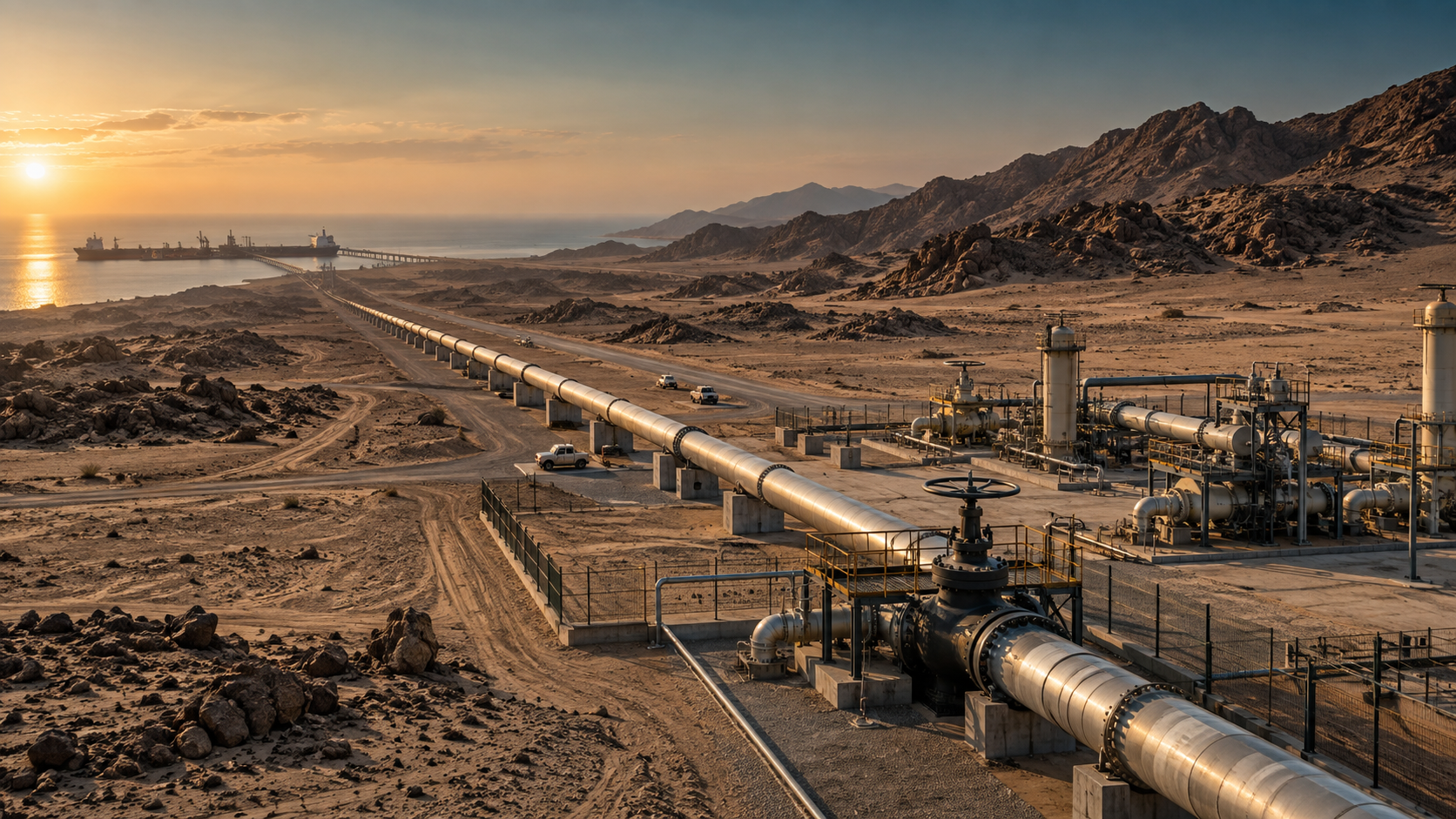
The 1,200-kilometer pipeline carries crude across Saudi Arabia to the Red Sea port of Yanbu. Officials cited by AP say much of the route could be unavailable for weeks. The damage comes as regional conflict has already reduced the flexibility of global oil shipments.
Why this pipeline matters
The East–West route is strategically valuable because it allows Saudi crude to reach the Red Sea without passing through the Strait of Hormuz. That narrow waterway normally handles a large share of the world’s seaborne oil trade and has become harder to use safely during the regional conflict.
The pipeline does not replace all Gulf export capacity, but it provides one of the few large alternatives when Hormuz is disrupted. Any extended outage reduces Saudi Arabia’s room to redirect barrels and makes global supply more dependent on routes facing their own security risks.
The central issue is not one damaged section of pipe. It is the loss of flexibility in an oil system already short of safe alternatives.
What is known about the damage
Reports indicate that drones struck the pipeline and that repairs may require more than a quick restart. Until engineers complete inspections, estimates can change: operators must assess the pipe, pumping equipment and nearby infrastructure before restoring normal flows.
That uncertainty matters to traders. Oil prices respond not only to barrels immediately removed from the market, but also to the chance that replacement supplies cannot reach buyers. Prices rose more than 2% in the first market reaction reported by AP, while subsequent trading remained sensitive to new information from the region.
What consumers could notice
An outage does not translate instantly or evenly into higher gasoline prices. Retail fuel costs depend on crude benchmarks, refinery capacity, inventories, taxes, transport and local competition. Still, a lasting rise in oil prices can filter into transportation, aviation, manufacturing and delivery costs.
The broader economic effect depends on duration. A repair completed near the short end of the estimate would limit the shock. A prolonged outage, further attacks or deeper restrictions around Hormuz and the Red Sea could amplify it.
The Red Sea security dimension
The pipeline ends at Yanbu, shifting exports toward the Red Sea. Yet that corridor is also under pressure. AP reported that Houthi forces have seized additional Red Sea islands, extending the conflict’s reach and adding another layer of uncertainty for commercial shipping.
This means rerouting is not a complete solution. Producers, shipping companies and insurers must evaluate risks across an interconnected network of pipelines, ports and sea lanes.
What to watch next
The most useful signals will be an official Saudi repair schedule, evidence of partial pipeline operations, changes in tanker movements from Yanbu and updates from the International Energy Agency. Markets will also watch whether the security situation around Hormuz and the Red Sea improves or deteriorates.
For now, the key fact is that an important backup route has lost capacity just when the global system needs it most. The coming days should show whether the disruption remains manageable or becomes a larger supply problem.
Reporting note: This developing story was prepared from public reporting available on September 14, 2026. Repair estimates and regional conditions may change.