


UN Allocates $160 Million to Underfunded Crises, with Inclusion Built In
ONELROR · INTERNATIONAL
UN Allocates $160 Million to Underfunded Crises, with Inclusion Built In
A new emergency allocation supports twelve humanitarian responses and reserves funding for people with disabilities. Delivery and access remain the next tests.
By OnelROR Editorial Team · October 2, 2026 · 3-minute read
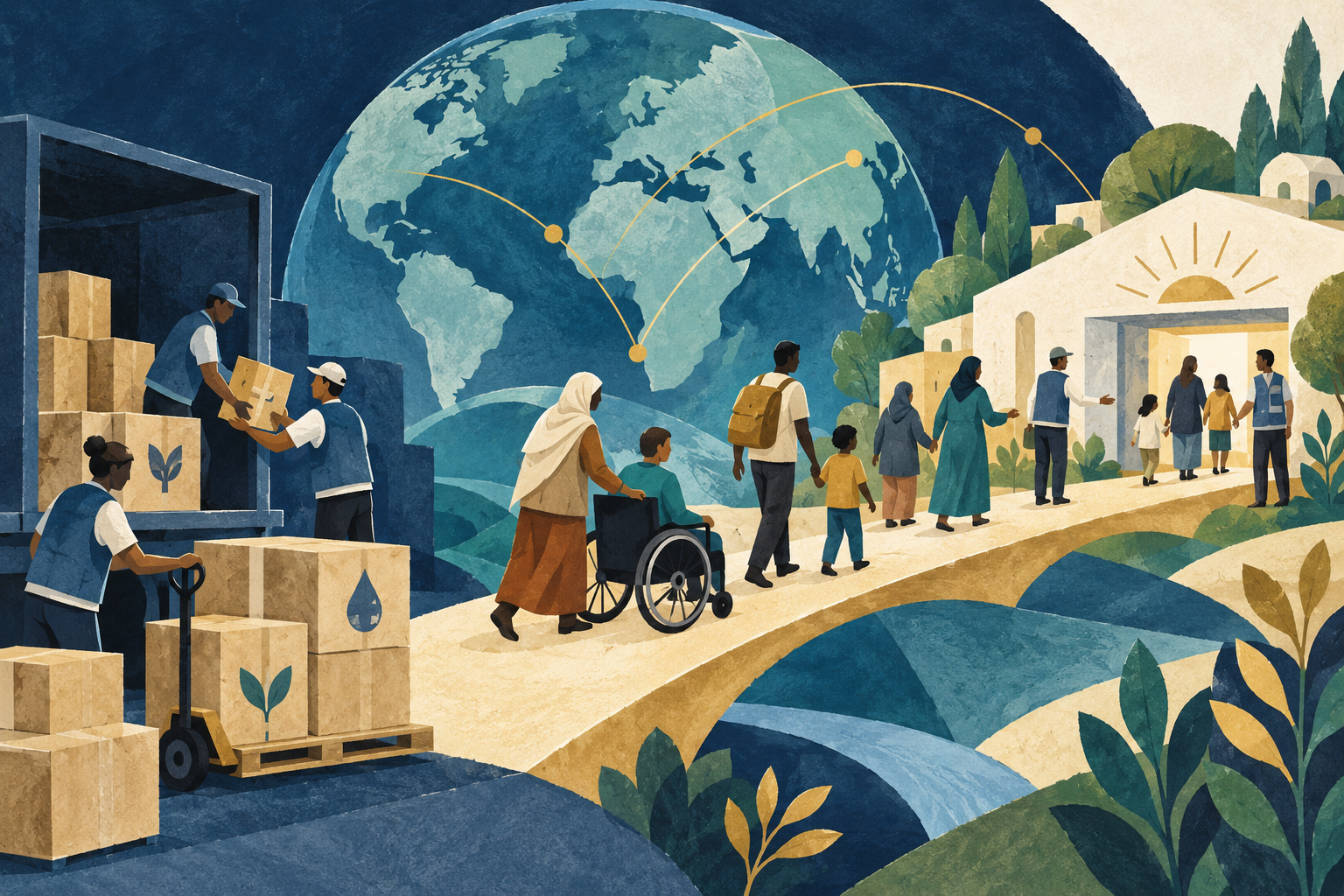
Featured image: original conceptual illustration of inclusive aid delivery, not a photograph of a particular response.
What was announced today
The United Nations allocated $160 million from its Central Emergency Response Fund on October 2, 2026, for twelve underfunded humanitarian crises. OCHA’s same-day announcement separates $150 million for country responses from $10 million intended to make assistance more accessible to people with disabilities.
Afghanistan, the occupied Palestinian territory and Yemen each receive $18 million from the country-response portion. Somalia and Sudan receive $16 million each. The other recipients are Burkina Faso, Cameroon, Chad, Cuba, Mali, Niger and South Sudan. These allocations are funding decisions; the announcement does not establish that all the resulting assistance has already reached people.
The scale needs careful reading
OCHA places this decision within a broader effort to reach 87 million people with severe humanitarian needs this year. That figure describes the wider humanitarian priority, rather than a verified beneficiary count for this single allocation. The agency says total CERF allocations so far in 2026 now amount to $483 million.
The UN Geneva briefing summary, also dated October 2, corroborates the package and its disability-inclusion component. Both reports describe the announcement, not completed programme results.
Inclusion has its own funding line
The $10 million component addresses urgent needs of people with disabilities across the twelve crises. The UN Global Disability Fund is expected to provide up to $4 million in complementary funding, together with technical support. OCHA says that support includes strengthening the capacity and participation of local organizations of persons with disabilities.
That structure raises concrete questions for later reporting: whether assistance is reachable, whether information is usable, and whether the intended communities can participate in shaping the response. A reserved budget creates an opportunity to answer those questions; it is not proof that every barrier has been resolved.
What to follow after an allocation
CERF is the UN emergency fund managed by OCHA. Its data hub distinguishes contributions from allocations, a useful reminder that money entering a fund and money assigned to a response are different stages.
For readers tracking this package, subsequent project records and delivery reports matter more than repeating the headline amount. Look for the activities funded, the timing of assistance, the people reached and the inclusion measures implemented. OCHA also stresses that political action to secure humanitarian access is necessary: financing alone cannot guarantee that responders can reach everyone in need.
Source note: OCHA release and UN Geneva briefing, October 2, 2026; CERF data hub for institutional context. This article reports an allocation, with implementation still to be assessed.