





Amazon Prime Air Cargo Plane Crash in Miami: What Investigators Know So Far
U.S. NEWS | AVIATION
Amazon Prime Air Cargo Plane Crash in Miami: What Investigators Know So Far
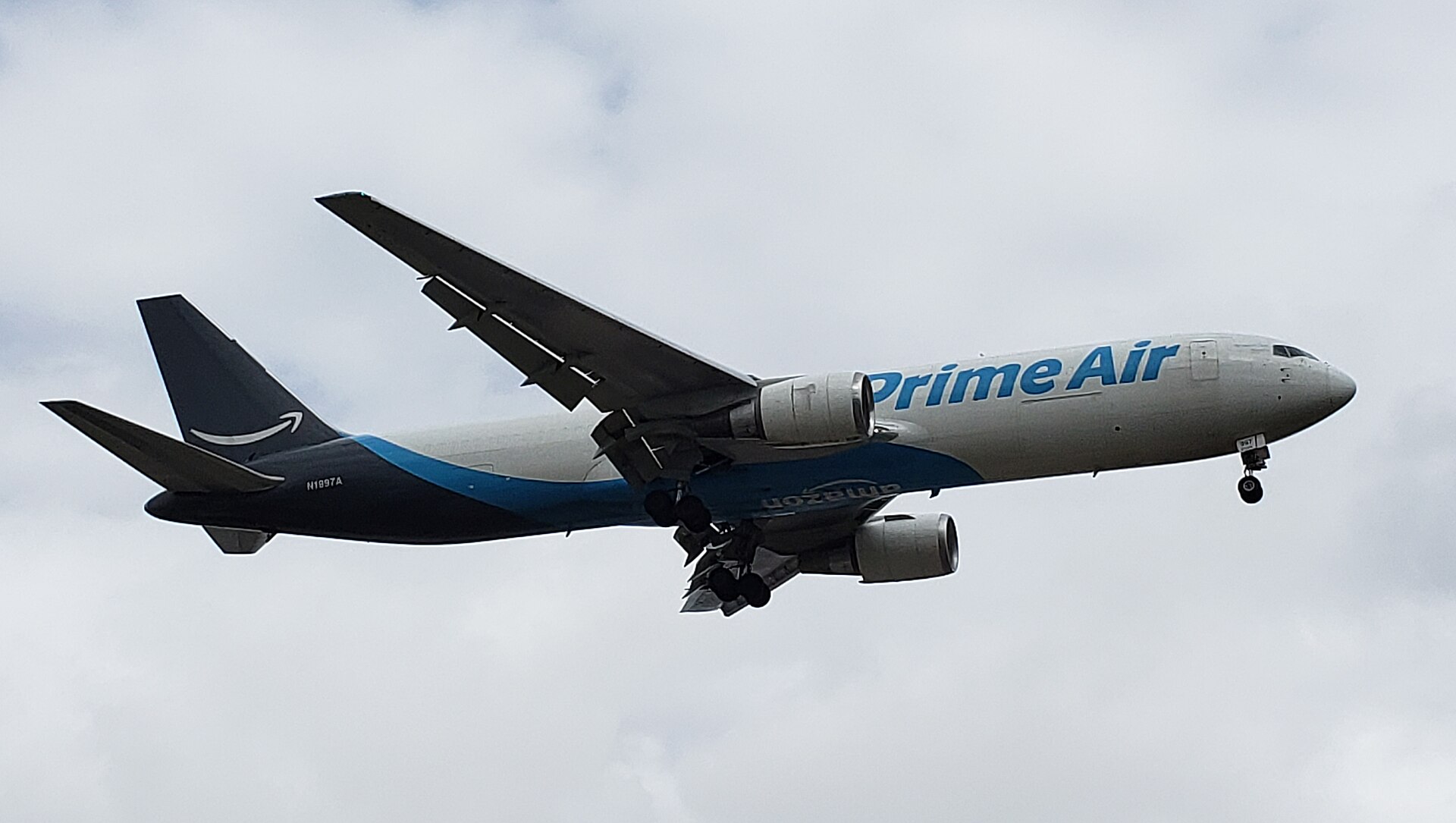
Five people were killed after a Boeing 767 operating for Amazon’s air cargo network overran a runway at Miami International Airport. Federal investigators are examining flight-recorder data, the landing sequence, weather conditions and whether the crew attempted to abandon the landing.
MIAMI — Federal investigators are examining the final moments of a Boeing 767 cargo flight that overran Runway 30 at Miami International Airport, killing five people on the ground and raising questions about the aircraft’s touchdown, braking sequence and an apparent attempt to initiate a go-around.
What Happened at Miami International Airport?
21 Air Flight 7598 was arriving in Miami from San Juan, Puerto Rico, on September 6 when the Boeing 767-33A overran the end of Runway 30 during landing.
The aircraft was operating a commercial cargo flight as part of Amazon’s air transportation network.
According to federal investigators, the aircraft traveled approximately 1,300 feet beyond the end of the runway before striking airport equipment, a van on airport property and another vehicle beyond the airport perimeter.
Operator: 21 Air LLC
Flight: Flight 7598
Route: San Juan → Miami
Runway: Runway 30
Fatalities: 5 people on the ground
Investigation: National Transportation Safety Board
Five Workers Were Killed on the Ground
The five people who died were not aboard the aircraft.
They were traveling in a van belonging to Professional Ocean Service Corp., a company that provides aircraft cleaning services.
Seven workers were reportedly inside the van when it was struck.
Authorities identified the victims as Rolando Aleman Leon, 55; Yoel Rodriguez Naranjo, 53; Julio C. Pineda, 75; Carlos Acosta Fajardo, 53; and Javierkys Reyes Quevedo, 47.
Five other people were injured. The pilot and co-pilot survived and were later released from the hospital.
Flight Data Points to an Attempted Go-Around
Information recovered from the aircraft’s flight data recorder is giving investigators a more detailed picture of what happened immediately after touchdown.
The NTSB said the nose landing gear and right main landing gear touched down before the left main landing gear.
Recorded data later showed the brakes being released and the throttles increasing to levels consistent with go-around thrust.
Investigators are examining whether the crew attempted to abandon the landing after touchdown — and why the aircraft ultimately continued beyond the runway.
The throttles were subsequently reduced to idle and the brakes were reapplied.
Investigators also reported that recorded data did not show deployment of the speed brakes or thrust reversers during the sequence under examination.
These findings do not establish the cause of the crash. The investigation remains ongoing and the NTSB has not issued a final probable-cause determination.
Weather Is Also Under Examination
Weather conditions are another part of the investigation.
Strong winds were reported around Miami during the aircraft’s arrival, and investigators are examining how wind, groundspeed and the aircraft’s touchdown point may have affected the landing.
A tailwind can increase an aircraft’s groundspeed and the distance required to stop.
However, investigators have not concluded that weather caused the accident.
The NTSB has not determined the probable cause of the accident. Questions surrounding crew decisions, aircraft performance, braking, weather and airport infrastructure remain part of the investigation.
Runway Safety Systems Are Getting New Attention
The crash has also renewed attention on Engineered Materials Arresting Systems, commonly called EMAS.
EMAS uses specially engineered crushable material beyond a runway to help slow aircraft during certain runway overruns.
The runway involved in the Miami accident did not have such a system.
Miami International Airport nevertheless has a runway safety area that complies with applicable federal requirements.
Whether additional runway-overrun protection could have reduced the consequences of this accident is one of many issues likely to receive further scrutiny.
The Boeing 767 Was More Than Three Decades Old
The aircraft involved was approximately 32 years old.
It originally operated as a passenger aircraft before later being converted for cargo operations.
The aircraft was operated by Miami-based 21 Air LLC as part of Amazon’s cargo network.
Aircraft age by itself does not determine whether an airplane is safe. Commercial aircraft can remain in operation for decades when maintained according to regulatory and manufacturer requirements.
Investigators will nevertheless review the aircraft’s maintenance records, mechanical condition and systems as part of the broader investigation.
Investigators Recovered Both Black Boxes
Investigators recovered both the flight data recorder and cockpit voice recorder from the aircraft.
The devices were sent to the NTSB’s laboratory in Washington for analysis.
Together, the recorders can help investigators reconstruct the aircraft’s performance and the decisions and communications inside the cockpit during the final stages of the flight.
The Crash Disrupted One of America’s Largest Airports
Miami International Airport temporarily suspended operations following the accident.
Flights later resumed, but runway closures caused widespread delays and cancellations while investigators examined the crash scene.
Miami International is a major passenger airport and one of the most important cargo gateways linking the United States with Latin America and the Caribbean.
What Happens Next
The federal investigation is still ongoing.
Investigators will continue reviewing the aircraft, flight recorders, weather data, air traffic control information, crew actions, maintenance records and physical evidence from the scene.
A final probable-cause determination typically comes later, after investigators have evaluated the available evidence.
For Miami, however, the human cost is already clear.
Five workers who went to work that day never returned home.
Their deaths remain at the center of an accident that could ultimately lead to new discussions about cargo operations, landing procedures and runway safety.
This report was compiled using information released by the National Transportation Safety Board and reporting from multiple established news organizations. The federal investigation remains ongoing.
National Transportation Safety Board — Investigation DCA26MA352