


Direct Thermal or Thermal Transfer? The Ribbon Changes the Job
Technology · Printing Explained
Direct Thermal or Thermal Transfer? The Ribbon Changes the Job
Both methods use heat, but they put the image on a label differently. Direct thermal printing changes a heat-sensitive surface; thermal transfer moves a coating from a ribbon onto the material. That distinction matters more than the generic words “thermal printer.”
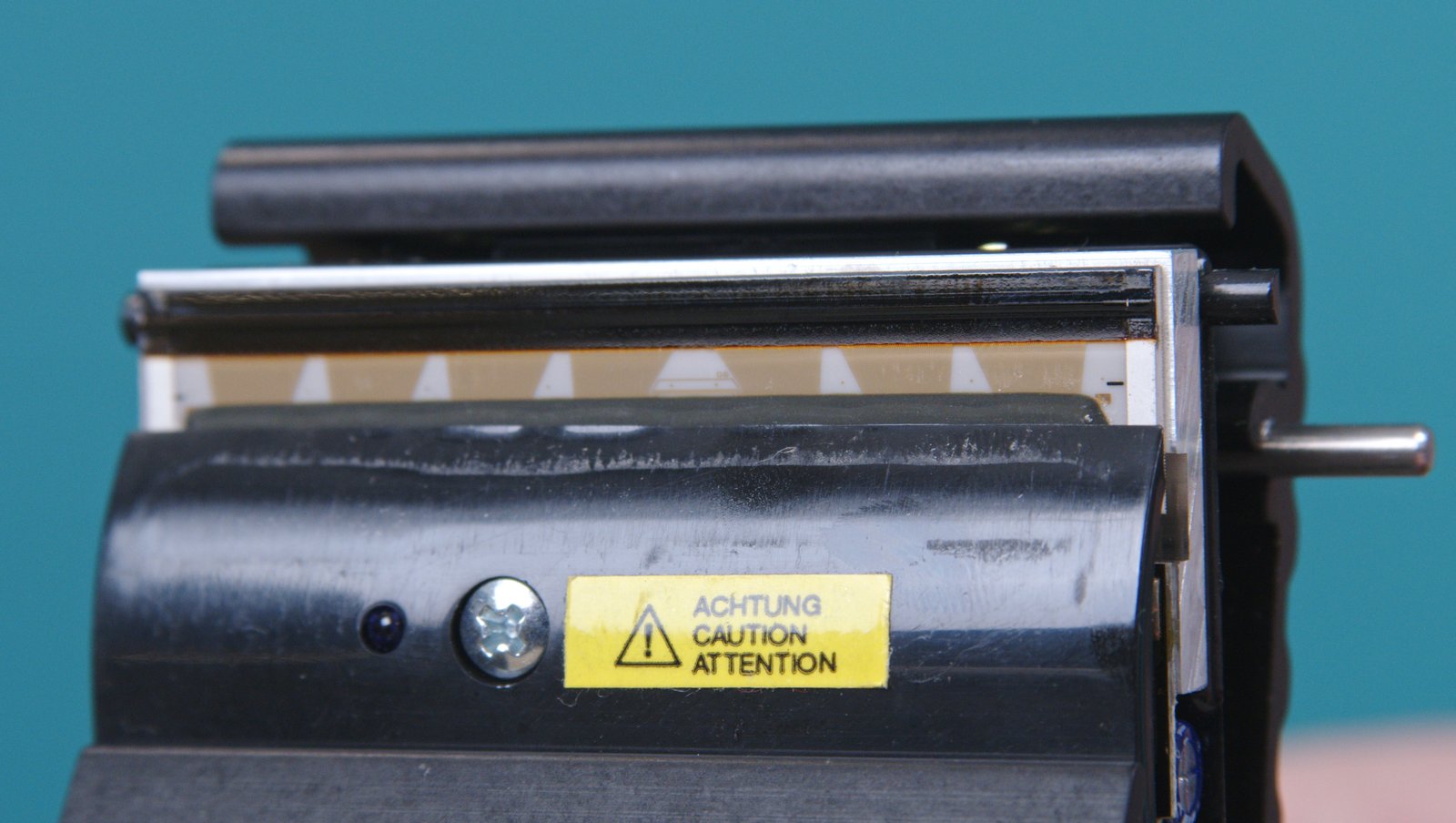
Featured archival photograph: the printhead of an Axiohm Blaster Advantage direct-thermal printer, photographed in 2021. Gravis, CC BY-SA 4.0. Unmodified.
Two paths from heat to an image
In a direct thermal printer, small heated elements act on specially treated media. There is no ribbon to load and no ink cartridge or toner to replenish. The consumable surface itself supplies the color-forming response. Ordinary paper is not an interchangeable substitute.
Thermal transfer adds a ribbon between the printhead and the label. Heating transfers its wax or resin coating to the receiving surface. As Zebra explains, this approach can work with materials including paper, polyester and polypropylene. The ribbon and receiving material must be compatible; “thermal” alone does not specify the supplies.
A shipping label and an asset tag have different lives
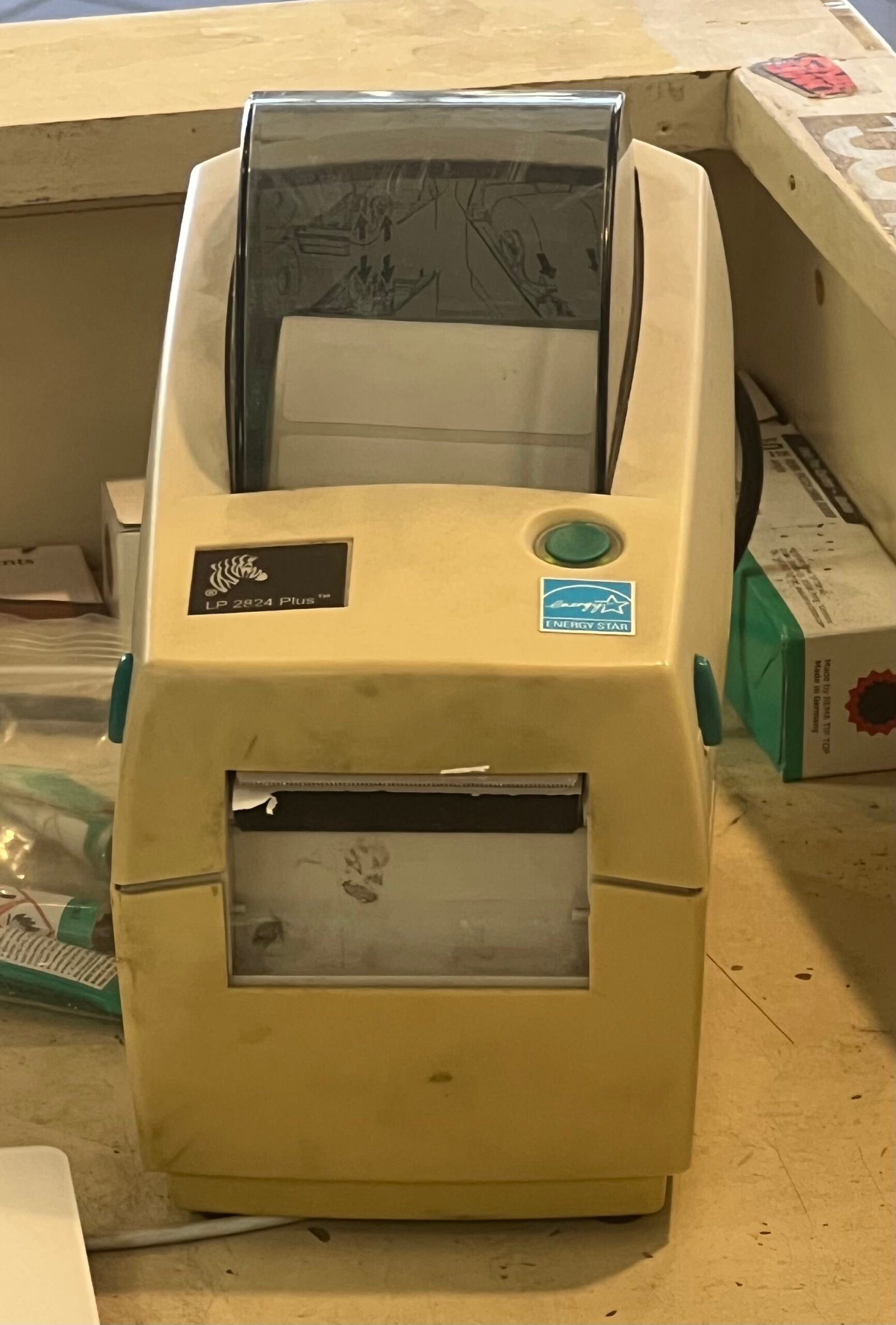
A parcel label may need to survive a journey; an equipment identifier may need to remain readable for years. Direct thermal is widely used for receipts and shipping labels, but its surface remains sensitive after printing. Excessive heat or light can darken the background, reducing the contrast that makes text and barcodes readable.
For longer service or harsher surroundings, thermal transfer provides more options. It is not automatically indestructible: Zebra’s comparison stresses matching the label material, ribbon and adhesive to the exposure. A claim about the printing method is not a guarantee for every label sold under that name.
Compare the whole consumable system
Skipping a ribbon simplifies loading, but does not prove a lower total cost. SATO’s 2015 technical comparison considers media, printhead wear, ribbon changes and the required label lifetime together. Its historical cost examples are not current quotations.
For a practical comparison, specify three things: how long the label must remain legible, what heat, sunlight or chemicals it will encounter, and which media and ribbons the exact printer supports. Then test the intended combination in its real use conditions. Do not assume that two rolls with the same dimensions use the same printing process.

The useful question
Instead of asking whether thermal printing “needs ink,” ask where the image-forming material comes from: the treated label or a separate ribbon. Follow that with a second question: will this exact label system remain readable for the job it must do?
Source note: manufacturer explanations were checked October 19, 2026. The two Zebra pages show no publication date; the SATO paper is dated 2015. Photographs are licensed archival examples, not OnelROR product tests. No manufacturer or photographer endorsement is implied.



