


New Bee Guitar Cable: Fit Checks

By OnelROR Editorial Team · October 26, 2026
As an Amazon Associate I earn from qualifying purchases.
Choosing a guitar cable is mostly a fit decision. The length has to reach without pulling at either jack, and the plug shape has to clear the instrument and nearby gear. A cable can have the right connector size on paper and still be awkward for a particular setup, so measure the route and inspect the jack before buying.
This guide covers the New Bee JT3M listing selected as a black, 10-foot cable with a right-angle plug style. The product page also offers other lengths and a straight style; confirm the options shown on the final order page because a listing can open on a different variation.
Measure the route, not just the gap
Measure from the instrument’s output jack to the amp, pedalboard, or other device along the path the cable will actually take. Include the slack needed when you stand, turn, or move the instrument. A straight-line measurement across the room understates the distance when the cable must follow a stand, wall, or pedalboard edge. Avoid planning a taut run: tension at a plug can make a connection inconvenient and can tug on the jack.
Ten feet may suit a compact practice area or a short stage run, but the useful length depends on where the player and equipment sit. If the route includes several turns or the instrument moves widely, compare the other available lengths instead of assuming the shortest workable path will remain comfortable.
Check what “right angle” means for your jack
The selected style is listed as right-angle. That describes the plug orientation, not a universal fit guarantee. Look at the instrument’s jack location and the clearance around it: a side-mounted jack, strap, body shape, or nearby control can affect how a right-angle plug sits. A straight plug may be easier to route in some positions; in others, a right-angle plug may reduce how far the connector projects. Compare the jack area with the product listing image and choose the orientation that leaves room for the cable to exit without a sharp bend.
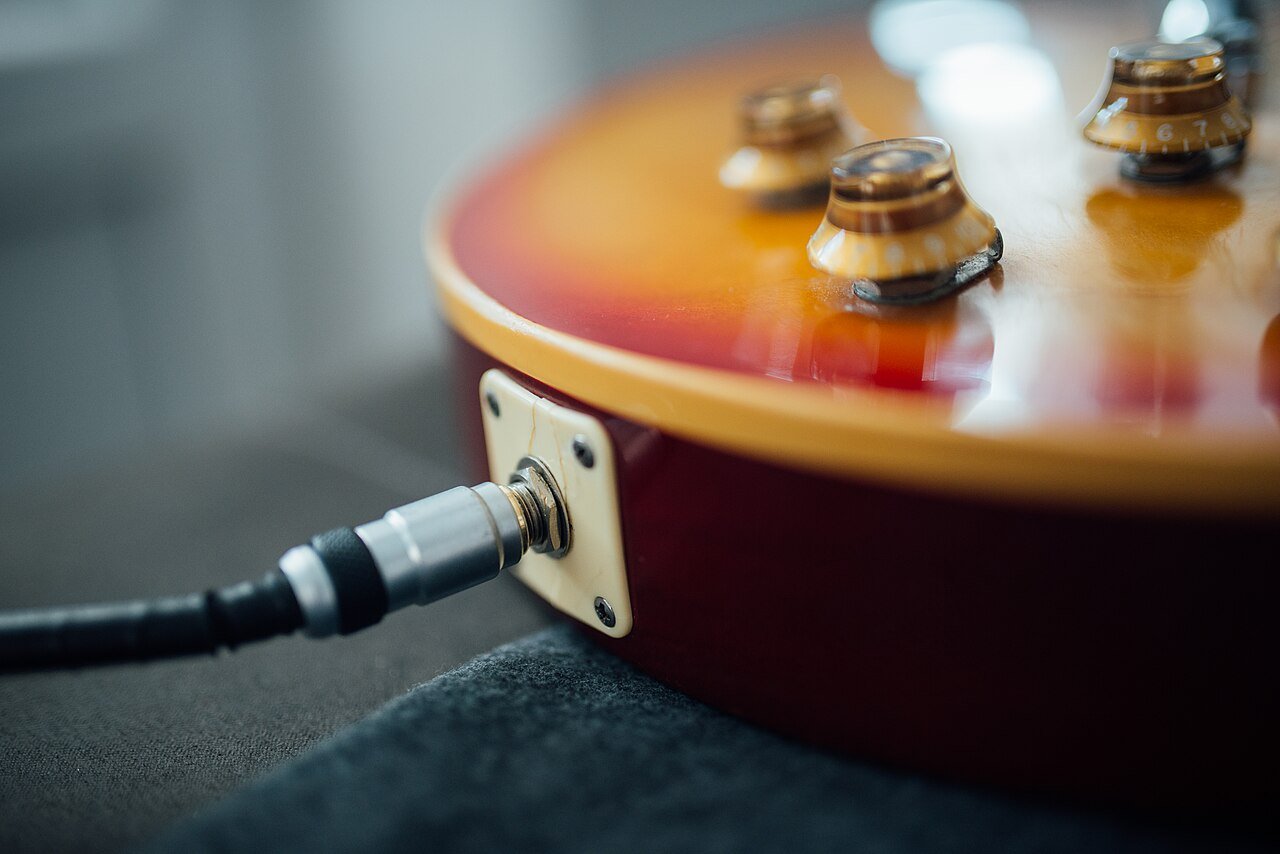
Also check the equipment manual for connector and signal requirements. Hosa’s connector guide describes TS (tip-sleeve) as a common unbalanced instrument connection for guitars, basses, and unbalanced keyboards. That general convention does not prove compatibility with every instrument or device. If a manual specifies TRS, balanced wiring, a locking connector, or another connection, follow that specification rather than relying on the phrase “guitar cable.”
Keep the cable easy to put away
After use, avoid winding the cable tightly around your hand or forcing kinks into it. Hosa’s over-under wrapping guide explains a method that alternates the coil direction to reduce twisting and helps the cable uncoil more cleanly. Store it loosely, away from sharp edges and heavy objects, and inspect the plug and jacket if the cable has been pinched or pulled.
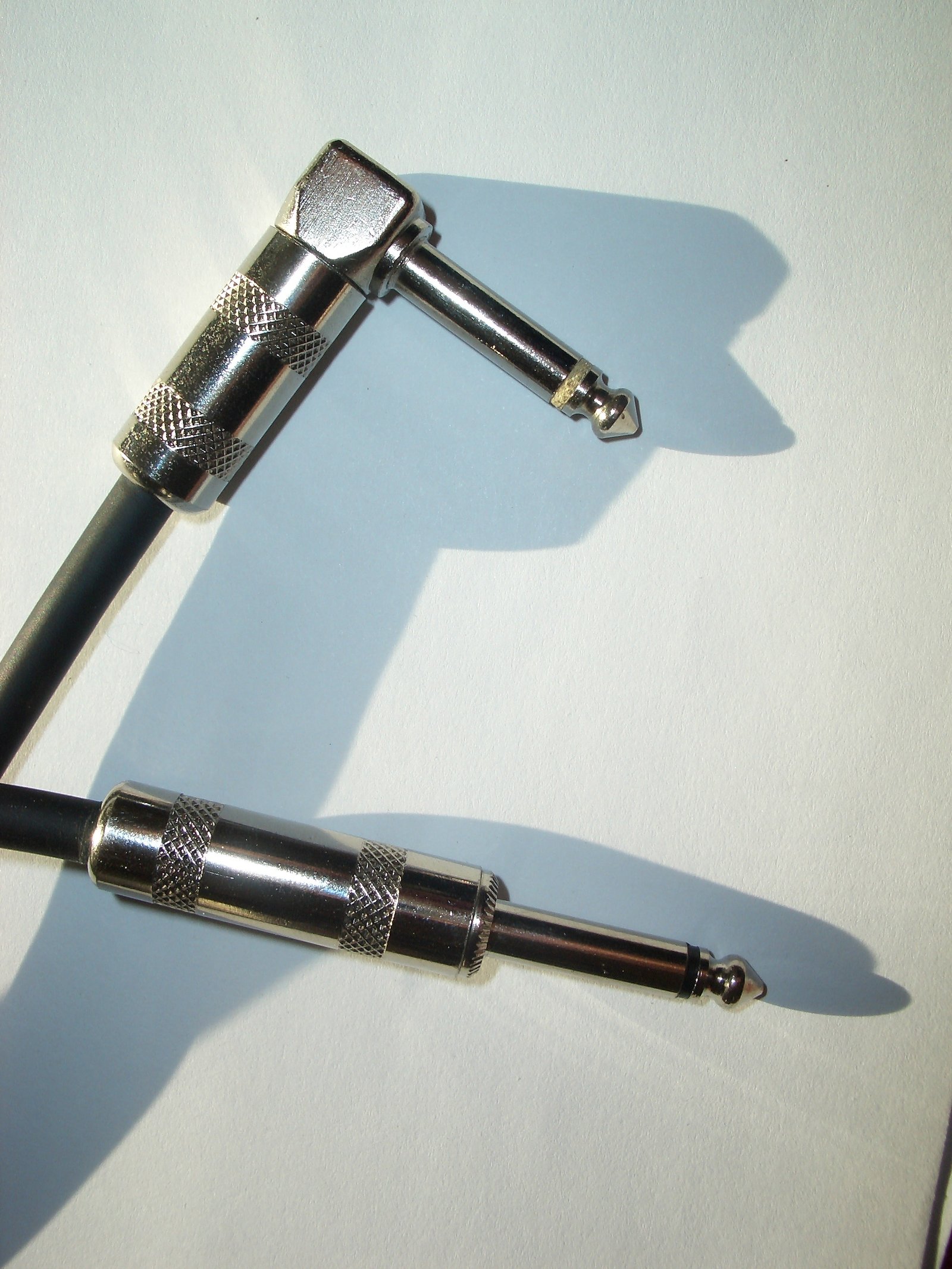
The images in this guide are contextual photographs of other cables, guitar connections, and plugs; they are not photographs of the New Bee product and do not document a hands-on test. Use the listing and your equipment manual to verify the exact variation and connection before purchase.
Before you order
- Confirm the listing shows black, 10 ft, and the right-angle style.
- Measure the full cable route and leave comfortable slack.
- Check plug clearance at the instrument and the other device.
- Verify the connector type in your instrument or equipment manual.
- Recheck the destination and selected variation at checkout.
Check the selected variation on Amazon: View the New Bee JT3M listing. I may earn a commission if you buy through this link, at no extra cost to you. Check the length, plug style, color, and destination before ordering.
Sources
- New Bee JT3M product page (10 ft and straight/right-angle options; checked October 26, 2026).
- Hosa, “Balanced vs. Unbalanced Audio: Which Cable Do You Need?” (general TS/unbalanced guidance; checked October 26, 2026).
- Hosa cable-wrapping guide (over-under method; checked October 26, 2026).
Image credits: Featured photo: Guitar cable connected to an amplifier (context), Shixart1985, CC BY 2.0, Wikimedia Commons. Inline photo: cord plugged into another electric guitar (context), Shixart1985, CC BY 2.0, Wikimedia Commons. Inline photo: generic straight and right-angle plugs (context), Claude-Étienne Armingaud (Claudé), CC BY-SA 3.0, Wikimedia Commons. These images do not depict or document the New Bee cable.