


New Zealand’s Glow-worm Is a Fly Larva That Hunts With Light
Curiosities · Science & Space
New Zealand’s Glow-worm Is a Fly Larva That Hunts With Light
A blue-green ceiling of lights is more than a cave spectacle: each glow can belong to a fungus-gnat larva using light to guide prey into a sticky silk trap.
OnelROR Editorial Team · October 18, 2026 · Miami (America/New_York) · 3 min read
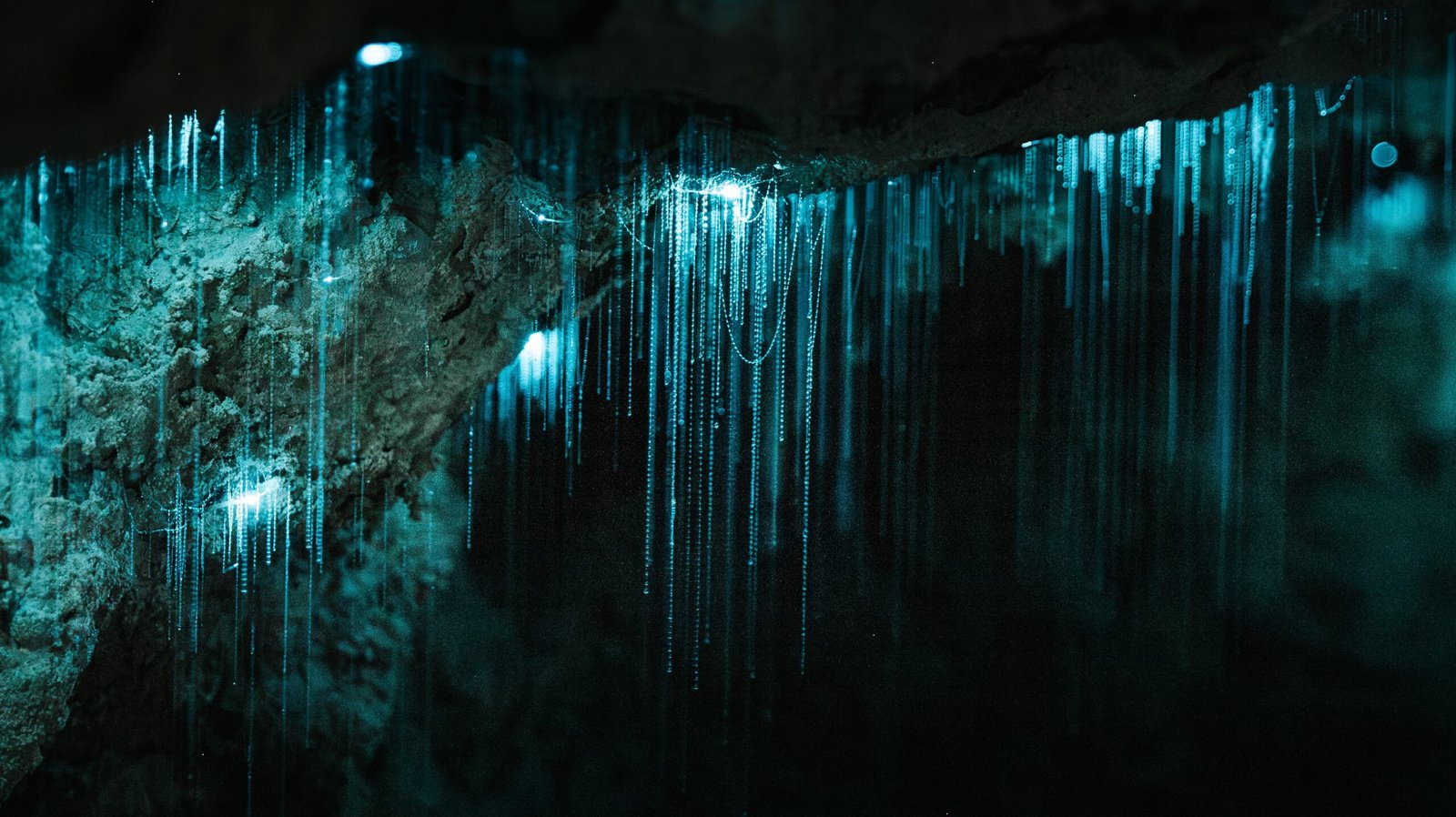
Featured photograph: glowworms at Milky Way Glowworm Cave, Waipu, New Zealand. Ian Fox at Waipu Caves Farm Park / Wikimedia Commons, CC0. Taken February 20, 2025.
Not a worm, and not a firefly
“Glow-worm” is a common name, not a family tree. The glowing larvae belong to the fungus-gnat species Arachnocampa luminosa, a fly in the order Diptera. They are neither worms nor the beetles known as fireflies. The adult that eventually emerges is a small gnat; the long, glowing form is the larva, the stage that builds the capture system. Te Ara’s natural-history account explains how observations of the life cycle corrected the old beetle assumption.
The light guides prey to the snare
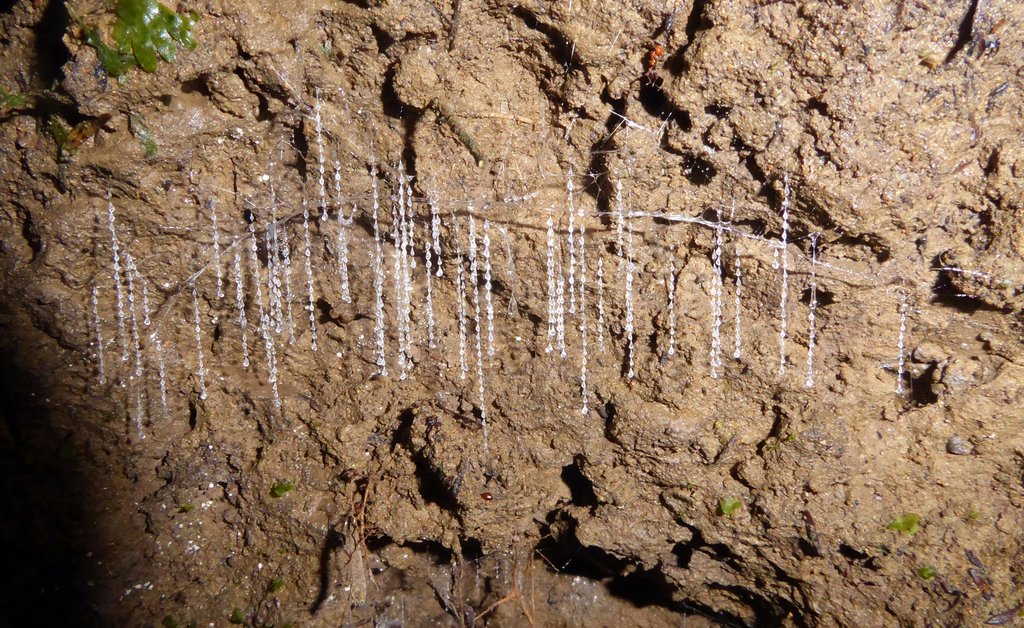
A larva builds a small silk tube and hangs fine threads below it, placing sticky droplets along the lines. In darkness, a flying insect can mistake the blue-green glow for an opening or a patch of sky and head toward it. The light draws prey within reach; the adhesive threads do the catching. When an insect hits a line, the struggle can alert the larva, which pulls the thread inward to recover its meal. It can cut away prey that is too large or unwanted. New Zealand’s Science Learning Hub describes the same lure-and-line sequence.
Moist air helps the trap work
The threads depend on their surroundings. A study published on February 28, 2019 compared A. luminosa fishing lines in wet cave conditions and after drying. The results showed how moisture supports their adhesive properties. They should not be read as one universal humidity threshold for every cave or glowworm species.
In a 2024 study of Waitomo Glowworm Cave, a long-running monitoring program tracked the colony while cave managers worked to prevent dry-air conditions that could harm larvae. The cave’s humid, steady environment is not background scenery: it helps preserve the fine lines and droplets that turn the glow into a working lure.
Its light chemistry is not a firefly’s
There is a molecular twist behind the blue-green light. A 2018 analysis found that the glowworm’s luciferase enzyme belongs to the same broad protein family as firefly luciferase, but its luciferin—the molecule that reacts to produce light—is different. The researchers traced the substrate to xanthurenic acid and tyrosine and, in that 2018 paper, proposed a candidate structure that still needed confirmation through synthesis and further light-producing assays.

One cave shows a changing glow, not a universal clock
A paper published on July 7, 2024 analyzed 2011–2023 images from one Waitomo chamber. A fixed-camera program begun in 2011 took photographs every 30 minutes, recording detectable glowing larvae and the intensity of the display. The study found daily rhythms and changes across the year. It discussed temperature and prey as possible influences, without establishing a simple causal explanation.
The record concerns one colony and the larvae visible to its camera, rather than a complete population census or a pattern established for every cave.
The spectacle comes from a compact hunting system: a fly larva, a chemical light, silk, adhesive and humid air. Each visible point can mark a predator waiting for food.
Sources and editorial basis
The article distinguishes a species-level biology summary from findings measured in a particular cave or laboratory setup.
- George Gibbs, “Glow-worms,” Te Ara: The Encyclopedia of New Zealand — natural-history overview; accessed October 18, 2026.
- “Glow-worms,” Science Learning Hub, University of Waikato — published August 8, 2017; accessed October 18, 2026.
- Watkins et al., “New Zealand glowworm bioluminescence is produced by a firefly-like luciferase but an entirely new luciferin,” Scientific Reports — published February 19, 2018.
- von Byern et al., “Biomechanical properties of fishing lines of the glowworm Arachnocampa luminosa,” Scientific Reports — published February 28, 2019.
- Merritt, “Photographic monitoring of glowworm Arachnocampa luminosa in a tourist cave reveals diurnal and annual cycles,” Austral Entomology — first published July 7, 2024.



