



Webb Finds Brown Dwarfs Barely Twice Jupiter’s Mass—Why That Matters
SCIENCE & SPACE | ASTRONOMY
A sweeping new Webb view of the stellar nursery IC 348 highlights objects that formed like stars yet weigh only about twice as much as Jupiter. Their existence tests how little material gravity needs to build a star-like body.
Astronomers have long drawn a practical line between stars and planets by asking how an object formed. Stars emerge when clouds of gas collapse under gravity. Planets generally assemble inside disks around young stars. Brown dwarfs occupy the difficult middle ground: they form like stars but never become massive enough to sustain ordinary hydrogen fusion.
A newly released James Webb Space Telescope panorama of IC 348 brings that boundary into unusually sharp focus. The nearby star-forming region, roughly 1,000 light-years away in Perseus, contains brown dwarfs estimated at only twice Jupiter’s mass. NASA describes them as the least massive brown dwarfs known.
A nursery designed for finding faint objects
IC 348 is young—only a few million years old—so its smallest members still glow with heat left from formation. Webb’s Near-Infrared Camera can see through obscuring dust and identify candidates by their colors and brightness. Researchers then use the telescope’s Near-Infrared Spectrograph to confirm their low temperatures and study their atmospheres.
The new panorama is also scientifically useful beyond its scale. Young stars in the region fire jets into surrounding gas, while dusty structures trace ongoing stellar birth. The image links a dramatic landscape to a careful census of extremely faint bodies.
Not simply “rogue planets”
Mass alone cannot settle whether an object is a planet or a brown dwarf. A free-floating body with two Jupiter masses could have formed through direct collapse, or it could have formed in a planetary disk and later been ejected. Astronomers therefore combine spectra, environment, age and evidence of surrounding material to reconstruct its history.
One of IC 348’s lightest brown dwarfs appears to possess a disk. That is striking because disks contain the raw material from which planets can grow. In principle, an object with roughly planetary mass might host its own smaller planetary system.
The formation puzzle
Traditional estimates often place the minimum mass for star-like formation above these new objects. Turbulence, magnetic fields, radiation and the density of the natal cloud all influence whether a fragment continues collapsing or disperses. Finding several planetary-mass brown dwarfs in one cluster gives theorists concrete targets for revising those calculations.
The result does not erase the difference between stars and planets. It shows that nature can reach the same mass range by more than one route. Formation history, rather than a single number on a scale, may be the clearest distinction.
What comes next
Astronomers need broader surveys of other young clusters to learn whether IC 348 is typical. Follow-up spectroscopy can refine temperatures, compositions and disk signatures. Precise motion measurements may also help establish whether candidates belong to the cluster or lie in the foreground or background.
Webb’s sensitivity is opening a population that earlier observatories could barely detect. Each new example helps answer a basic textbook question: what is the smallest object that can be born the way a star is born?
Sources
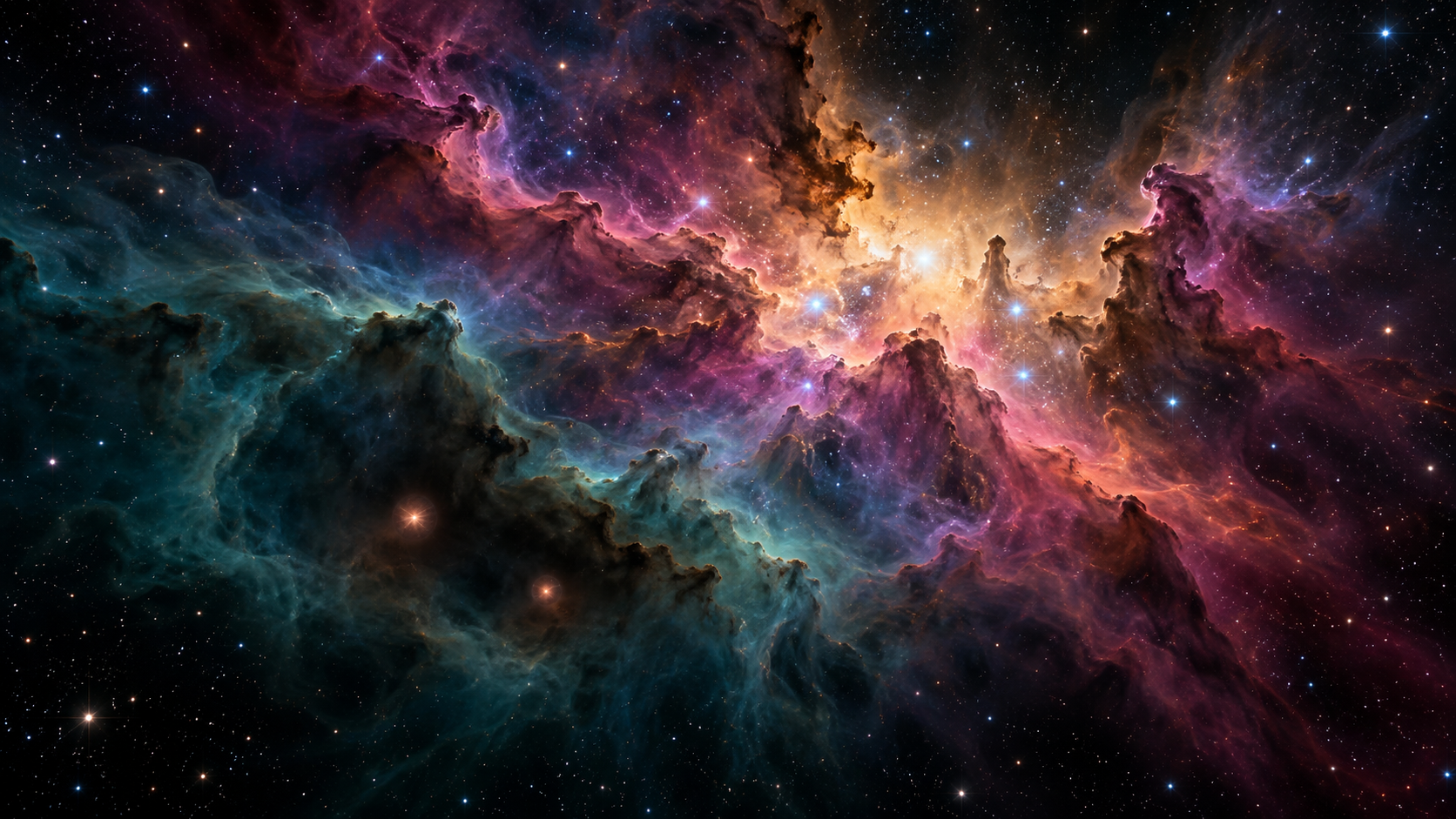
Image note: The featured image is an original editorial illustration created for ONELROR and is not a documentary Webb photograph.