


Why a Cosmic Radio Filament Looks Like a Giant Treble Clef
Why a Cosmic Radio Filament Looks Like a Giant Treble Clef
By OnelROR Editorial Team
A giant shape resembling a musical symbol is glowing in radio data from a galaxy cluster behind the Milky Way. Astronomers have nicknamed it the “Treble Clef.” The resemblance is striking, but the object has no connection to music: it is a pattern in telescope data, and its likely story involves an old black-hole outburst followed by a collision between galaxy clusters.
The source sits almost directly behind the Milky Way’s crowded central plane. Stars, gas and dust in our own galaxy make it difficult to see what lies beyond. Radio, X-ray and infrared observations reveal different parts of the scene and help astronomers study this obscured region.
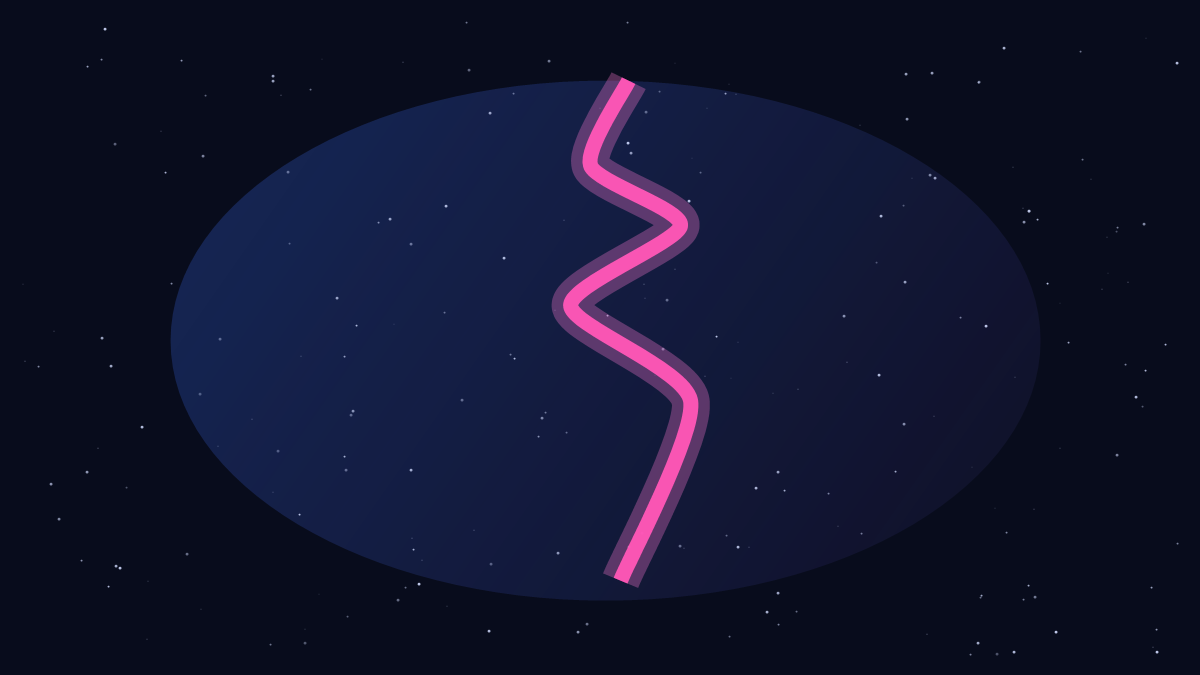
The color image combines radio emission measured by LOFAR (red), hot gas seen in X-rays by Chandra and eROSITA (blue), and infrared observations from UKIDSS (mostly white). Those colors distinguish datasets; they are not what a person would see by looking at the cluster. The red “clef” is a radio structure, not an optical object hanging in space.

How a radio “phoenix” can glow again
The researchers’ explanation has two stages. First, a supermassive black hole in a galaxy at the cluster’s center likely erupted, driving clouds of charged particles and magnetic fields outward at close to the speed of light. Those particles produced radio waves, then gradually lost energy and grew faint.
Later, two galaxy clusters began merging. Their hot gas and motion through it could compress and re-energize the old particle cloud, making it bright again in radio waves. The team says shock waves from the collision may also have helped. This “radio phoenix” describes a revived radio source; it does not mean a new black hole formed.

X-ray observations provide evidence of the cluster collision, while the radio map reveals the filaments that inspired the nickname. The NASA release says the direct collision likely happened a few hundred million years ago, with the clusters now moving apart.
The familiar outline is pareidolia: our tendency to recognize patterns in irregular forms. The radio filaments may preserve evidence of an ancient black-hole outburst, while the cluster merger may have lit them up again. The researchers connect radio, X-ray and infrared evidence to build a plausible history, but the shape alone cannot show exactly how every filament formed. More low-frequency radio observations can help test the explanation.
Sources: NASA Chandra, 14 October 2026; A. Botteon et al., “The Treble Clef radio phoenix and its old nonthermal filaments,” arXiv v2, 5 October 2026.