


Why Stars Twinkle More Near the Horizon

OnelROR Editorial Team | November 10, 2026 | 2 min read
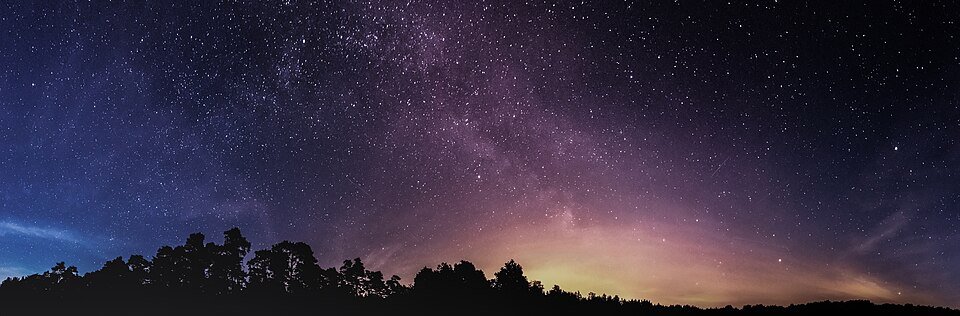
Cover: Night sky above Küssnacht and the Rigi mountain, Switzerland, photographed July 14, 2020. Archive photograph for context, not a measurement of twinkling. Resized 960px Commons rendition; no further content edits. Featured display may crop the view. Photo: Eddie basler / Wikimedia Commons, CC BY-SA 4.0. Adaptations retain the same or a compatible license.
A star low above a clear horizon can seem to flicker more strongly than one high overhead. The difference does not necessarily mean that the lower star is changing its own light more rapidly. Part of what you see happens during the final stretch of the light’s journey, through Earth’s atmosphere. [1]
Moving air changes the light’s path
NASA’s StarChild explanation describes air movement, or turbulence, bending incoming starlight slightly. Some light reaches your eye while some is diverted away. Those changing paths make the apparent brightness fluctuate: the familiar twinkle. Most stars in this everyday explanation are shining steadily while the atmosphere changes the view. [1]
The horizon adds more atmosphere
Looking toward a low star means looking through more atmosphere than when you look toward a star high in the sky. NASA therefore notes that stars near the horizon appear to twinkle more. The useful comparison is the viewing direction, rather than an assumption that a brighter-looking flicker reveals a different kind of star. [1]
A still photograph leaves something out
NASA’s Astronomy Picture of the Day illustrates a telescope’s changing view of Betelgeuse with a time-lapse sequence. It explains that distant stars look like points to our eyes, while changing pockets of air continually alter their apparent images. This is an effect of observing through the atmosphere, not a recording of the star physically jumping around. [2]
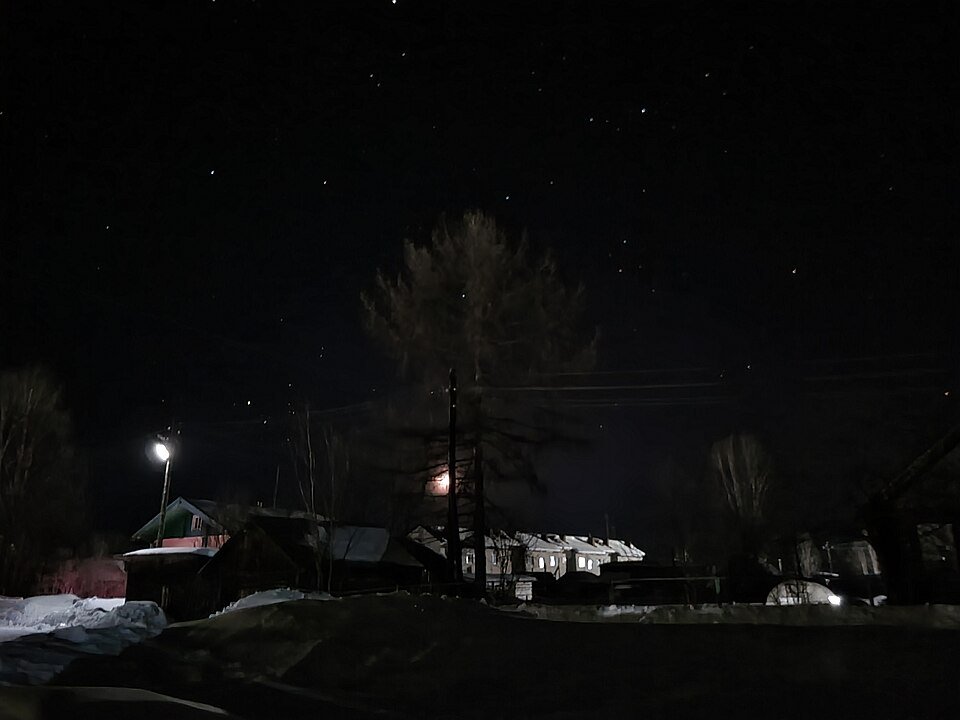
The photographs here provide night-sky context. A single exposure cannot demonstrate the moment-to-moment flicker you notice by eye; the panorama also combines multiple frames. Neither the photographs nor their colors measure the amount of turbulence.
Try a simple comparison
On a clear evening, if stars are visible from a safe stationary spot, compare one low above an unobstructed horizon with one higher up. Note their positions and what you notice. Treat this as a qualitative observation, not a controlled experiment: different stars and changing conditions prevent it from being a measurement of atmospheric turbulence.