

Why Windows Get Condensation—and What to Check First
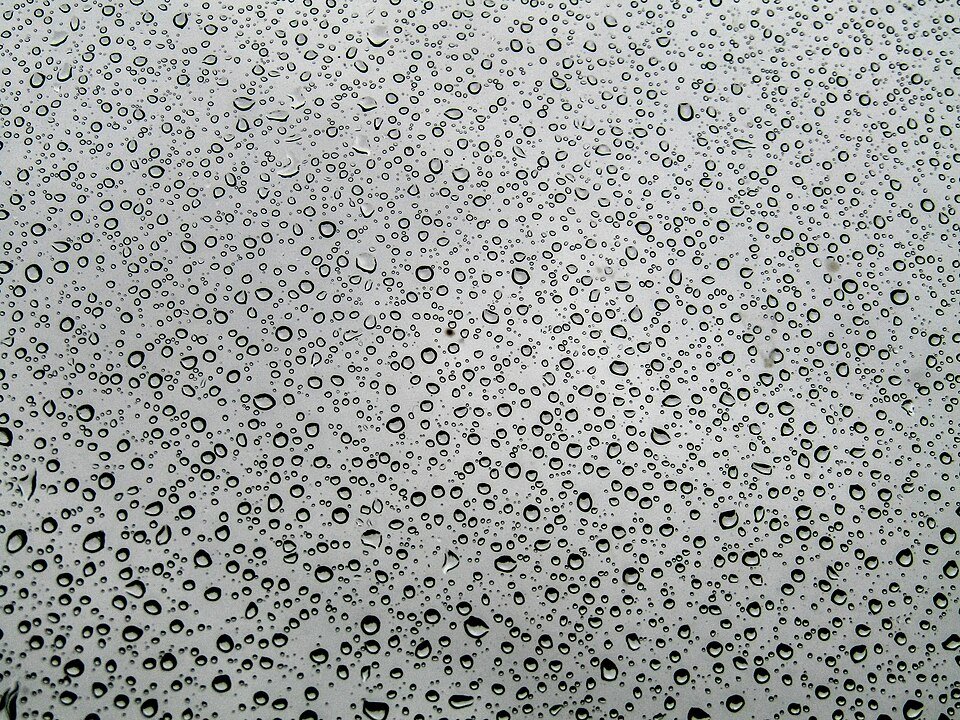
Water on the room-facing side of a window can look like a leak, but it often forms when humid indoor air meets cold glass. The droplets alone do not prove a window is defective, and a quick check cannot diagnose a building. Start by noting where the water appears, how often it returns, and what indoor conditions may be contributing.
Featured photo: water droplets beading across a window pane. Photo by Partonez, CC BY-SA 4.0, via Wikimedia Commons. Image unaltered.
First, locate the moisture
Check whether droplets are on the room-facing glass, on the outside, or between panes. Indoor condensation forms on a surface that has cooled below the point at which moisture in the air condenses. Water trapped between panes or moisture that appears to enter around a frame may need a different assessment; this article cannot determine the cause from appearance alone.
Dry the inside glass and sill, then observe whether moisture returns during the same conditions. Note the room, time, outdoor weather, and activities such as showering, cooking, or drying clothes indoors. Look for persistent damp trim, staining, peeling finishes, or standing water. If moisture keeps returning or materials remain wet, arrange an assessment by a qualified window or building professional rather than relying on the glass alone.
Measure humidity and reduce indoor sources
A small hygrometer can help you see whether indoor relative humidity rises during certain activities. The U.S. Environmental Protection Agency says to keep indoor relative humidity below 60 percent if possible, ideally between 30 and 50 percent. These are general indoor ranges, not a promise that condensation will disappear: climate, outdoor conditions, insulation, and the window surface all matter.
Use bathroom and kitchen exhaust fans that vent outdoors while showering or cooking, and let them run long enough to remove humid air. Check that a clothes dryer vents outdoors. If you use a humidifier, review its setting and clean it according to its instructions. Everyday moisture can also come from boiling water, indoor clothes drying, and other activities; address the source that fits your household instead of trying every measure at once.

Improve air movement and warm cold surfaces
EPA describes three broad ways to reduce condensation: lower indoor humidity, improve air circulation, and warm cold surfaces. Keep vents and the space around windows clear so room air can move. Insulation or storm windows may raise the temperature of a cold interior surface, but the right approach depends on the building and climate. Avoid covering a persistent moisture problem without first finding why it is happening.
Ventilation choices depend on outdoor conditions. In cold, dry weather, bringing in some outdoor air can help remove moisture; in warm, humid weather, a dehumidifier or air conditioner may be more useful. Follow the equipment instructions and consider a building professional if the problem is widespread or difficult to control.
A short check-in routine
- Identify which side of the glass is wet and whether moisture is between panes.
- Dry the room-facing glass and record when droplets return.
- Use a hygrometer to understand humidity changes, not as a stand-alone diagnosis.
- Reduce moisture at its source and use exhaust fans that vent outdoors.
- Improve circulation and consider cold-surface insulation when appropriate.
- Seek qualified help for recurring water, visible leaks, or damp materials that do not dry.
EPA guidance emphasizes moisture control because persistent dampness can damage materials and support mold growth. Treat ongoing water as a problem to investigate, while remembering that condensation on glass by itself does not identify the source or establish that mold is present.
Official references
- U.S. EPA: What are the main ways to control moisture in your home?
- U.S. EPA: A Brief Guide to Mold, Moisture and Your Home
- U.S. EPA: Mold Course, Chapter 9
Sources accessed October 24, 2026.
Written by OnelROR Editorial Team. October 24, 2026. 4-minute read.