





CDs Are Back: The Numbers Behind Physical Music’s 2026 Comeback
News & Trending · Culture & Technology
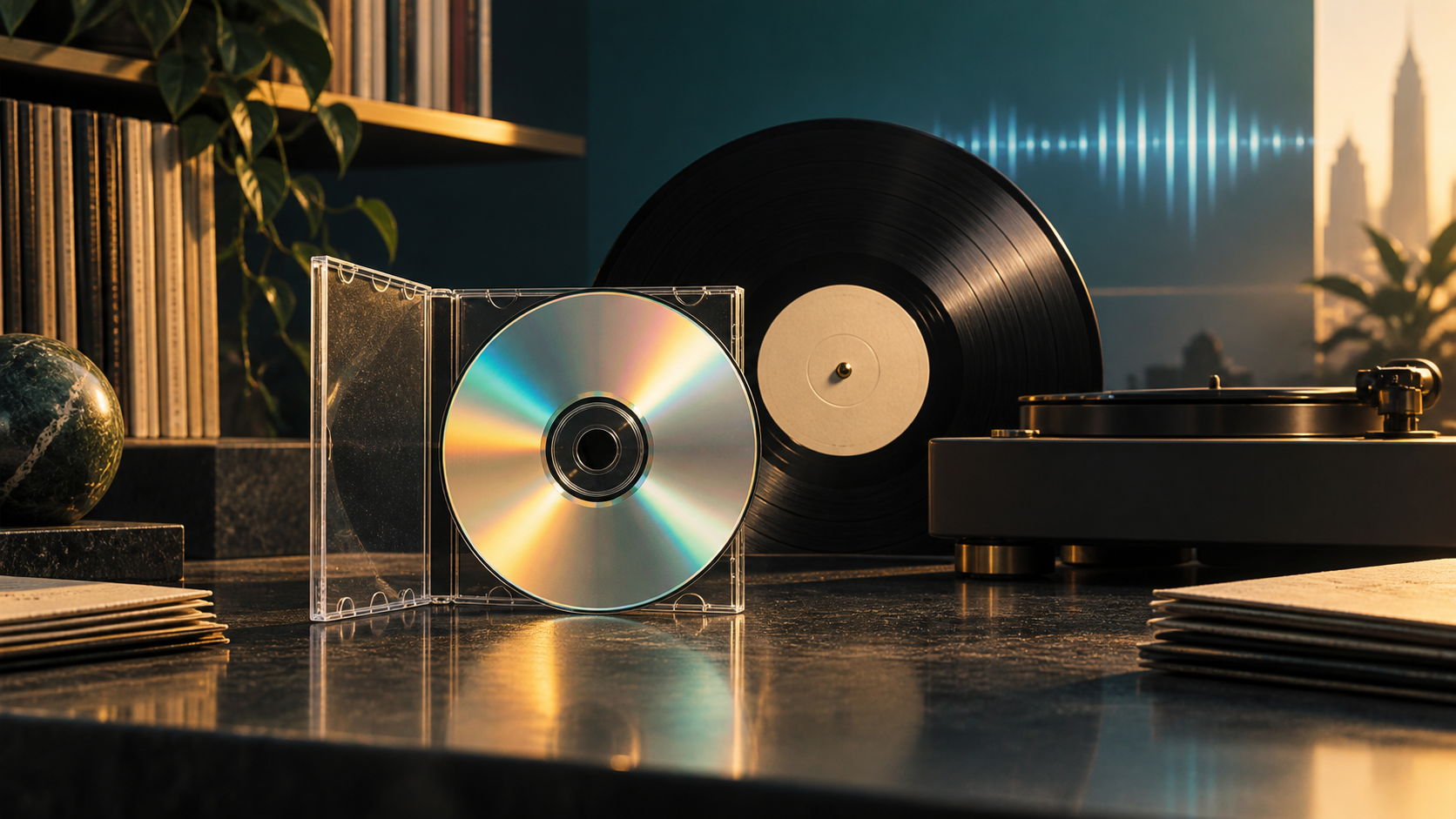
Streaming still dominates American music, yet a remarkable first-half surge in compact discs and continued vinyl growth show that ownership, collectability and tactile design still matter.
The compact disc, long treated as a casualty of streaming, is growing again. U.S. CD revenue reached $171.1 million in the first half of 2026, a 58.6 percent increase from the same period a year earlier, according to the Recording Industry Association of America. Unit shipments rose 45.7 percent to 17.5 million.
Vinyl also continued its long revival. Revenue rose 17.7 percent to $543.8 million, while shipments increased 20.9 percent to 26.5 million units. Together with smaller formats, physical music produced $731.5 million in revenue—25.9 percent more than in the first half of 2025.
The numbers at a glance
CDs: $171.1 million, up 58.6%. Vinyl: $543.8 million, up 17.7%. All physical formats: $731.5 million, up 25.9%. Streaming remained dominant at about 82 percent of recorded-music revenue.
A comeback, with an important caveat
The percentage gains are dramatic, but they do not mean discs have displaced streaming. Streaming generated roughly $4.9 billion during the period and remained the industry’s central business model. Total U.S. recorded-music revenue rose 6.9 percent to almost $6 billion.
CD growth also started from a smaller base after a difficult 2025, when full-year CD revenue and unit volume fell. A rebound can therefore produce a large percentage increase. The clearest conclusion is narrower and more interesting: physical music is expanding alongside streaming rather than replacing it.
For a growing group of listeners, access is convenient—but ownership still carries emotional and practical value.
Why listeners are buying objects again
A physical album offers something a playlist cannot: an object with artwork, notes and a fixed sequence chosen by the artist. Special editions, collectible packaging and fan merchandise have made that appeal especially visible in pop and K-pop, where one release can appear in several versions.
Price matters, too. New vinyl records often cost substantially more than CDs. For younger listeners interested in owning an album, the compact disc can be the more affordable entry point. Used discs are plentiful, durable when handled carefully and easy to play without a recurring subscription.
Ownership also removes a quiet uncertainty of digital libraries. Licensed music can move between services, regional access can change, and a subscription grants access rather than permanent possession. A disc continues to work without an account or internet connection, provided the listener keeps compatible hardware.
What the data does—and does not—show
The RIAA figures measure estimated U.S. revenue at retail value and shipments, and their methodology is not identical to consumer-tracking services. That helps explain why different reports can publish different unit-growth estimates. Revenue growth may also reflect changes in product mix and price, not only the number of buyers.
The report does not prove that frustration with streaming caused the increase. Collectability, major releases, deluxe editions, nostalgia and easier access to inexpensive players may all contribute. The data captures a market result; the motivations behind millions of individual purchases require more evidence.
Why CDs appeal
- Lower entry price than many new records
- Portable, durable format
- Permanent offline access
- Booklets and collectible packaging
Reasons for caution
- Streaming still holds overwhelming scale
- Growth follows a weak comparison year
- Headline revenue is not the same as buyers
- Players are absent from many new devices
What happens next
The second half of the year will show whether the jump is durable or concentrated around a few major releases. Holiday sales, catalog reissues and the availability of affordable players will matter. So will the industry’s willingness to keep standard editions accessible rather than treating every physical release as an expensive collectible.
The most useful reading of the 2026 figures is not that streaming is fading. It is that music listeners increasingly use formats for different purposes: streaming for discovery and convenience, vinyl for ritual and presentation, and CDs for affordable ownership. A supposedly obsolete medium has found a new job inside a mixed digital-and-physical culture.
Sources
- RIAA: 2026 Mid-Year Recorded Music Revenue Report
- Reuters: CDs make a comeback, boosting U.S. recorded-music revenue
- TechCrunch: CD sales are making an unexpected comeback
Reporting note: Figures cover the first half of 2026 and use the RIAA’s reported retail-value and shipment methodology. This article does not infer individual consumer motives from aggregate sales alone.